
Last updated November 23, 2026
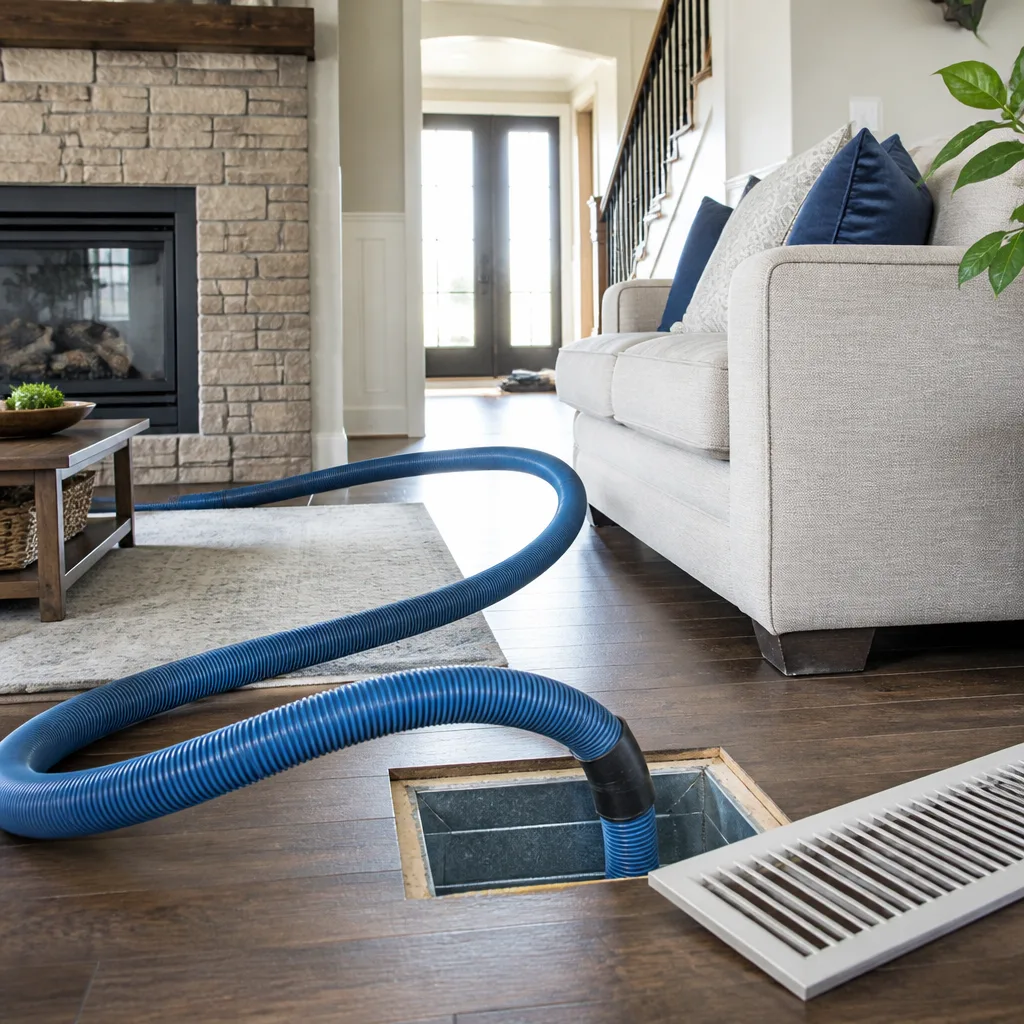 Whole-home duct cleaning
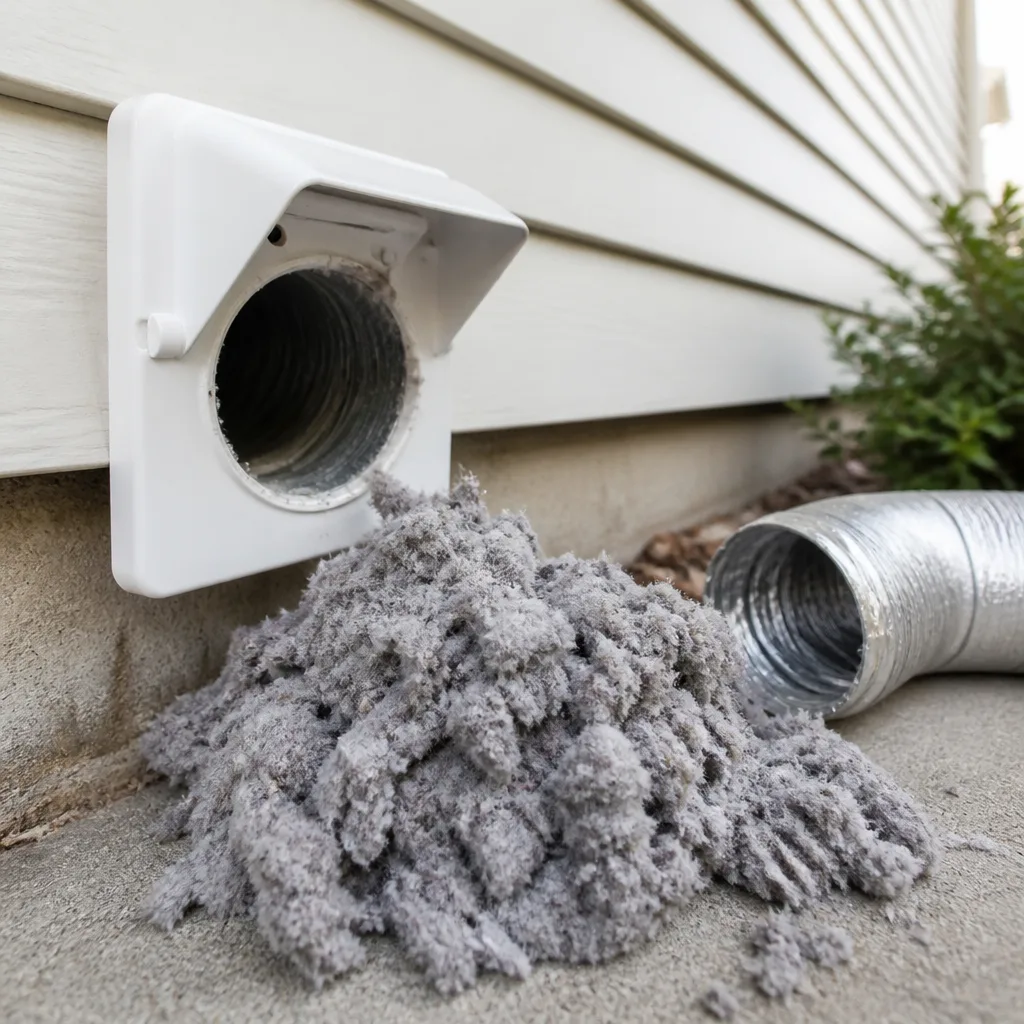 Dryer vent cleaning
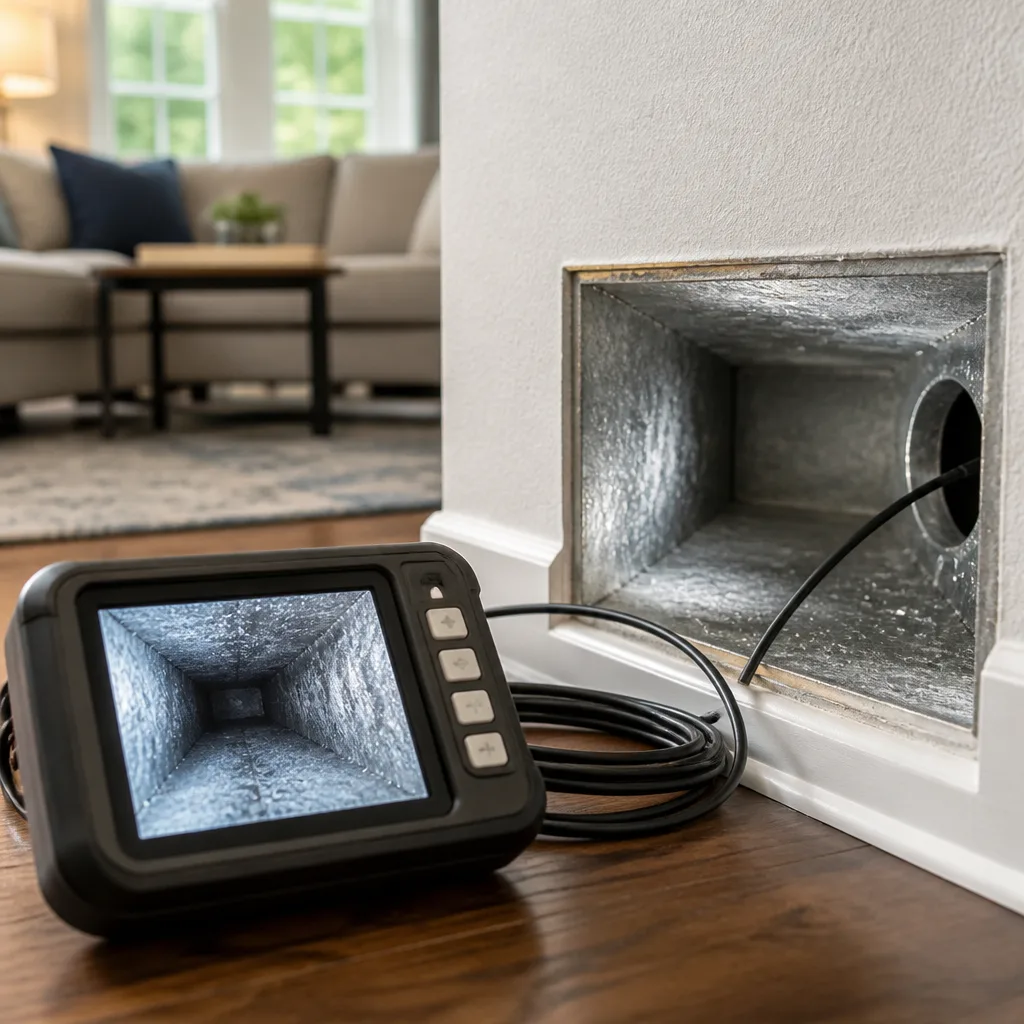 Camera inspection
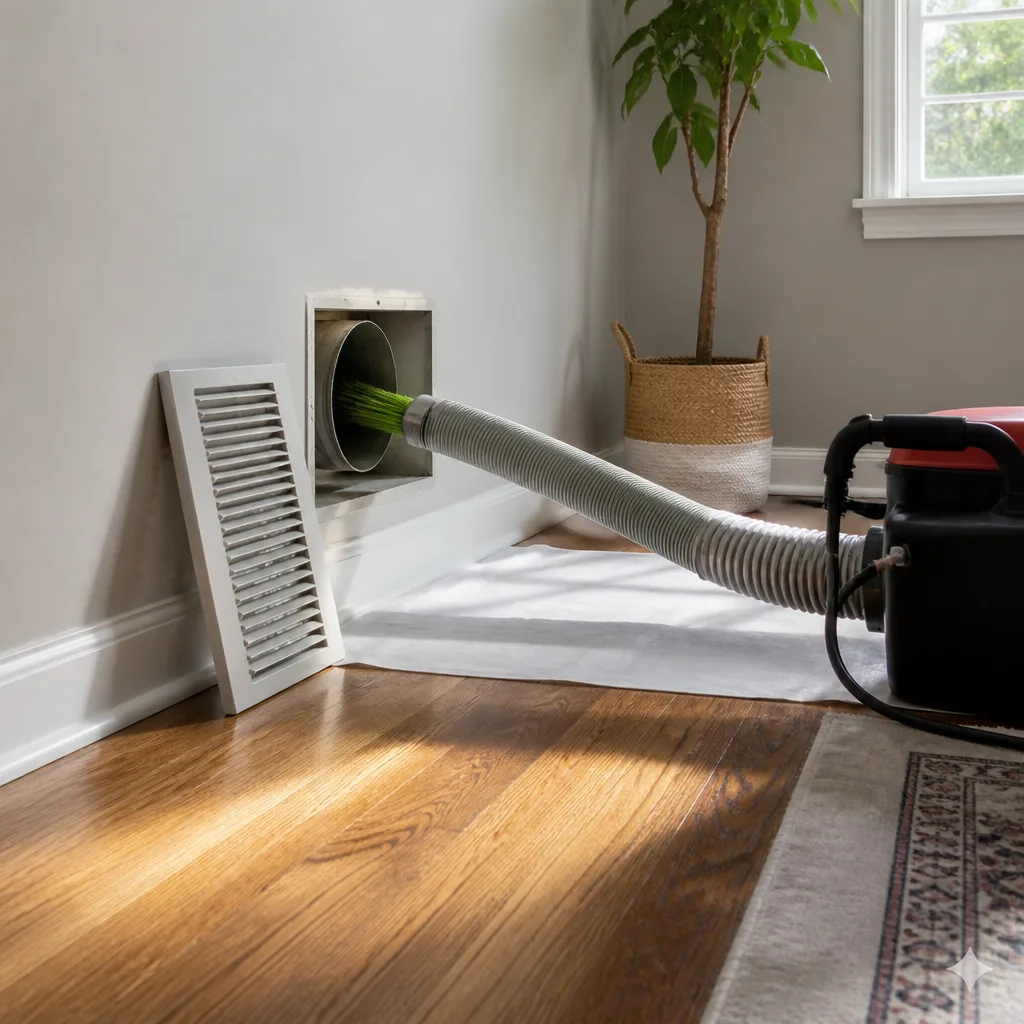 Sanitizing & deodorizing
Whole-system duct and dryer vent check with before-and-after photos - you see exactly what came out of your vents
That "$99 whole-house special" is a bait ad - the real number appears once they are in your hallway, or the "clean" is a shop-vac at the register. We photograph the inside of your ducts before and after instead.
Air Duct Cleaning Warning Signs: A Stanton Homeowner’s Reference Guide
The sign most Stanton homeowners notice last is the one that shows up first: a cooling bill that climbs 15 to 20% before anyone feels a single uncomfortable room. When an HVAC technician blames refrigerant, the real culprit is often a dirty evaporator coil starved of airflow by contaminated ducts. By the time dust appears at your registers, the restriction has been building for months. This guide covers the subtler indicators – the ones that appear on your Edison bill, in your furniture dust patterns, and in the timing of your allergy symptoms – so you can act before air quality and equipment life take the hit. Stanton Air Duct Cleaning Pros walks through each one below.
Quick Answer
The earliest warning signs of dirty air ducts in Stanton are a 15 to 20% jump in cooling costs, rooms that never balance in temperature, dust settling in patterns that don’t match your register locations, and musty odors that appear only at HVAC startup or only during continuous operation. Visible dust at the registers is usually a late-stage symptom, not an early one. If two or more of these indicators appear together, it’s worth having the system inspected.
Styles & brands we work with
- Whole-home duct cleaning
- Dryer vent cleaning
- Camera inspection
- Sanitizing & deodorizing
Table of Contents
- 1. Rising Utility Bills: The First Signal
- 2. Uneven Room Temperatures
- 3. Musty Odors at Startup vs. Continuous Operation
- 4. Reading Dust Settlement Patterns
- 5. Allergy Symptoms and Their Timing
- 6. Airflow and Static Pressure Clues
- 7. When to Call a Professional
- 8. Frequently Asked Questions
Rising Utility Bills: The First Signal
Dirty ducts restrict airflow, and restricted airflow forces your air handler to run longer cycles to reach the thermostat setpoint. The problem is invisible at first. Your system still cools. It just works harder. A 15 to 20% increase in summer cooling costs is the classic early indicator, and it typically precedes any comfort complaint by weeks or months. In Stanton’s mild climate, cooling dominates the energy bill for much of the year, so a duct restriction masks itself well. The house still feels cool enough. The bill is what’s different.
The diagnostic trap is refrigerant. When an HVAC technician finds a system struggling, a low refrigerant charge or a coil issue is a common first suspicion. But a dirty evaporator coil fed by contaminated return ducts will strain the system in ways that mimic refrigerant problems. Before you authorize a refrigerant top-off, ask whether the return-side airflow has been checked.
Things to compare month over month:
- Cooling-season kilowatt usage against the same month last year
- System run time – listen for longer cycles before the compressor shuts off
- Whether the house reaches setpoint at all on warmer days, or only gets close
- Whether the bills climbed gradually or stepped up suddenly
A gradual climb points to a restriction building over time. A sudden step-up usually points to a mechanical failure instead. If the pattern is gradual and the technician finds no refrigerant issue, a duct inspection is the next logical step. Our air duct cleaning service begins with an assessment of the return and supply sides before any equipment runs.
Uneven Room Temperatures
Not all uneven rooms are a duct problem. Some rooms are simply undersized for their duct branch from the day they were built. The distinction matters, and the pattern tells you which is which. An undersized room has always run warm or cool – it’s a design characteristic. A room that used to heat and cool fine and now doesn’t is showing a blockage. Partially blocked branches restrict flow to a specific zone while the rest of the system balances normally.
The pattern to watch for is a room that drifts out of balance when the system is working hardest. In Stanton, that’s mid-afternoon cooling load. A room that holds temperature at 10am but drifts by 3pm is likely downstream of a restriction. A room that drifts all day is more likely undersized.
Numbered steps to interpret what you’re seeing:
- Note which rooms run warm or cool and whether the pattern is new or longstanding.
- Check whether the drift varies by time of day or outdoor temperature.
- Compare the room’s register airflow by hand – weak flow relative to other rooms is a partial block.
- Confirm the room’s supply register is fully open and unobstructed by furniture.
- If one room is weak and the rest are normal, suspect a branch blockage, a collapsed flex duct, or debris.
- If multiple rooms on the same side of the house are weak, suspect a larger trunk restriction.
Multiple rooms on a single trunk running weak is the pattern that most often warrants professional attention. That’s the point where an inspection beats a guess, and where duct repair and sealing becomes relevant rather than cleaning alone. A leaky or separated branch can produce the same symptom as a blocked one, and the two require different fixes.
Musty Odors at Startup vs. Continuous Operation
The timing of a musty odor tells you where the contamination is. Odor that appears when the system first starts each cycle and fades once air is moving is a signature of moisture and biological growth sitting in the air handler or plenum – the coil, the drain pan, or the interior of the cabinet. The first blast of air picks up that smell, then the moving air dilutes it. Odor that persists during continuous operation points somewhere else: contaminated duct lining, a saturated filter, or debris in the return trunk itself.
Two different sources, two different solutions. Startup odor usually means the air handler and coil need cleaning, sometimes with air sanitizing afterward. Continuous odor means the ducts themselves need attention and possibly a leak inspection – a musty smell inside a sealed duct system is a sign moisture is getting in somewhere, and a leak is the usual entry point.
What each pattern points to:
- Startup-only odor: Moisture at the evaporator coil, a slow drain pan, or growth inside the air handler cabinet.
- Continuous odor: Contaminated duct interior, a saturated filter, or moisture entering through a duct leak.
- Odor only in one zone: A branch or section of duct with localized growth, common in runs through unconditioned space.
- Odor that intensifies in warm weather: Consistent with biological growth that flourishes in heat and humidity.
In our experience, continuous odor is the pattern homeowners live with longest before acting. It’s easy to write off as “just how the house smells.” It usually isn’t. If the smell persists with the system running, the problem is in the system, not the house. Our full indoor air quality scope covers duct cleaning, HVAC cleaning, and air sanitizing, so a single visit addresses both the source and the symptom rather than treating one and leaving the other.
Reading Dust Settlement Patterns
Furniture dust is normal. Dust that settles in a pattern tied to your register locations is not. This is the most overlooked early indicator in Stanton homes, because the dust looks ordinary until you map where it lands. If the heaviest settlement appears on furniture surfaces directly downstream of a supply register, that register or its branch is shedding debris. If dust accumulates in a band along one wall, the leak is likely in a duct concealed above that wall or behind it.
The key phrase is “tied to register locations.” Dust distributed evenly across a room suggests filtration or infiltration issues. Dust concentrated in a linear band or radial pattern from a register suggests the duct is the source. It’s telling you which part of the system to look at, not just that there’s a problem somewhere.
Observations that point to ducts rather than outdoor dust:
- A room with a register directly above a surface collects more dust than rooms without one.
- Dust returns within hours of cleaning on surfaces near a register but not far from it.
- Dark staining appears on ceiling or wall surfaces near a supply register.
- Dust collects on the face of registers and blower grilles faster than other horizontal surfaces.
- One room collects noticeably more than comparable rooms with similar traffic.
Ceiling staining near a register is worth taking seriously. It usually indicates a duct leak or a poorly sealed boot, where unconditioned air escapes and carries dust with it. That’s the kind of finding that makes duct repair and sealing the right answer, not cleaning. We’ve seen this pattern in Stanton homes repeatedly – cleaning alone doesn’t stop it, sealing does. Professional-grade equipment matters here; a rotary brush system like a Rotobrush cleans the duct interior, but only a seal stops the debris from escaping at a bad joint.
Allergy Symptoms and Their Timing
When allergy or respiratory symptoms worsen specifically during HVAC operation and improve when the system is off, that’s a duct or air handler signal. Symptoms that follow pollen seasons, humidity, or time spent outdoors point elsewhere. The distinguishing question is timing. If the symptoms track the system’s run cycle rather than the outdoor environment, the contamination is likely in the duct system or the air handler.
What different timing patterns suggest:
- Symptoms worsen when the system runs: Airborne debris or biological growth being distributed through the ducts.
- Symptoms improve during operation: Less common, but sometimes points to filtration working while a leak elsewhere is the source.
- Symptoms worse in a specific room: A branch or duct section serving that room is the likely source.
- Symptoms worse on startup: Coil or air handler contamination picked up in the first airflow.
- Symptoms worse overnight: A return duct near the affected bedroom, or a room with a return and a supply branch issue.
None of this replaces a medical opinion. But when a homeowner notices that a family member coughs or itches specifically when the AC kicks on, that timing is useful diagnostic information. It narrows the inspection. In Stanton’s mild climate, systems often run intermittently through the day, so the correlation between run cycles and symptoms can be easier to spot than in climates where cooling runs nonstop.
If the timing pattern is convincing, the next step is a full inspection of the duct system and air handler. Our HVAC cleaning service addresses the coil and air handler, while duct cleaning addresses the distribution side. Both matter when symptoms track operation. The goal is to remove the source, not mask the symptom.
Airflow and Static Pressure Clues
Static pressure is the technical measure of how hard your blower has to work to move air. When ducts are restricted, static pressure rises, and that stress eventually shortens equipment life. You can’t measure it without a gauge, but you can spot the downstream symptoms. Consider having static pressure checked as part of any inspection – it’s one of the clearest objective indicators of duct restriction, and it distinguishes a restricted system from a leaky one.
Clues a technician can find quickly:
- High static pressure on the return side: Contaminated or blocked return ducts.
- High static pressure across the coil: A dirty evaporator coil or a saturated filter.
- Weak supply airflow with normal return: A leak or restriction on the supply side.
- Blower motor overloading: A system working against too much resistance.
These are the kinds of measurements that separate a real inspection from a sales visit. Professional-grade equipment, every job, means the tools match the diagnosis – a Nikro negative-air machine for capture during cleaning, a rotary brush system for the duct interior, and filtration equipment for the air handling side. That combination is what makes the difference between cleaning what you can see and cleaning the whole duct system, not just the registers.
If the static pressure check points to a restriction, the fix may be cleaning, a duct repair, or both. This is where the ability to diagnose and correct – rather than only clean – changes the outcome. Our Stanton Air Duct Cleaning Pros team handles the full scope of indoor air quality work for this reason.
When to Call a Professional
Call a professional when two or more of the early indicators appear together, or when a single indicator has been persistent for more than a few weeks. A climbing cooling bill combined with an uneven room is enough to justify an inspection. Continuous musty odor with no other explanation is enough. A room that used to balance and doesn’t anymore is enough. Visible dust at the registers and ceiling staining near a duct are enough. If you’re unsure, an estimate settles it – you don’t need to diagnose the system yourself to know it’s worth looking at.
Stanton Air Duct Cleaning Pros offers free estimates in Stanton. Call (877) 820-9417. We answer 24/7. Fast dispatch from 7am to 7pm, Sunday through Friday. The estimate is set per job, in writing, before any work begins. If the inspection finds contamination, or a leak that needs sealing, you’ll know the scope and the cost before anything starts.
One note on dryer vent work, since it’s often overlooked alongside duct cleaning: a restricted dryer vent is its own safety issue, and our dryer vent cleaning service inspects the run end to end. If you’re already scheduling a duct inspection, it’s worth having the dryer vent checked in the same visit.
See the difference
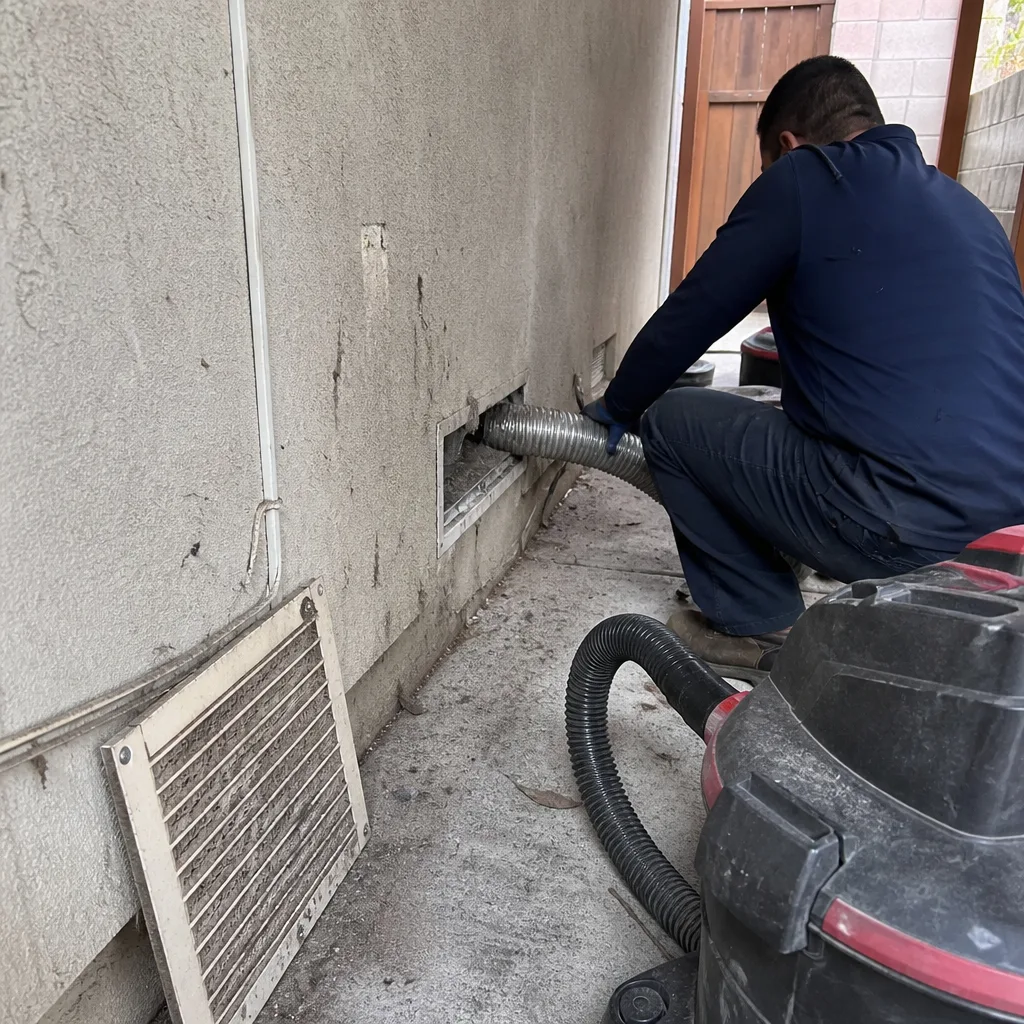 Before
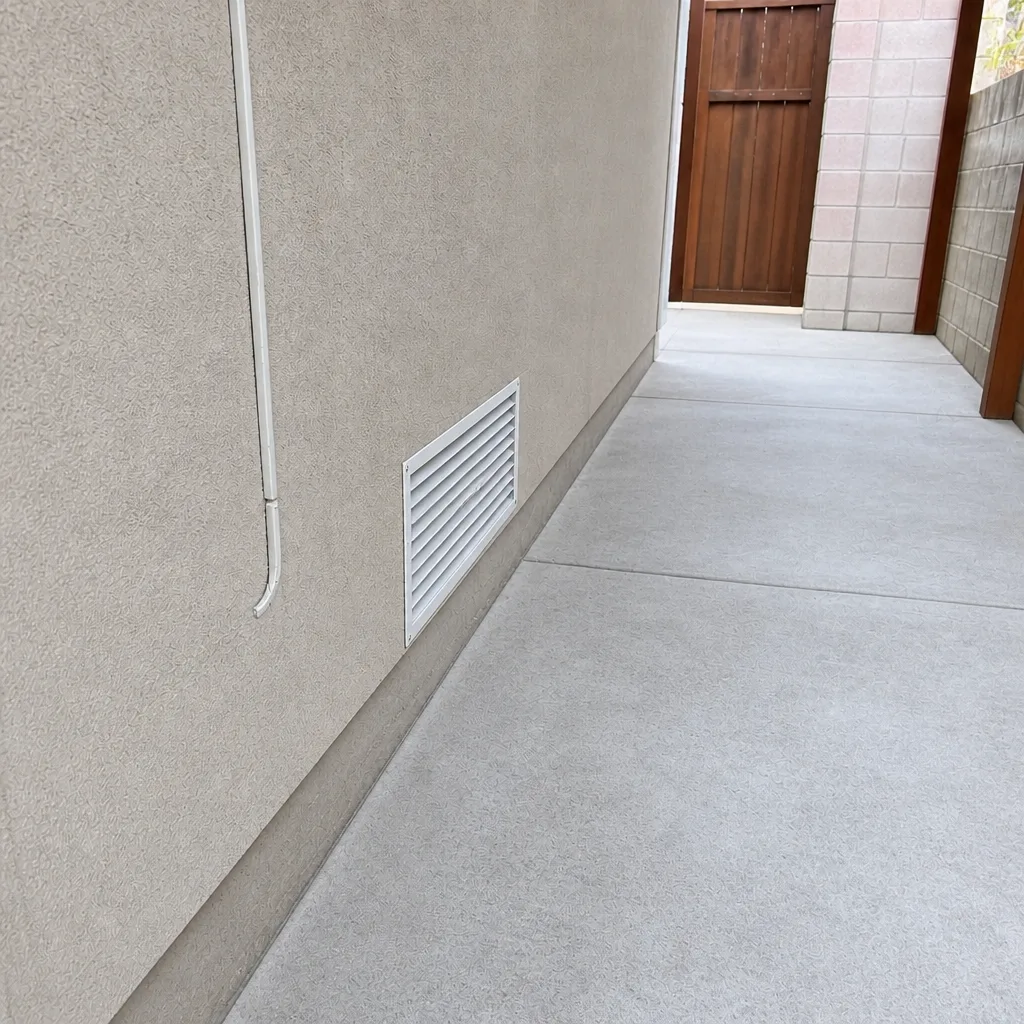 After
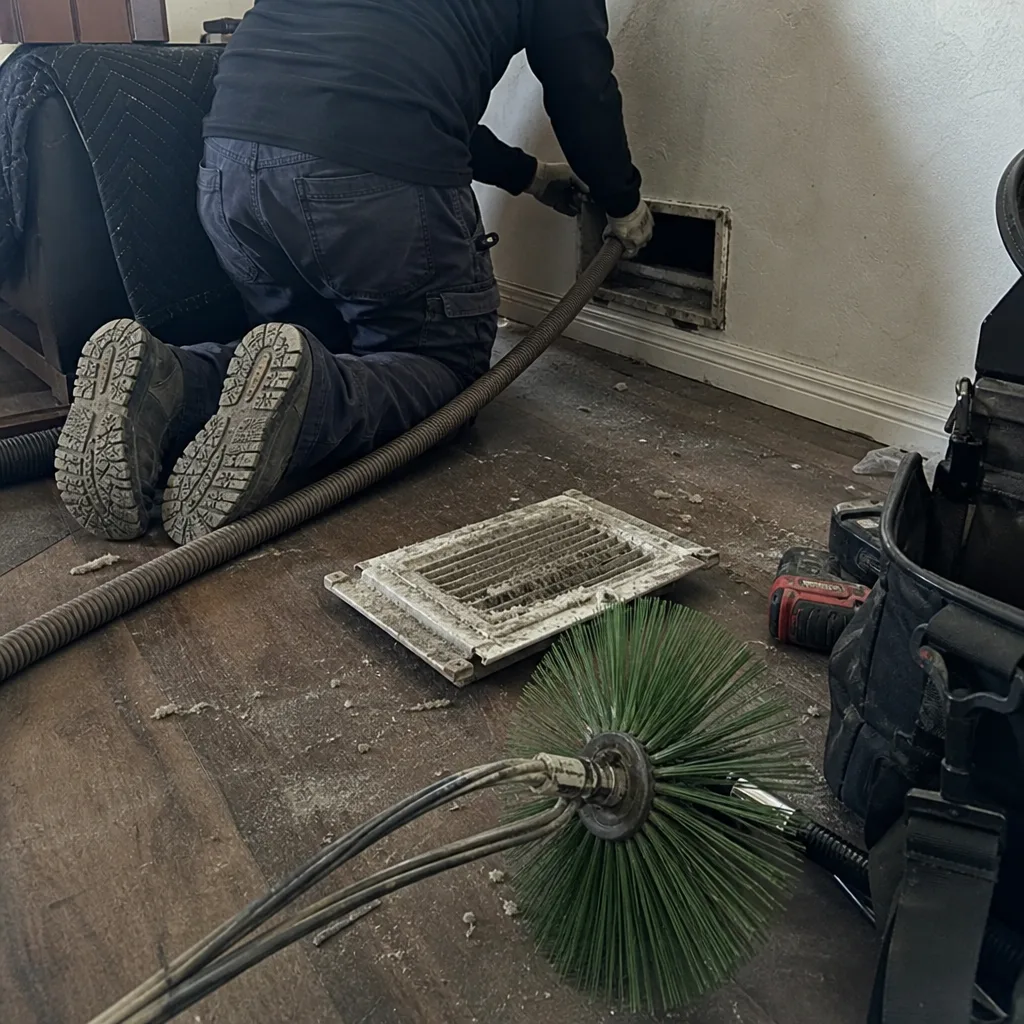 Before
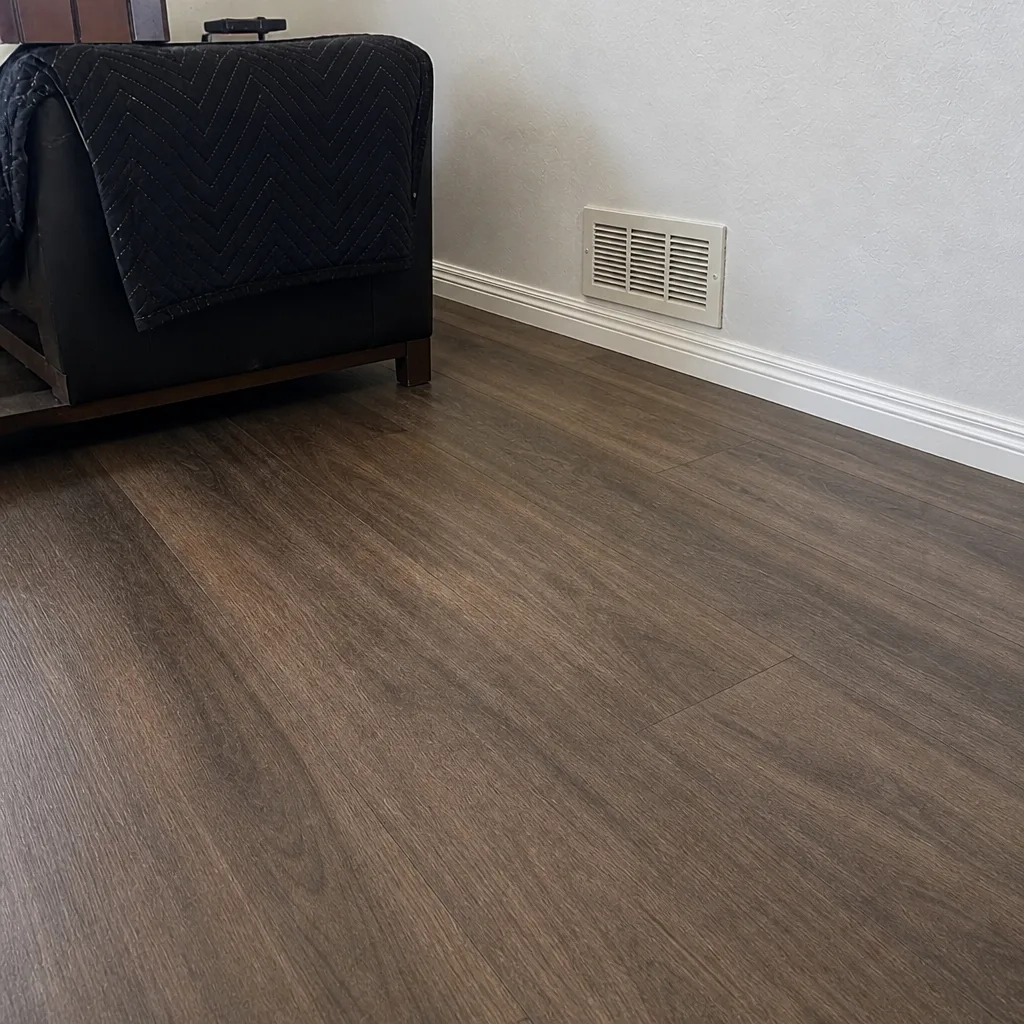 After
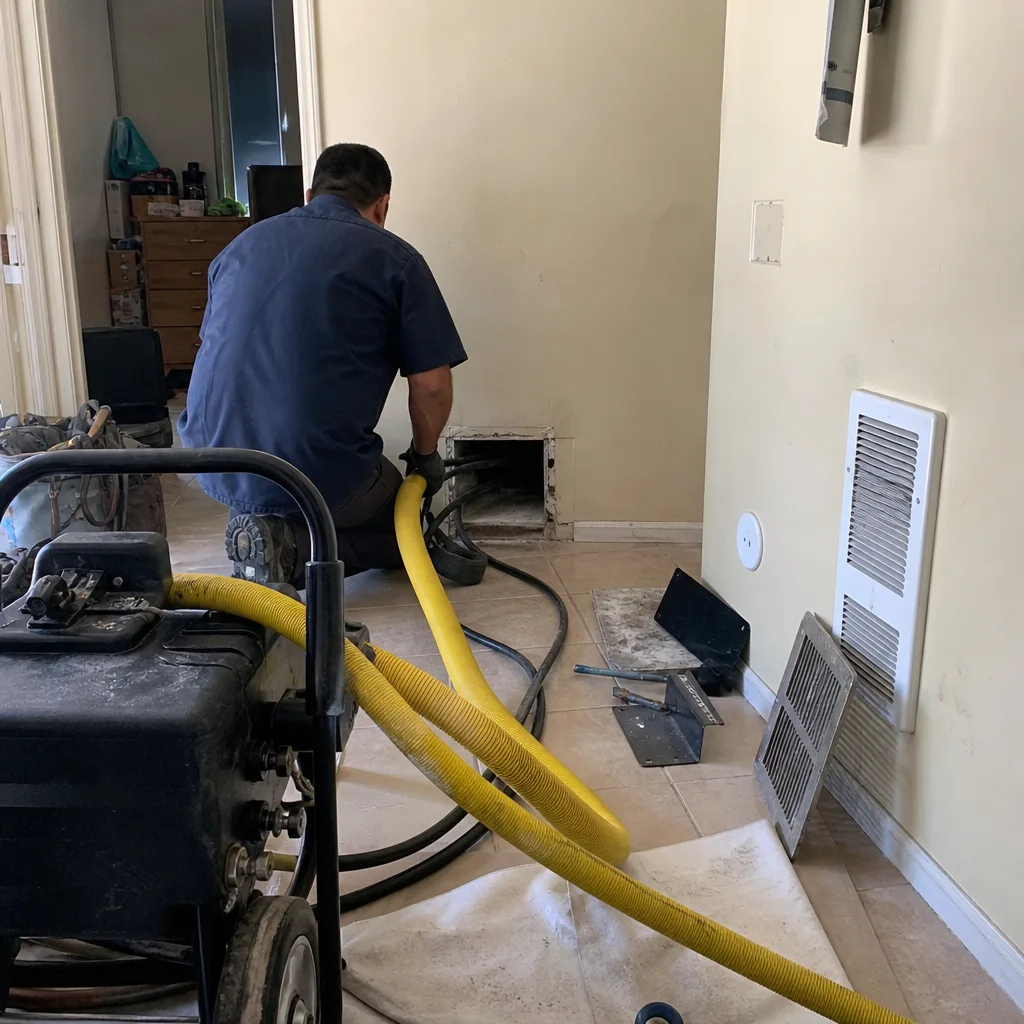 Before
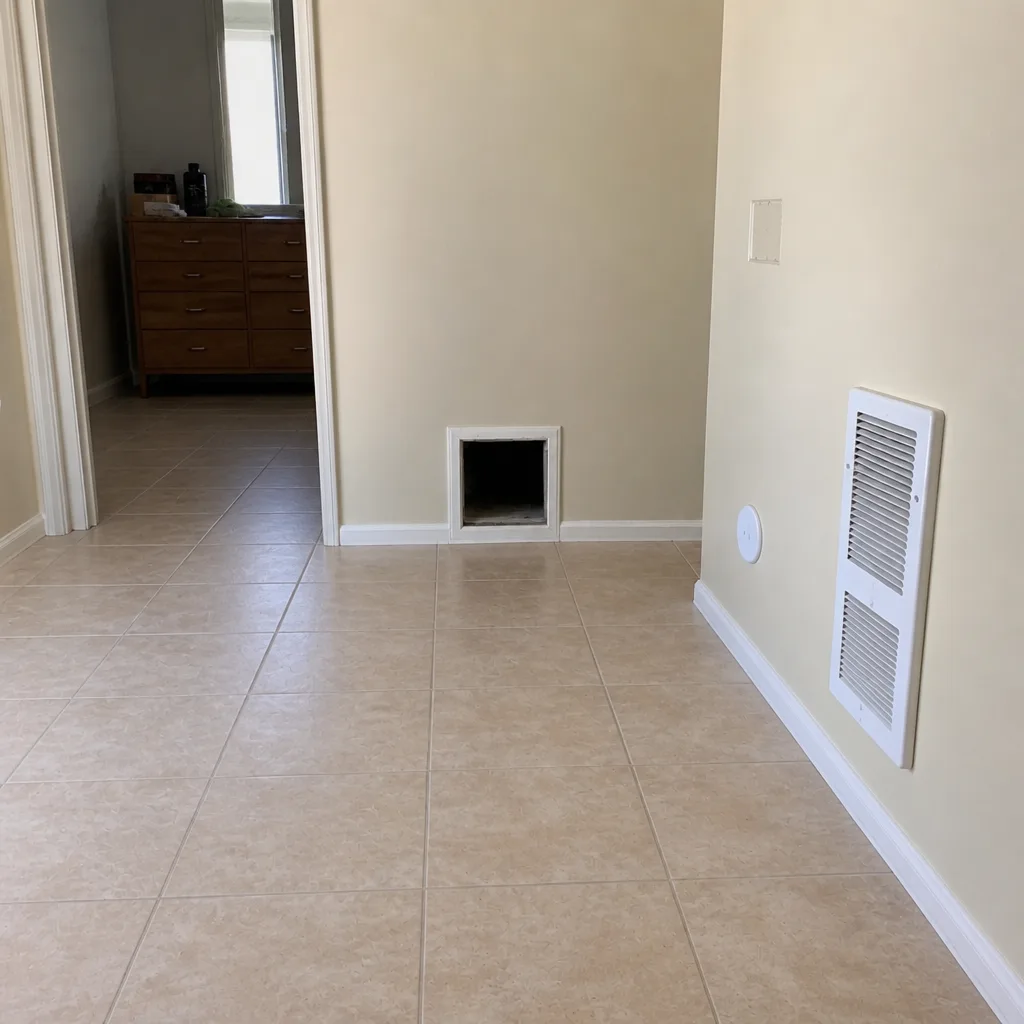 After
Common Mistakes to Avoid
- Waiting for visible dust at registers. By the time debris shows at the vent face, the contamination behind it has been building for months. The bill and the temperature imbalance show up first.
- Authorizing a refrigerant top-off without checking return airflow. A struggling system with normal refrigerant often has a duct restriction. Ask whether the return side was measured before signing off on a recharge.
- Assuming an uneven room is just how the house is built. A room that changed its behavior recently is a different problem from a room that was always undersized. Check the history, not just the current temperature.
- Treating startup musty odor and continuous musty odor the same way. One points to the air handler, the other to the ducts and a possible leak. Cleaning the wrong part wastes money.
- Cleaning ducts without sealing leaks. Cleaning removes what’s inside; sealing stops new debris from escaping at bad joints. A leak that carries ceiling staining will keep dusting the same wall if it isn’t fixed.
- Relying on a shop-vac and a wand for “duct cleaning.” A vacuum at the register face cannot reach the branch run. Ask what equipment the tech will use, and expect a rotary brush system and negative-air capture to be named.
- Ignoring the dryer vent in a duct-focused job. The two systems are separate, but a restricted dryer vent is a fire risk and gets missed when the focus is entirely on HVAC ducts.
Frequently Asked Questions
A 15 to 20% increase in summer cooling costs is the most common early indicator, appearing before any discomfort is felt. The system runs longer cycles to overcome restricted airflow, and the bill is the first place it shows. Call (877) 820-9417 for a free estimate if you’ve noticed one.
A single weak room usually points to a partial blockage, a collapsed branch, or debris in that zone, while multiple weak rooms on one side of the house suggest a larger trunk restriction. A room that was always warm is likely undersized, a room that changed recently is blocked. An inspection tells the difference. Call (877) 820-9417 for an exact quote – estimates are free.
Startup odor usually means moisture and growth in the air handler or coil; continuous odor points to the ducts themselves, or a leak letting moisture in. The two need different work. Air sanitizing addresses the coil side; duct cleaning addresses the distribution side.
The price is set per job by the written estimate based on the size and condition of your system – there’s no per-vent price and no teaser rate. What you get is a flat price per system agreed before work starts, with before-and-after photos of your own ducts. Call (877) 820-9417 for a free estimate.
Very low quotes usually skip the equipment that makes cleaning effective – a rotary brush system for the duct interior and a negative-air machine for capture. That combination is what actually removes the contamination. Cheap quotes often mean a vacuum at the register face and nothing more. Call (877) 820-9417 for a fair, transparent quote that names the equipment.
Most homes benefit from an inspection every few years, more often if you have pets, allergy sufferers, or recent renovation dust. The warning signs in this guide are a better trigger than a calendar. If two or more appear together, have the system looked at. Call (877) 820-9417 to book an inspection.
The Bottom Line
The early signs of duct contamination in Stanton are quieter than the obvious ones. Watch your cooling bill for a gradual 15 to 20% climb. Notice whether uneven rooms are new or longstanding. Distinguish startup odor from continuous odor, since each points to a different fix. Map where dust settles relative to your registers. And pay attention to when allergy symptoms appear. Two or more of these together is your cue to inspect. Our technicians have up to 13 years of experience, and we use professional-grade equipment from Rotobrush, Nikro, and Abatement Technologies on every job – the same tools commercial contractors rely on. We clean it, we seal it. If remediation is needed, we handle the air quality work too, so a single visit covers the whole duct ecosystem.
Ready to find out what’s behind your walls? Call (877) 820-9417. We answer 24/7. Fast dispatch from 7am to 7pm, Sunday through Friday. The estimate is free, the price is set per job in writing before work starts, and you’ll see before-and-after photos of your own ducts when the job is done.
Written by the team at Stanton Air Duct Cleaning Pros.