
Last updated November 23, 2026
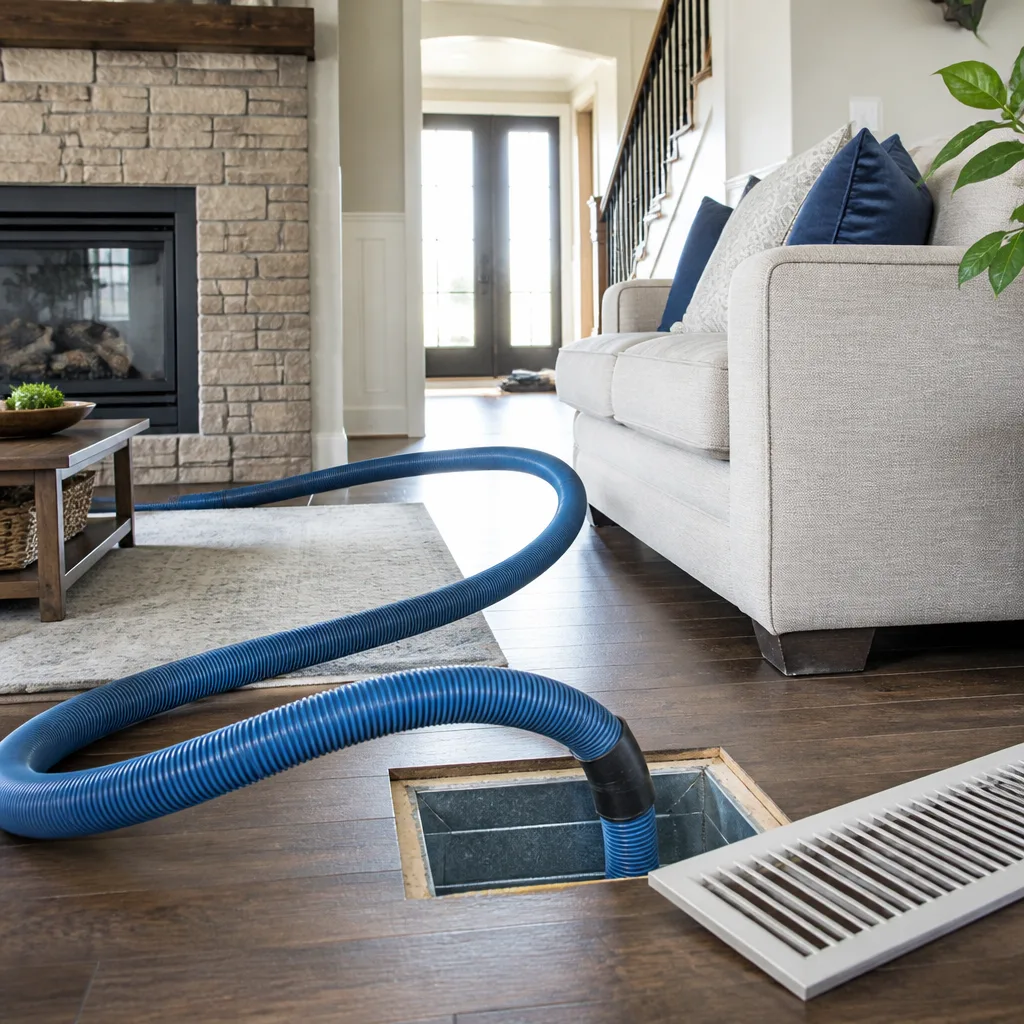 Whole-home duct cleaning
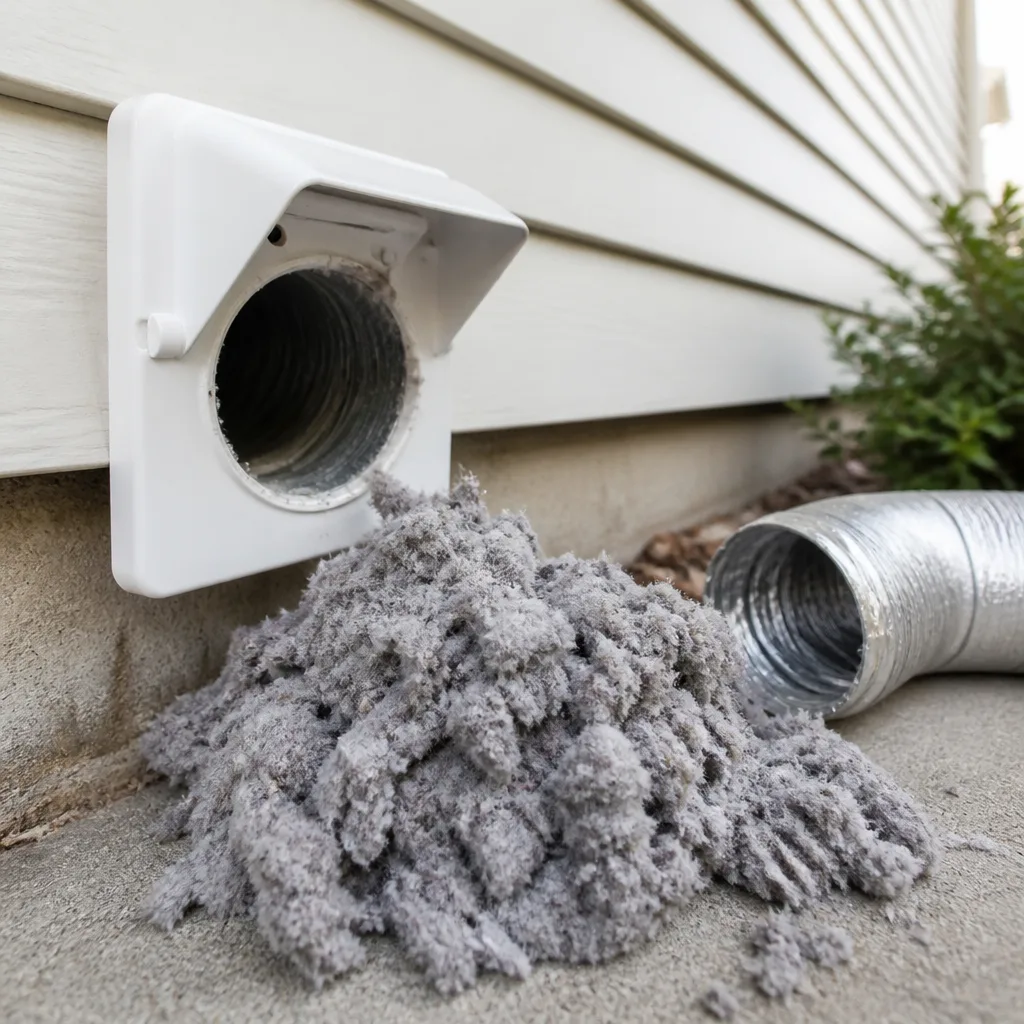 Dryer vent cleaning
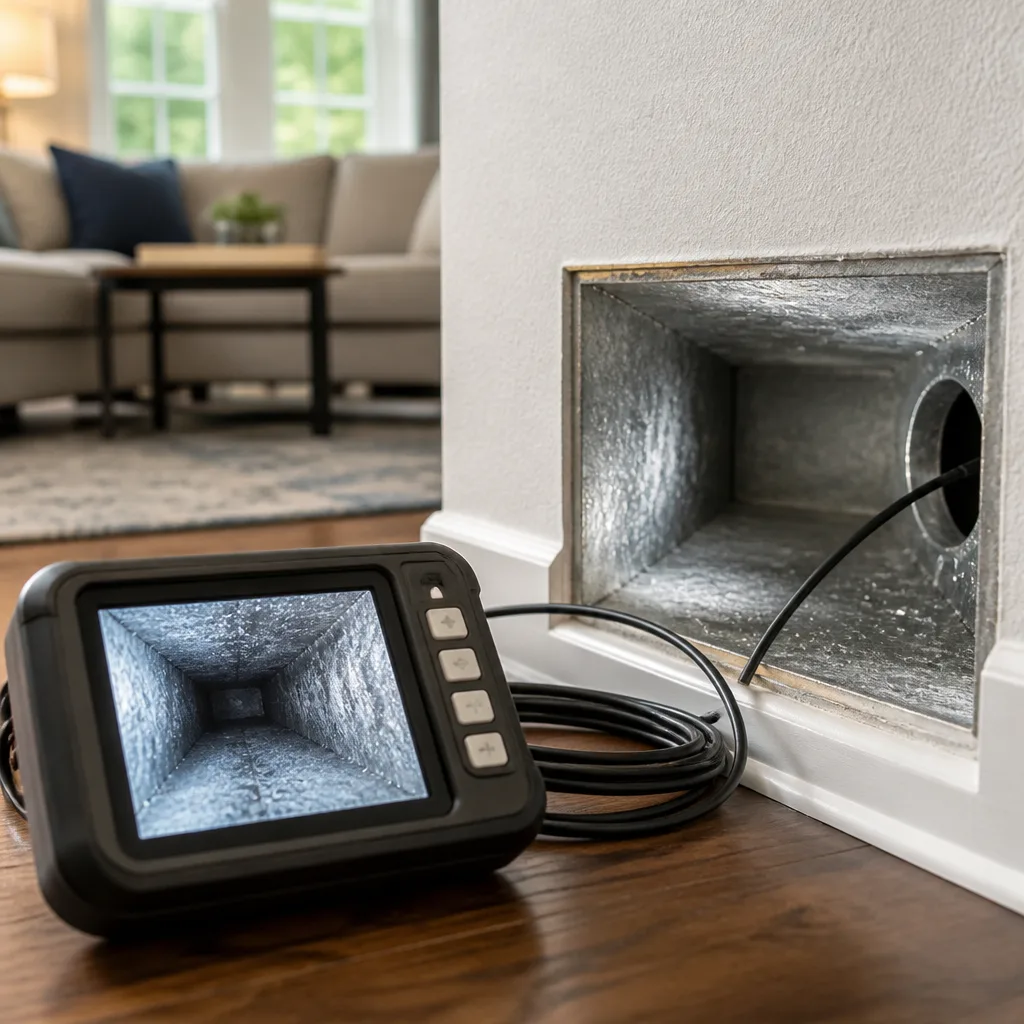 Camera inspection
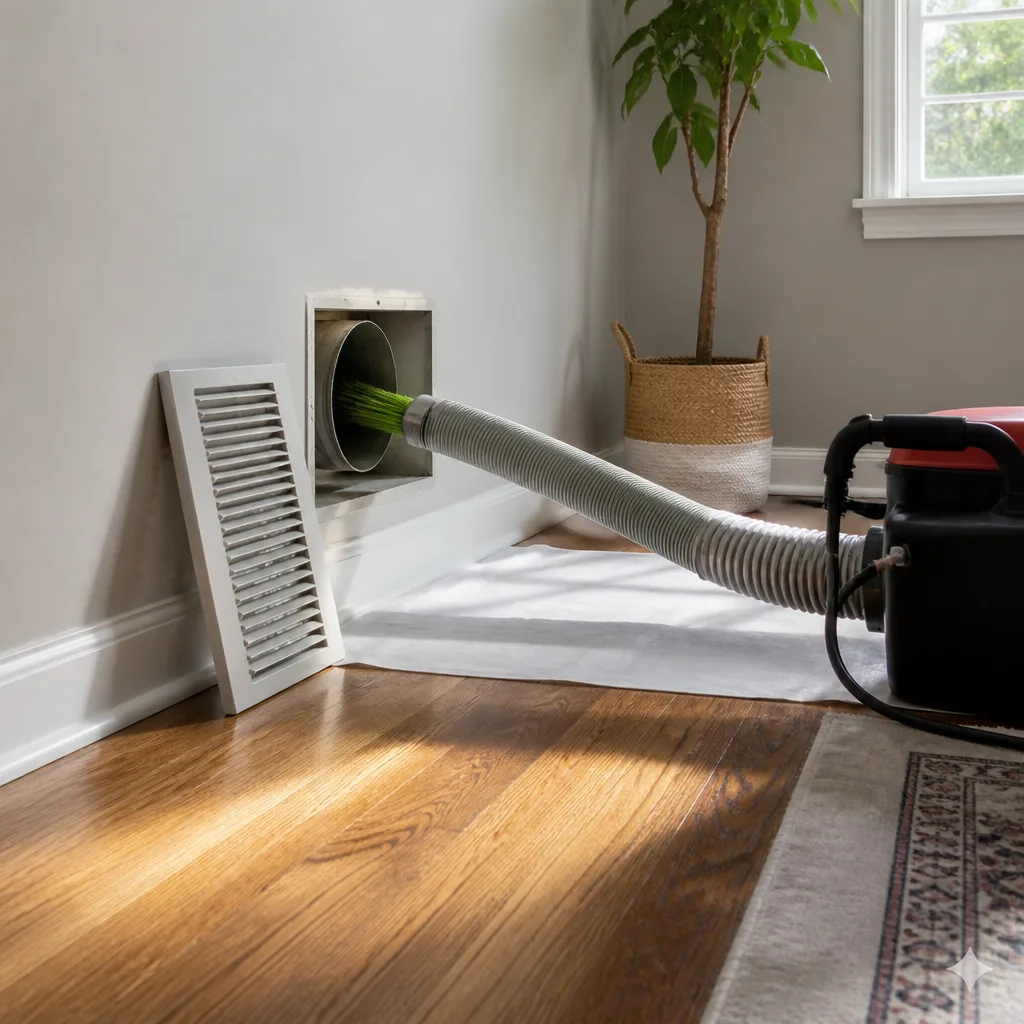 Sanitizing & deodorizing
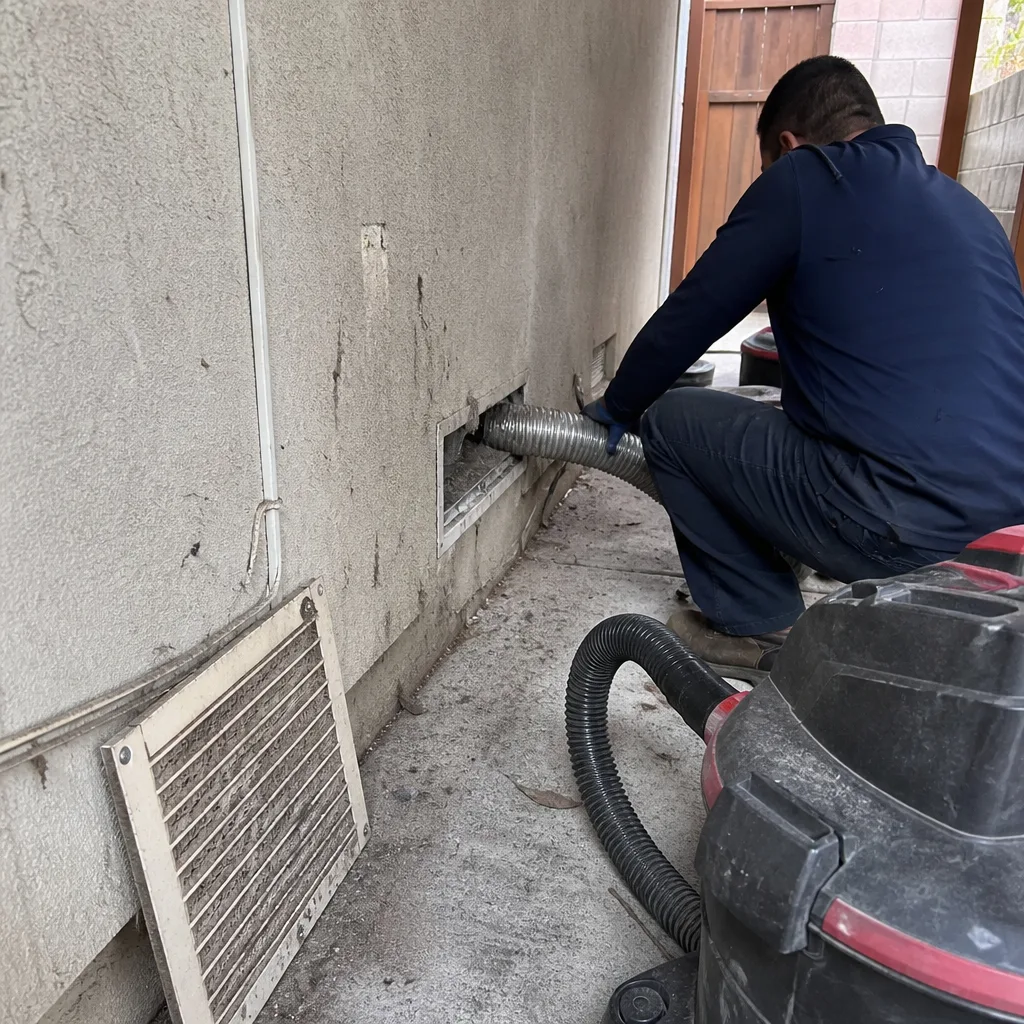
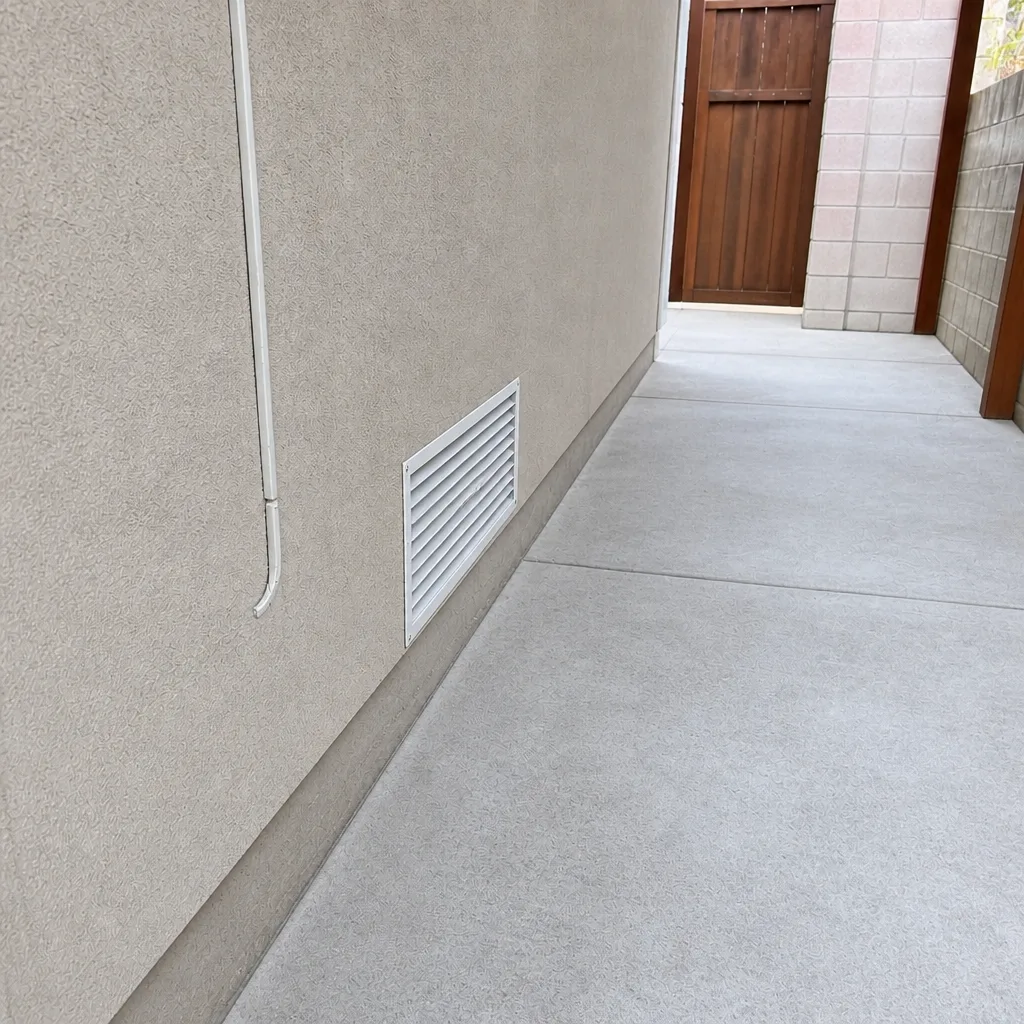
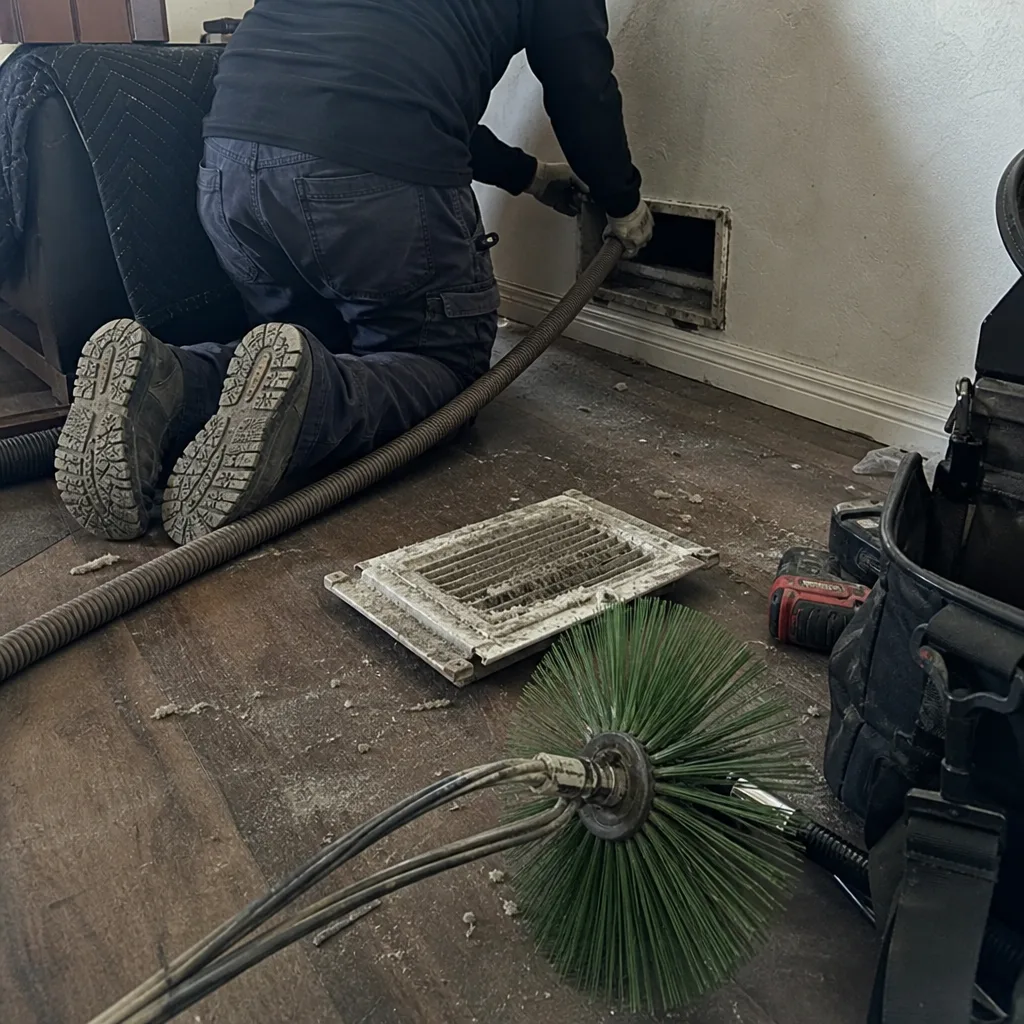
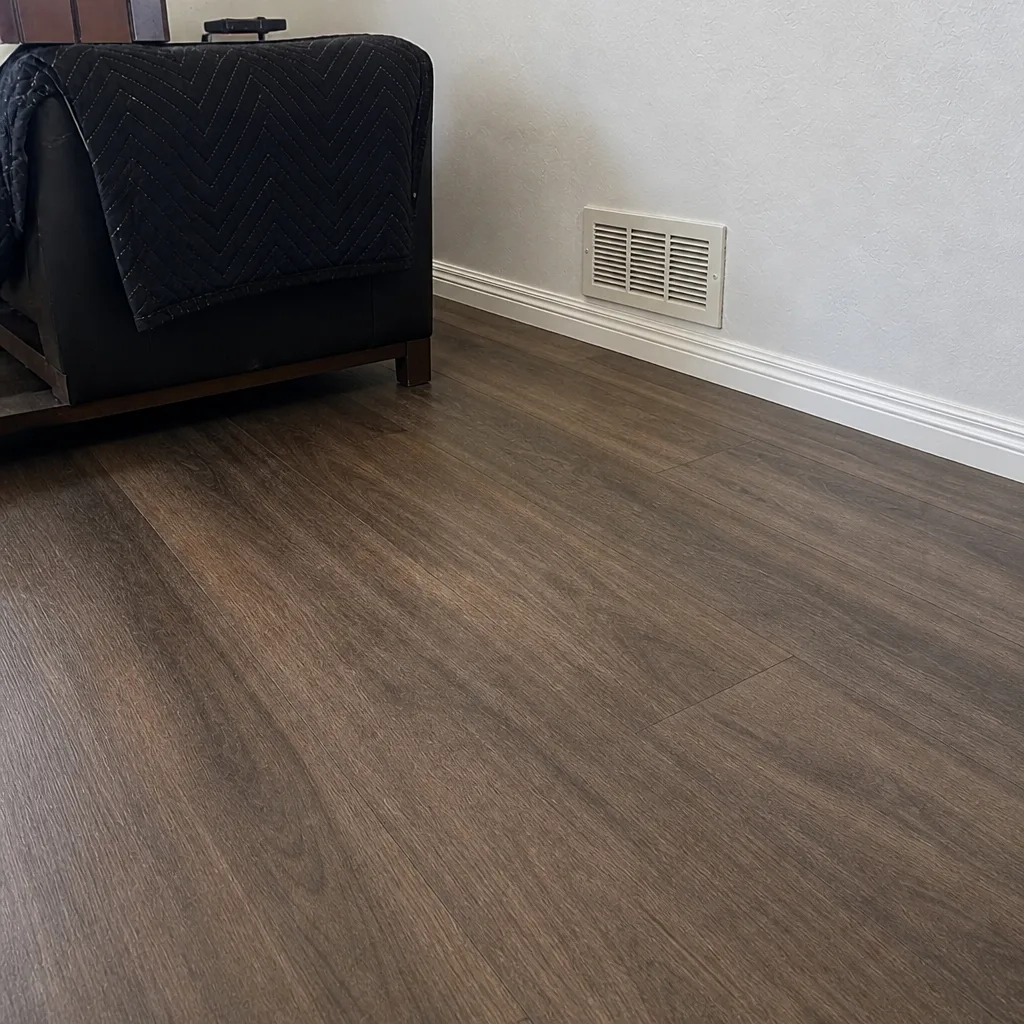
Whole-system duct and dryer vent check with before-and-after photos - you see exactly what came out of your vents
That "$99 whole-house special" is a bait ad - the real number appears once they are in your hallway, or the "clean" is a shop-vac at the register. We photograph the inside of your ducts before and after instead.
DIY vs Professional Air Duct Cleaning: The Stanton Homeowner’s Decision Guide
Most homeowners assume duct cleaning is simply a bigger version of vacuuming. It isn’t, and the reason comes down to physics rather than effort. A consumer shop vacuum pulling roughly 65 CFM is fighting the static pressure inside a residential duct system, so it moves a small fraction of the air volume that a professional negative-air machine pulls. In practice, DIY “duct cleaning” often pushes loose debris toward the air handler instead of removing it from the system. This guide explains what DIY genuinely accomplishes, where the equipment ceiling sits, and what to expect when you hire a specialist in Stanton.
Quick Answer
Professional air duct cleaning in Stanton removes debris from the entire duct system under controlled negative pressure, while DIY work cleans only what you can reach through the registers. Consumer vacuums can’t maintain negative pressure at the air handler during agitation, so they tend to redistribute dust rather than extract it. DIY register and grille maintenance is worthwhile as a complement, but it is not a substitute for a full-system cleaning.
Styles & brands we work with
- Whole-home duct cleaning
- Dryer vent cleaning
- Camera inspection
- Sanitizing & deodorizing
Table of Contents
- Why DIY Duct Cleaning Can’t Match Professional Results
- The Physics of Negative Pressure, Explained Simply
- What DIY Duct Cleaning Actually Does Well
- Equipment Comparison by Specification
- Scenarios Where DIY Is the Wrong Call
- How to Extend Time Between Professional Cleanings
- How to Evaluate a Stanton Duct Cleaning Provider
- Why a Duct Specialist Beats a Generalist
Why DIY Duct Cleaning Can’t Match Professional Results
Air ducts are a closed, networked system, and every branch feeds into a shared air handler. When you clean one register by hand, the loose dust you disturb travels into the main trunk, where it settles in places you can’t see or reach. Without a vacuum holding negative pressure on the system while you agitate, debris simply moves downstream. That is the fundamental limitation of DIY cleaning, and no upgrade to your home vacuum changes it.
Professional equipment solves this by doing two things at once: agitating the dust that has bonded to the duct walls, and pulling it out under sustained negative pressure through a HEPA-filtered unit. At Stanton Air Duct Cleaning Pros, we pair a Rotobrush rotary brush system with a Nikro negative-air machine so the brush loosens material while the vacuum captures it at the source. The rotary brush reaches duct runs and turns that consumer gear can’t touch: inside the trunk line, around elbows, and along the walls of the supply branches.
What you can do from the register side is limited but not pointless. Surface dust on grilles, visible debris in the nearest foot of duct, and pet hair stuck to return covers are all within reach. The trouble starts when homeowners assume this visible progress means the whole system is clean. In our experience, the first few feet of a supply run tells you almost nothing about what the trunk line looks like. See our air duct cleaning page for what a full-system scope includes from register to air handler.
Another factor homeowners miss is the internal surface area. An average Stanton house has hundreds of feet of ductwork, and every square foot of interior wall can hold a film of settled dust, pollen, and construction residue. Hand cleaning touches only the sections you can see. The material you don’t touch is the material that keeps circulating every time the HVAC system cycles on.
The Physics of Negative Pressure, Explained Simply
Negative pressure means the pressure inside the duct is lower than the pressure in the room, so air (and dust) flows inward through the vacuum. Holding negative pressure on the whole system during cleaning is what keeps loosened debris from escaping into your living space. Consumer equipment can’t sustain it because the vacuum loses suction the moment it faces the static pressure of a long duct run, and the more open registers there are, the more the vacuum is fighting open paths to the room.
Professional setups localize suction on the air handler or a dedicated access port, then seal the other openings so the only path for air is from the duct walls into the vacuum. That’s why a technician will temporarily close off registers before starting. It also explains why a homeowner using a shop vacuum at a single register gets almost no extraction from the trunk line just a few feet away – the air simply takes the path of least resistance through the other open registers.
Why This Matters During Agitation
Agitation is the act of disturbing dust that has bonded to duct surfaces. You can’t extract material that is still stuck to the wall, and you can’t loosen it without also generating airborne dust. If you agitate without negative pressure, the dust you lift goes wherever the air is moving – into your living room, or deeper into the system toward the air handler. Professional cleaning keeps agitation and extraction synchronized, which is why the equipment list matters so much more than the sales pitch.
When we clean a Stanton home, the negative-air setup stays running throughout agitation, and the collection filter captures what the brush lifts. Abatement Technologies filtration equipment brings a level of capture that a residential vacuum bag can’t approach. The difference is not horsepower; it’s design. Commercial air-quality equipment is built to hold pressure across long runs, which is exactly what a whole-home duct system is.
What DIY Duct Cleaning Actually Does Well
There’s a real case for doing some of this work yourself. Register and grille maintenance is legitimate, low-risk, and reduces how quickly the suppply side loads up with dust. Done properly, it also makes the professional cleaning you eventually book more effective. Here’s the method we recommend for homeowners who want to handle the reachable layer.
- Turn the HVAC system off at the thermostat. You want no air moving while you work at the registers.
- Remove the register cover and set it aside on a drop cloth. Wash it in a sink or outdoors with mild soap, then let it dry completely.
- Wipe the visible duct interior with a damp lint-free cloth. Reach only as far as your hand goes without forcing it – do not push cloth or tools into the duct run.
- Vacuum the register frame and surrounding wall or ceiling with a brush attachment on your household vacuum.
- Replace the cover and confirm the damper (if present) opens fully. A partially closed damper chokes airflow to that room.
What this accomplishes: clean grilles, a cleaner surrounding surface, and better-behaved airflow into the room. What it doesn’t accomplish: touching the trunk line, the supply branches, or the air-handler plenum. That interior work is the core of a real cleaning, and it sits behind the walls.
Note the physics one more time. Your household vacuum is drawing from the room side, not the system side. Even a good quality HEPA canister vacuum is fighting the duct’s static pressure. It will clean a grille beautifully, and it will do essentially nothing to the settled dust on the inside of the trunk line twenty feet downstream.
Equipment Comparison by Specification
A specification comparison helps explain why the professional result differs so much. Airflow moves at the unit of CFM (cubic feet per minute), and capture quality is measured in filtration rating. Both numbers matter. Here’s how the three primary tiers stack up in real-world terms, without turning this into a spec sheet.
| Equipment tier | Approximate airflow | Filtration typical | Reach | Negative pressure? |
|---|---|---|---|---|
| Consumer shop vacuum | Around 65 CFM | Basic filter bag or cartridge | At the register only | No |
| Portable HEPA unit | 150-250 CFM typically | HEPA filtration | Localized, one zone at a time | Partial |
| Professional negative-air system | Well into the hundreds of CFM, sustained | Multi-stage HEPA capture | Whole system, air handler sealed | Yes, throughout the run |
The relevant comparison isn’t peak horsepower. It’s whether the machine can hold negative pressure on the whole system while the brush agitates the duct walls. Rotobrush rotary systems are designed for exactly that cycle – agitate, extract, agitate, extract – and our technicians pair them with Nikro negative-air machines so the extraction never lags the agitation. The Nikro unit captures what the brush lifts before it can drift into the living space.
Portable HEPA units are a step up from a shop vac and are useful for targeted work like cleaning a single register cavity or wiping down a return plenum. They are not a substitute for a truck-mounted or high-capacity negative-air system, and any provider who tries to sell you a full-system cleaning using only a portable unit is charging for a job the equipment can’t complete.
Scenarios Where DIY Is the Wrong Call
Some situations call for a professional without question. If you’ve recently finished a renovation, you’re almost certainly looking at drywall dust and construction debris that has migrated straight into your supply runs. Drywall dust is fine, sticky, and extremely hard to remove from a duct wall with anything less than a rotary brush and negative pressure. Hand wiping makes almost no progress.
Rodent evidence changes the picture further. Droppings, nesting material, or chew marks near a vent mean the contamination extends past the register. Cleaning this by hand risks stirring up material you should not be breathing, and a professional crew uses personal protective equipment and dedicated capture equipment for exactly this reason. Call a specialist rather than opening the register yourself.
Mold indicators – musty odor, dark staining near a grille, or visible growth around the air-handler plenum – mean a moisture problem is feeding the growth. Cleaning without identifying the source won’t fix it. Professional cleaning combined with a proper moisture analysis gets to the root. Our full-service scope includes whole-system cleaning, duct repair and sealing, and air sanitizing under one roof, so the source issue can be addressed alongside the cleaning itself.
Flex duct systems deserve their own mention. Flex duct sags over time, the internal liner can bunch or tear, and a rotary brush used aggressively on damaged flex can do real harm. A specialist will identify questionable runs and adjust the cleaning method. DIY work with a shop vac on a sagging flex run often pulls the liner loose, which quietly kills the run’s airflow and turns a cleaning job into a repair job.
How to Extend Time Between Professional Cleanings
A meaningful maintenance program is the legitimately DIY part of indoor air quality, and it makes the professional cleaning you do book more effective and less frequent. Filter selection is the highest-leverage choice on the list. A MERV 8 to MERV 11 filter captures most airborne dust without overworking the blower; going higher can put unnecessary static pressure on the system and reduce airflow. Change it on the manufacturer’s recommended interval, and check it monthly during heavy-use periods.
Register maintenance is the second lever. Washing grilles and wiping the visible frame roughly monthly keeps the surface layer from caking and shedding back into the room. If you notice large dust clumps at a return, that’s a sign the system is loading up faster than the filter can handle; that’s when it’s worth booking an assessment.
Other Steps That Extend the Interval
- Run the HVAC fan on auto, not “on,” unless you have a specific reason for continuous circulation. Constant fan cycles more air through the ducts and pulls more dust out of suspension.
- Seal obvious leaks near visible ductwork with the appropriate tape (never the wrong type – duct tape is not duct tape). This is one of the areas we handle during duct repair and sealing, and it’s also a legitimate DIY-adjacent task on exposed runs.
- Keep the returns clear. Furniture pressed against a return chokes airflow and drifts dust into the room instead of the system.
- Address the source of dust. A dusty attic access hatch or a nearby construction project will reload the duct system no matter how often you clean it.
- Schedule dryer vent cleaning separately. Dryer vents are a distinct fire-safety category, and dryer vent cleaning is not part of the duct system.
Homes with Honeywell or Aprilaire whole-home air quality equipment benefit from a small extra step: confirm the filter media and the humidifier pad (if equipped) are current. Aprilaire components in particular have specific filter and pad replacement intervals; ignoring them reduces the equipment’s effectiveness and can add biological growth inside the duct-side cabinet.
How to Evaluate a Stanton Duct Cleaning Provider
Stanton sits in a mild-winter climate where the HVAC system runs year-round, which means the dust loading cycle is fairly steady. That makes equipment quality the deciding factor in a cleaning job, not seasonal urgency. When you talk to a provider, ask these questions directly. A specialist will answer them without hesitation; a generalist will change the subject.
- What negative-air equipment do you use? “Shop vac” is the wrong answer for full-system cleaning. A real answer names the equipment.
- How do you protect the air handler during cleaning? The air handler should be sealed off from the rest of the system while agitation is running.
- What is the full scope of the price? Ask whether it covers the supply side, return side, plenum, and – if applicable – coil cleaning.
- Will you show me before-and-after photos of my own ducts? This is the single best way to know the work was actually performed.
- Do you repair and seal leaks, or only clean? A service that can’t address leaks leaves you hiring a second contractor. We handle duct repair and sealing as part of our scope.
- What filtration rating does your equipment use? HEPA capture is the baseline standard for a job you want documented.
When you call us at Stanton Air Duct Cleaning Pros, our technicians walk you through the equipment and scope before any work starts. We use Rotobrush rotary cleaning and Nikro negative-air extraction on every residential job, and the same Abatement Technologies filtration equipment used in commercial and restoration work backs up our sanitizing services. If a provider can’t explain the equipment clearly, that’s your signal to keep looking.
Why a Duct Specialist Beats a Generalist
Duct cleaning as an add-on service to a general HVAC or handyman business is common, and that’s a large part of why this category has a low-trust reputation. A generalist team may own a shop vacuum or a small portable unit and treat duct cleaning as a quick add-on to a tune-up. That’s fine for register-level work; it isn’t fine for whole-system extraction, and it’s why low quotes often balloon into upsells once the crew is at the house.
A dedicated specialist carries the full equipment set every day because duct work is the whole job. At Stanton Air Duct Cleaning Pros, that means HVAC cleaning, duct cleaning, dryer vent cleaning, duct repair and sealing, and air sanitizing all live under one specialist scope. You aren’t talking to someone who cleans ducts twice a week. You’re talking to the team whose entire service line is indoor air quality.
That scope matters when a job turns out to be more than a cleaning. A generalist finds a leaking joint or a damaged flex run and moves on. A specialist can repair and seal the leak, clean the affected run, and confirm the system is pulling clean. Full-scope capability is the difference between an appointment and a resolved problem.
Common Mistakes to Avoid
- Assuming visible progress equals clean ducts. A wiped-down grille tells you nothing about the trunk line, and it’s the trunk line that moves most of your air.
- Buying the lowest quote without asking about equipment. If the price looks too low for a whole-system cleaning, it’s because the scope or equipment is smaller than what the job requires.
- Renting a shop vac and calling it duct cleaning. Running a shop vac at a register pushes as much dust downstream as it removes. It’s the wrong tool and the wrong direction of airflow.
- Skipping the dryer vent as “separate.” Dryer vent lint accumulation is a fire-safety issue distinct from duct cleaning. If you’re booking duct work, book the dryer vent too.
- Ignoring a musty smell as just the house. In a Stanton home with mild humidity swings, a persistent musty odor near a return often points to a moisture issue in the system, not a house-wide problem. Get it looked at.
- Installing a higher-MERV filter thinking it’s always better. Oversized filtration can choke airflow. Match the filter to the system’s rated capacity, not the highest number on the shelf.
- Trusting a provider who won’t show before-and-after photos. Photos of your own ducts are the clearest proof of work performed. If the provider won’t capture them, you have no way to verify anything.
See the difference
 Before
 After
 Before
 After
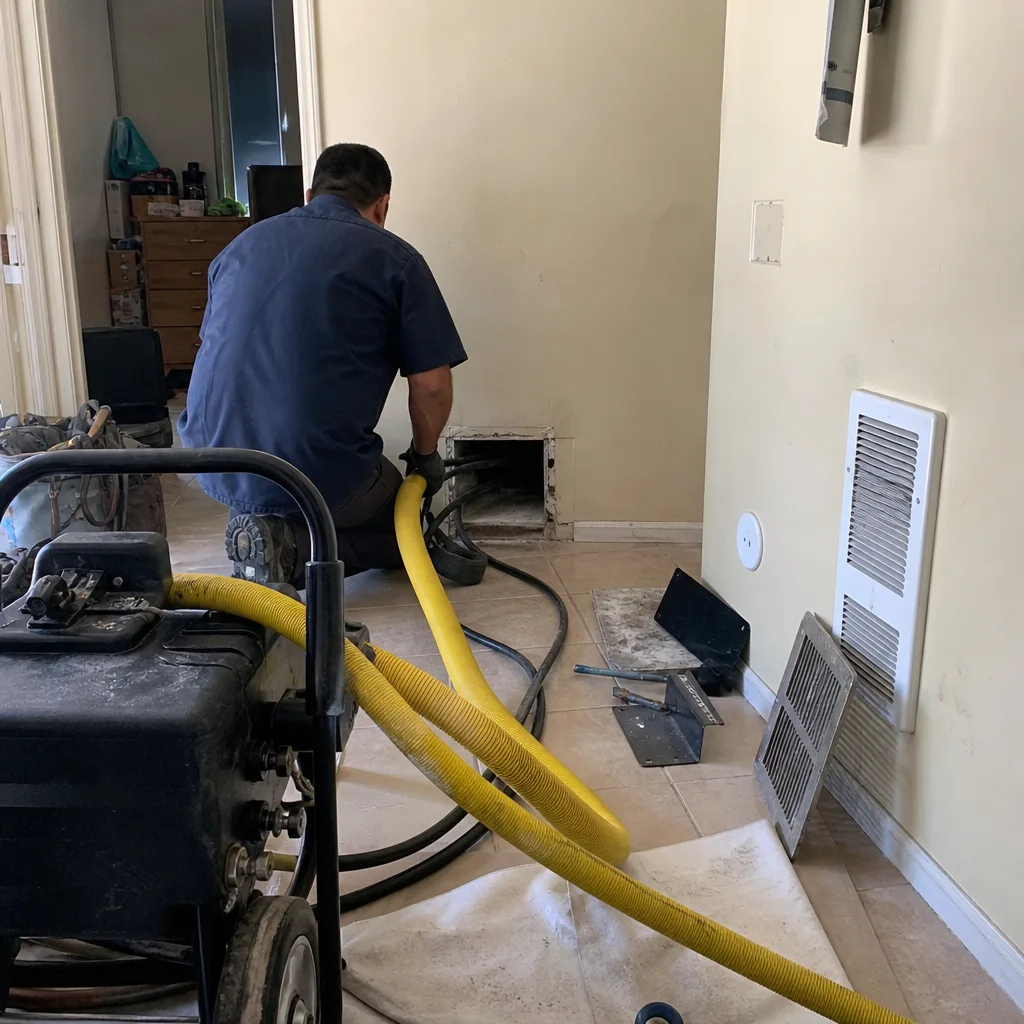 Before
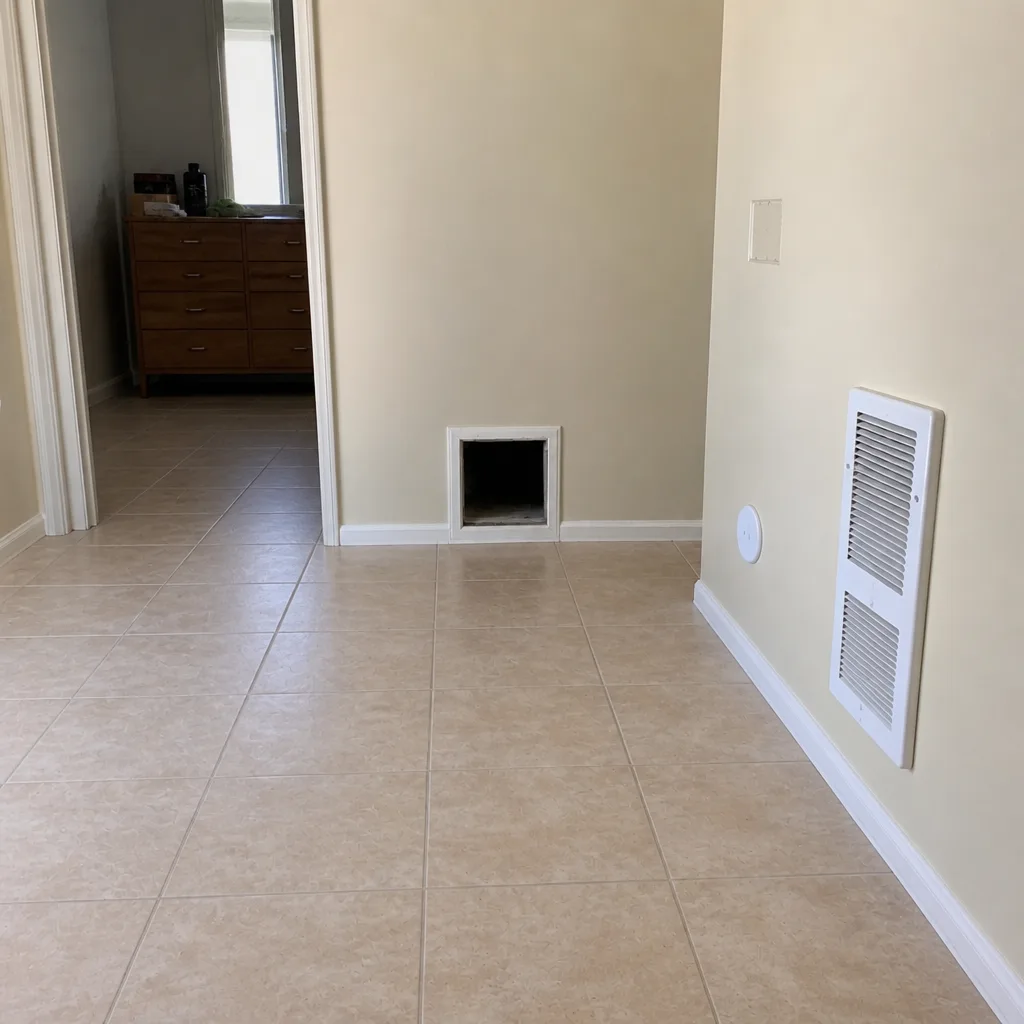 After
When to Call a Professional
Call a professional if you’ve noticed any of the following: construction or renovation dust that has clearly reached the supply registers, musty or stale odors when the HVAC cycles on, visible debris or pest evidence at a grille, sagging flex duct, or a sudden jump in dust settling in a room with heavy air movement. If the home has never had a full-system cleaning or you’re buying a property with unknown service history, an assessment is worth scheduling. A specialist can tell you within minutes whether the system needs cleaning or just a good filter and a wiped-down grille. Stanton Air Duct Cleaning Pros offers free estimates in Stanton – call (877) 820-9417. Call (877) 820-9417. We answer 24/7. Fast dispatch from 7am to 7pm, Sunday through Friday.
Frequently Asked Questions
Yes, for register-level maintenance only. Cleaning and washing grille covers, wiping the visible frame, and wiping the first few feet of duct you can reach with a cloth are legitimate, low-risk tasks that keep the surface layer from caking. It is not worth doing if you’re trying to clean the duct runs themselves, because consumer equipment can’t hold negative pressure against the system’s static pressure. Call (877) 820-9417 for a free estimate on a full-system cleaning that covers the parts you can’t reach.
Pricing is set per job by a written estimate, because a one-story ranch and a multi-zone home have very different duct lengths. We don’t quote per-vent teaser figures. The estimate is free, the price agreed in writing is the price, and before-and-after photos document what was actually removed. Call (877) 820-9417 for an exact quote.
Lower quotes typically reflect smaller equipment, a smaller scope, or both. A provider using a portable vacuum cannot extract what a Rotobrush and negative-air setup can, so the cleaning is easier to sell cheaply. The low number often becomes a larger invoice once the crew is on site and upsells start. Ask what equipment is used and what the written scope covers before comparing prices.
Ask for before-and-after photos of your own duct runs and the air-handler plenum, not stock images. A specialist can capture those easily. If a provider can’t or won’t document the work with pictures, you have no way to verify anything. We photograph every job we perform.
Most homes need it less often than cleaning companies suggest, and more often than most homeowners actually do it. A reasonable interval depends on filter habits, pet population, recent renovation, and local dust loading. The honest answer is to check the condition of the system with an assessment rather than committing to a fixed calendar. Call (877) 820-9417 to schedule one and get a straight answer.
Cleaning can remove visible mold growth from duct surfaces, but it doesn’t fix the moisture source that allowed the growth. That’s why our scope includes air sanitizing with Abatement Technologies filtration equipment – the same category used in mold and restoration work – paired with duct repair and sealing to eliminate the moisture entry point. Call (877) 820-9417 to talk through your situation.
The Bottom Line
DIY duct cleaning is real work, but it’s limited to the parts of the system you can see and reach. The interior of the trunk line, the supply branches, and the air-handler plenum require sustained negative pressure and a rotary brush to clean properly, and no consumer tool delivers that combination. Do the register maintenance yourself – it’s worth doing and it extends the interval between cleanings. Book the full-system cleaning with a specialist who names their equipment and photographs the work, because that’s the only way to know the job was actually done. Stanton Air Duct Cleaning Pros handles the full scope in Stanton: cleaning, repair, sealing, dryer vents, and air quality.
Ready for a real answer on your duct system? Call (877) 820-9417 for a free estimate. We answer 24/7. Fast dispatch from 7am to 7pm, Sunday through Friday. Learn more about our Stanton Air Duct Cleaning Pros team and how we handle a whole-home duct cleaning from register to air handler.
Written by the team at Stanton Air Duct Cleaning Pros.