
Last updated November 23, 2026
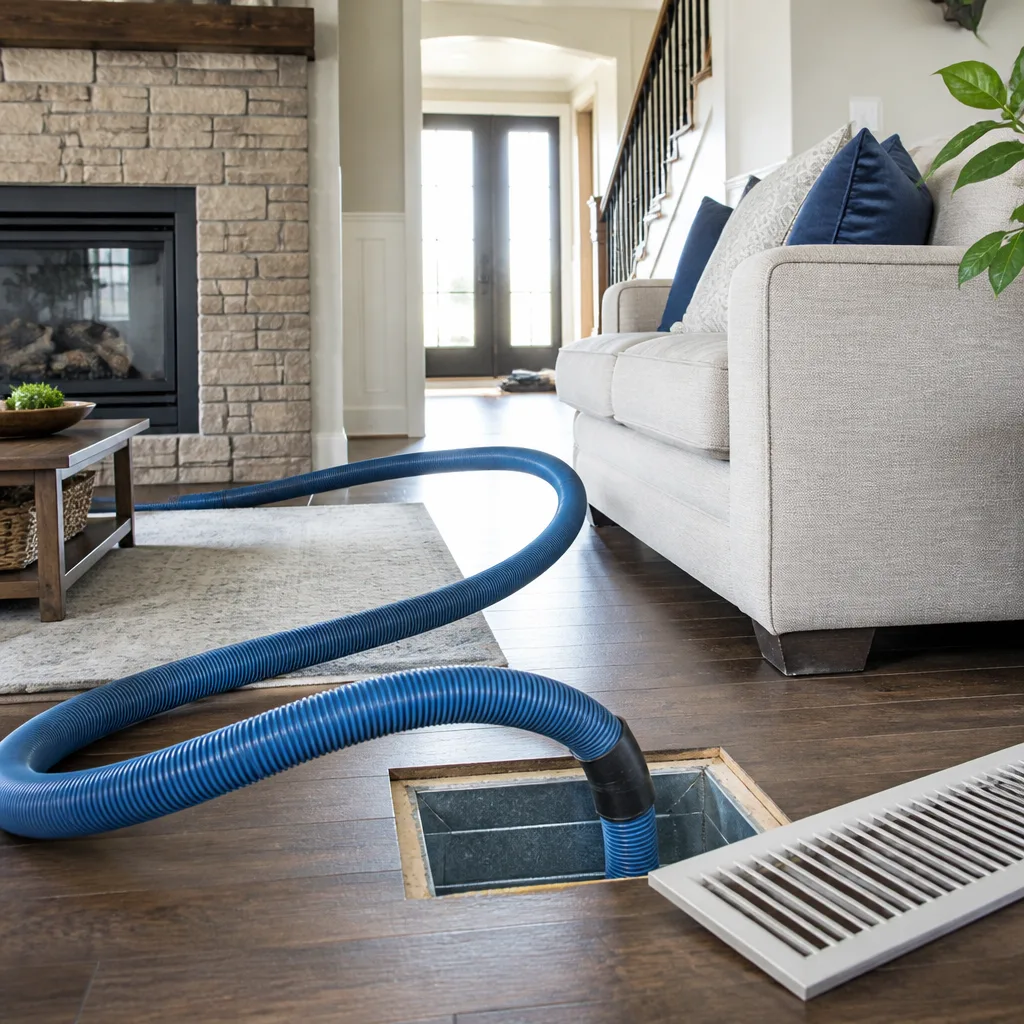 Whole-home duct cleaning
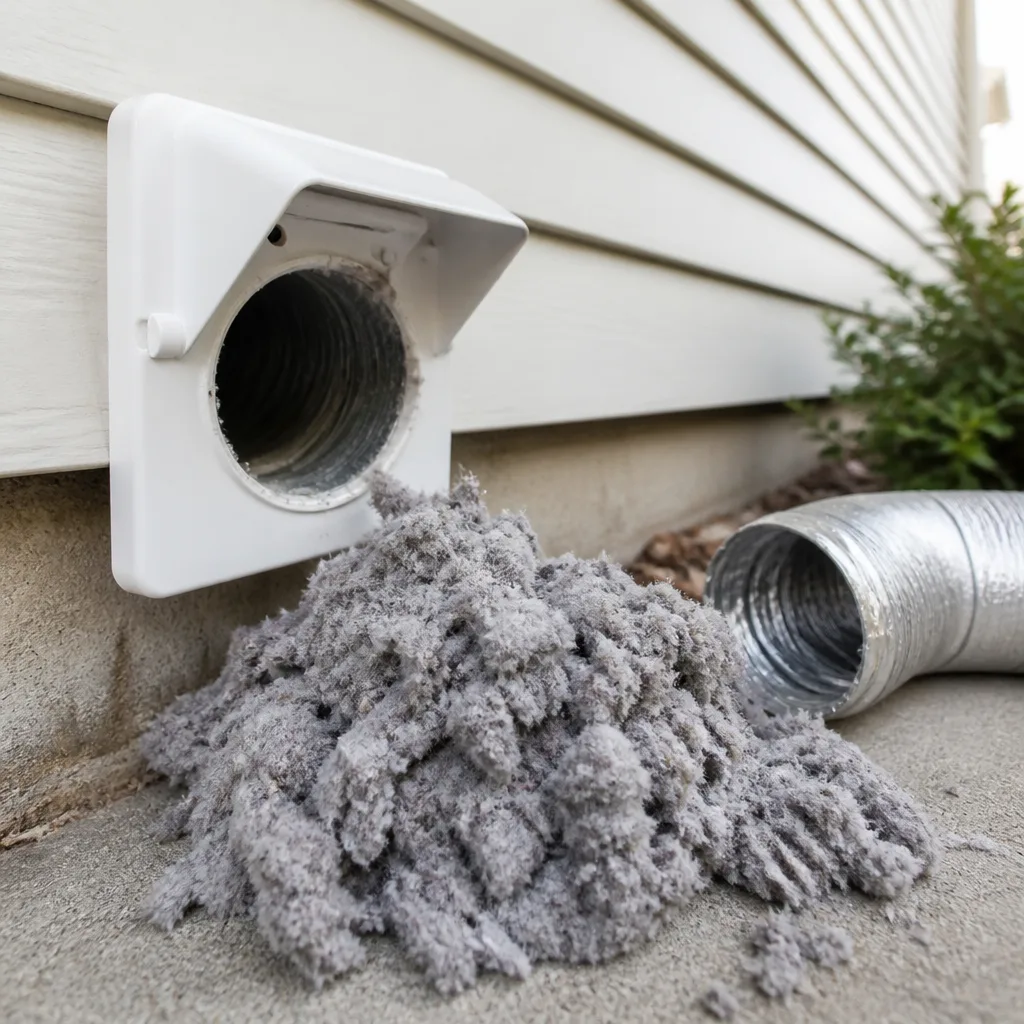 Dryer vent cleaning
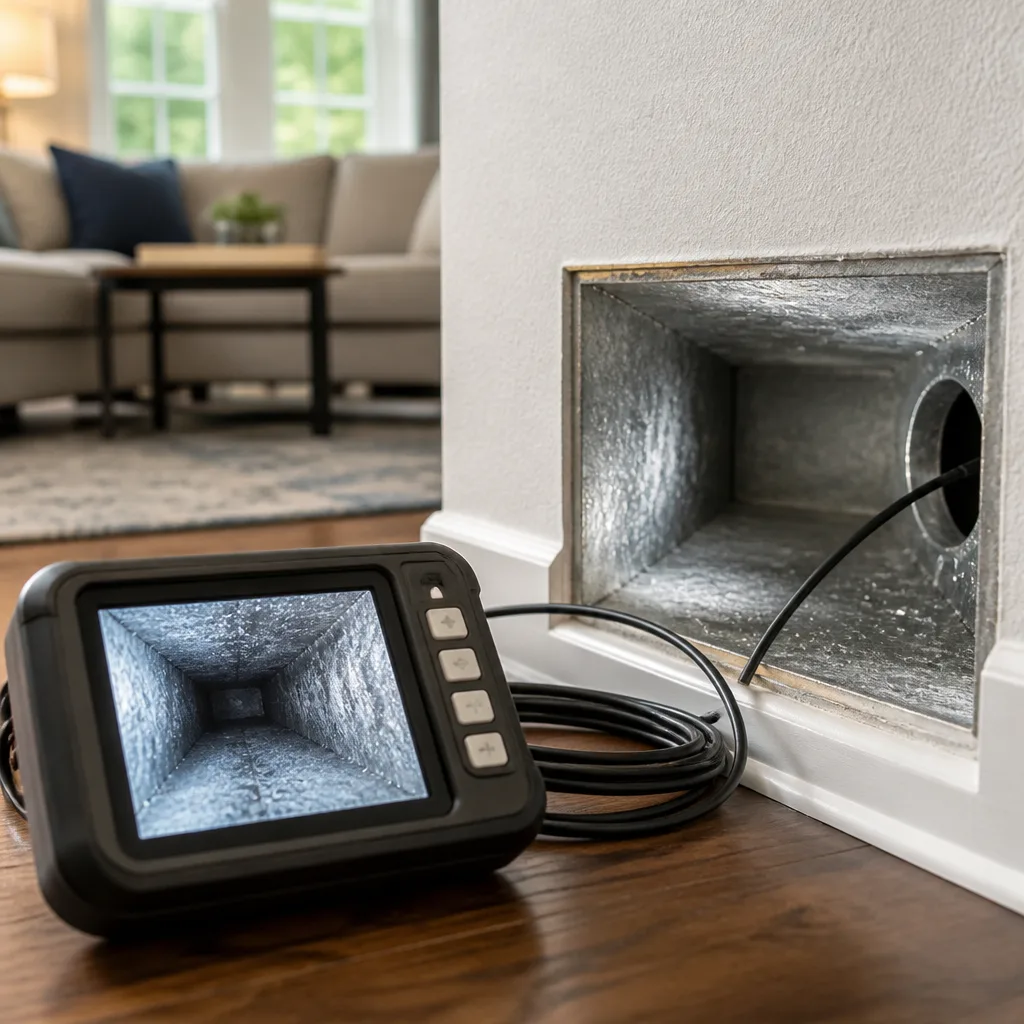 Camera inspection
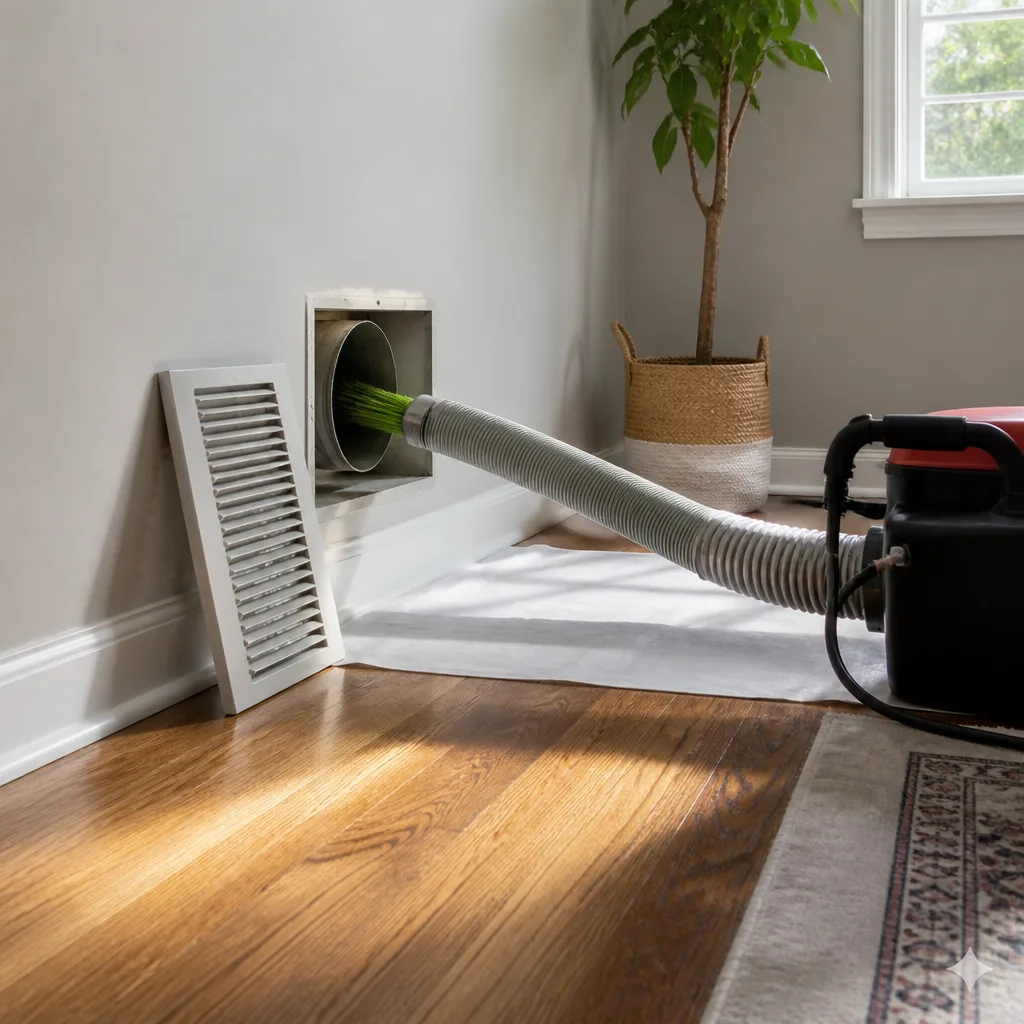 Sanitizing & deodorizing
Whole-system duct and dryer vent check with before-and-after photos - you see exactly what came out of your vents
That "$99 whole-house special" is a bait ad - the real number appears once they are in your hallway, or the "clean" is a shop-vac at the register. We photograph the inside of your ducts before and after instead.
The Complete Guide to Air Duct Cleaning in Stanton
Most people assume duct cleaning is about what they can see – the dusty registers in the hallway, the vent covers in the bedroom. It isn’t. The debris that matters is the debris you can’t reach with a vacuum from the hardware store, and in Stanton the specific makeup of that debris is different from what you’d find a few hours inland or up the coast. Stanton sits in a corridor that pulls both marine layer humidity off the coast and dry particulate from inland wind events, a combination that causes duct debris to compact differently than in most of California. Standard cleaning intervals and generic methods don’t always hold here, which is exactly what this guide covers: how local conditions shape what a thorough cleaning actually requires, and what to look for when you hire.
Quick Answer
Air duct cleaning in Stanton works best when it’s built around local conditions rather than a fixed schedule: debris here compacts from a mix of marine humidity and dry inland wind events, so a proper job uses rotary brush agitation followed by negative-pressure extraction rather than a single surface pass. A full-system inspection, professional-grade equipment, and documented before-and-after evidence are what separate real cleaning from a vacuum-over-the-registers visit. Most Stanton homes benefit from professional attention when there are visible signs of buildup, musty odors, or a much-reduced airflow.
Styles & brands we work with
- Whole-home duct cleaning
- Dryer vent cleaning
- Camera inspection
- Sanitizing & deodorizing
Table of Contents
- Why Stanton’s Climate Changes the Equation for Duct Cleaning
- How Santa Ana Wind Events Force Particulate Into Return-Air Pathways
- Why Stucco and Drywall Construction Sheds Silica Deep in Trunk Lines
- The Tool Sequence Your Contractor Should Follow – Rotobrush, Nikro, and Order of Operations
- What a Full-System Inspection Covers Beyond the Registers
- How to Read a Post-Cleaning Report
- Signs It’s Time for Air Duct Cleaning in Stanton
- Honeywell and Aprilaire Systems: What We See in Stanton Homes
Why Stanton’s Climate Changes the Equation for Duct Cleaning
Stanton sits in a band of Southern California where two very different air masses alternate. On some days the marine layer rolls in from the coast and pushes cool, humid air inland. On other days dry, dust-heavy air moves west from the desert behind Santa Ana wind events. That swing matters because duct debris responds to humidity differently than dry particulate. Moisture softens existing dust and causes it to bind to duct walls. Dry particulate then lands on top of that softened layer and gets compacted into a firmer deposit by every pass of heated or cooled air through the system.
The result is that Stanton duct systems tend to hold a harder, denser layer of debris than duct systems in a place with more stable air. A vacuum-only cleaning that works in a mild climate may barely disturb the deposit here – it pulls the loose top layer and leaves the bonded layer underneath. That’s the single biggest reason we tell Stanton homeowners to ask a contractor what equipment they’re bringing and in what order they plan to use it.
There’s a second local factor worth naming: homes in this part of Orange County often run their HVAC systems with windows closed for many months of the year because of nearby traffic corridors and seasonal air conditions. Closed-window operation means the system is pulling the same air through the same channels day after day, and each pass deposits a little more. The practical takeaway is that “clean the ducts every few years” as a fixed rule of thumb is not a reliable guide here. What matters is what the inspection finds, not what the calendar says.
How Santa Ana Wind Events Force Particulate Into Return-Air Pathways
Santa Ana winds are the reason duct cleaning in Stanton requires attention to the return-air side of the system, not just the supply vents. When a strong dry wind event hits, the pressure outside the house changes and the building envelope leaks in ways it doesn’t during still weather. Air gets pushed in through gaps you’d never notice – around windows, at door sweeps, through attic penetrations, behind outlets. That air carries fine dust, pollen, and dry particulate, and the return-air grille is one of the main places it goes once it’s inside a house.
The problem is that routine filter changes don’t catch all of it. A filter catches what flows through it at the air handler. It doesn’t catch particulate that settles in the return plenum before it ever reaches the filter, or what enters and settles in the return trunk line. Over the course of a season, return-air runs in Stanton homes accumulate deposits that a homeowner changing filters every month would never suspect. We’ve pulled enough of this out of return runs to know it doesn’t show up in a standard filter change.
A full-system approach in Stanton has to include:
- Closing off the supply registers so cleaning action doesn’t push debris toward the living space
- Running negative pressure from the air handler end so loosened material travels toward extraction, not the rooms
- Agitating the full length of every return run, not just the trunk line
- Documenting return-side findings separately from supply-side findings in the final report
Return ducts on many Stanton homes are short and underfloor or in the attic, which makes them easy to overlook during a surface-level cleaning. They shouldn’t be. Most of what enters a house during a wind event goes through the return side more than the supply side.
Why Stucco and Drywall Construction Sheds Silica Deep in Trunk Lines
Stucco exteriors and drywall interiors are the standard construction for most Stanton-area homes, and both materials make a specific contribution to duct debris that homeowners rarely hear about. Stucco and drywall contain silica-bearing compounds, and both can shed fine mineral dust under normal conditions – not from damage, just from the natural aging and settling of the material. That dust is fine enough to slip past filter types that catch larger particulate, and it’s heavy enough that once it moves into a duct system it tends to settle deeper and travel further before it drops out of the airstream.
What this means in practice: silica-laden dust from construction materials in a typical Stanton home doesn’t get caught near the registers. It travels through the supply trunk line, makes its way into the main trunk and the branch runs, and settles in the lower sections where the air slows. That’s why a register-level cleaning can look perfectly tidy while the trunk lines upstream hold most of the actual deposit. The visible vent tells you almost nothing about the state of the system behind the walls.
This settling behavior has two implications for how cleaning works here:
- Trunk lines get first priority. The large-diameter horizontal runs in a Stanton home are where construction dust and windborne particulate collect. Any cleaning that starts at the branch runs and works backward misses the main deposit.
- Agitation matters more than suction alone. Compacted mineral dust needs mechanical loosening before extraction can pull it out. That’s why rotary brushing is a step, not an optional upgrade.
If your home has had recent drywall or stucco work, or if it’s older and has never been professionally cleaned, the trunk-line deposit is likely the dominant issue. That’s part of why we treat air duct cleaning as a whole-system job rather than a per-vent service. The register is the smallest surface area involved.
The Tool Sequence Your Contractor Should Follow – Rotobrush, Nikro, and Order of Operations
The order in which cleaning tools are used changes the result in Stanton more than it does in most other places, because the deposits here are compacted by the climate cycle. Doing the steps out of order doesn’t damage anything, but it does mean half the loosened material ends up resettling somewhere else in the system. Here’s the sequence we use, and the sequence you should ask about when you’re hiring.
- System inspection and air handler isolation. Before anything gets moved, the technician shuts the system down, isolates the air handler, and inspects the coil, plenum, and main trunk. This establishes where the deposit actually is and in what order the runs should be addressed.
- Containment and negative pressure. A Nikro negative-air machine hooks up at the air handler end of the system and pulls a steady vacuum through the entire duct network. This is the step that keeps debris from drifting back into the living space while the work is happening.
- Rotary brush agitation, working from the far end in. The Rotobrush rotary brush system goes into the supply and return runs from the terminal end and works back toward the main trunk. Brush agitation loosens the compacted deposit without damaging flex duct or sheet metal. This is the step that vacuum-only cleaning skips, and it’s the step that matters most in Stanton because it’s the only way to break up the humid-then-dry layered deposit.
- Extraction of loosened material. The negative-air machine pulls the loosened material out of the system. This is the step where a proper extraction machine pays for itself: the loosened deposit is now airborne within the system, and it has to be captured rather than allowed to move downstream.
- Coil and plenum cleaning. With the ducts clear, the evaporator coil and plenum surfaces get cleaned and, where appropriate, treated. A coil that’s been serving a Stanton home that runs year-round tends to hold more debris than one in a milder climate.
- Sanitizing with Abatement Technologies equipment. Where sanitizing is part of the job, we use Abatement Technologies filtration equipment to run a proper air-clean cycle during treatment. This is the same class of equipment used in restoration and mold-remediation work, which tells you the standard of protection the treatment should meet. It’s not a spray bottle and a prayer.
- Verification and documentation. Before/after photos of the runs and the air handler, a written summary of what was found, and a walkthrough with the homeowner. This is the step that lets you confirm what was done rather than take the technician’s word for it.
If a contractor can’t tell you what equipment they have on hand and the order they’ll use it in, that’s the answer you need. For a broader look at how the surrounding mechanicals factor in, see HVAC cleaning, which covers the air handler side of the system.
What a Full-System Inspection Covers Beyond the Registers
A proper inspection in a Stanton home is more involved than pulling the vent covers and looking inside. The visible registers are the least useful part of the whole picture. Here’s what a thorough inspection covers, and why each element matters in this climate.
- Coil access and condition. The evaporator coil is where condensation happens, and a coil that’s caked with debris becomes a breeding ground for microbial growth in a household that runs the system most of the year. Coil inspection means looking at the fin surface, not just the filter slot.
- Plenum condition. The plenum is the box that connects the air handler to the trunk line. It’s often the dirtiest surface in the system because dust that passes the filter tends to settle here first. Inspection means opening the plenum and looking, not just noting that it exists.
- Flex duct integrity. Many Stanton homes have at least some flex duct in the branch runs or attic. Flex duct can sag, kink, or tear at the collar connections, and a torn flex run is both a cleaning problem and an efficiency problem. Inspection should include checking for tears, crushed sections, and disconnected collars.
- Return-air pathways. As covered above, the return side is where a lot of Stanton’s windborne particulate lands. Inspection needs to trace return runs all the way from the grille back to the air handler.
- Filtration type and airflow compatibility. Some homes in Stanton have had high-MERV filters installed that the duct system wasn’t designed for. An undersized filter slot with an oversized filter rating is a common airflow bottleneck. Inspection should confirm that the filtration matches the system.
- Signs of moisture or microbial growth. In a marine-layer climate, moisture finding its way into an insulated duct run is a real risk. Any musty smell, visible staining, or condensation evidence should be flagged during inspection and treated as a separate finding from ordinary dust.
If leaks are found during the inspection, they should be fixed rather than cleaned around. Sealing a duct leak that’s been pulling unfiltered attic air into the supply stream is often the single highest-value repair in the whole system. That’s why we treat HVAC cleaning work and duct repair as related, not separate.
How to Read a Post-Cleaning Report
The report you get after the job is finished is the strongest tool you have for confirming what actually happened. A report from a credible Stanton contractor should be specific and verifiable. Here’s what to look for and what to be suspicious of.
- Before-and-after photos of your own ducts. Not stock photos of a clean duct. Not a generic diagram. Photographs of the actual runs in your home taken at the same angle before and after. If a company won’t show you these, ask why.
- Written findings from the inspection. Not just “system cleaned.” A list of what was found: which runs had heavy deposit, whether the coil was fouled, whether any flex duct was compromised, whether any seams were leaking. You should be able to point to a specific run and read what was found there.
- Separate reporting for supply and return sides. Return ducts in Stanton homes often have a different composition of deposit than supply ducts. The report should reflect that distinction rather than treating the whole system as one uniform job.
- Verification photographs of the air handler and coil. The air handler is where the most consequential work happens, and it’s the part of the system that a homeowner can’t inspect themselves. Photos of the coil before and after are the proof.
- Sanitizing documentation where sanitizing was performed. If a sanitizing step was included, the report should confirm which Abatement Technologies equipment was used and what the treatment protocol was. A one-line note that “system was sanitized” doesn’t meet that standard.
- Notes on items excluded from the job. If a run couldn’t be cleaned because it was inaccessible, or a leak was found that requires a separate repair, the report should say so clearly. A report with no exclusions is a report you should question.
If you read the report and can’t answer the question “how do I know the work was actually done?” from the document itself, the report hasn’t done its job. Documented work is the whole point of using a professional-grade process.
Signs It’s Time for Air Duct Cleaning in Stanton
Because a fixed cleaning schedule isn’t reliable in this climate, the signs below are a better trigger than the calendar. If two or more apply to your home, it’s worth having the system inspected.
- Musty odor when the system first kicks on. A smell that appears only at startup and fades after a few minutes usually points to deposit sitting in the air handler or plenum. In Stanton, humidity cycles make this more likely, not less.
- Visible dust blowing from supply vents. If you’re seeing dust streams from a register when the air comes on, deposit is loose enough to be blown downstream. That’s a sign the system needs attention now, not next season.
- Recurring allergy flare-ups indoors. Particulate in the duct system can contribute to indoor air quality problems. If the symptoms follow the HVAC schedule, that’s a correlation worth investigating.
- Airflow that feels weaker than it used to. Reduced airflow can come from a fouled coil, a crushed flex duct, or a filter slot problem. All of those get identified during a proper inspection.
- Recent construction, remodeling, or drywall work. Silica-bearing construction dust from even a small remodel can settle in the trunk lines. If you’ve had work done in the last year and never had the ducts cleaned afterward, it’s worth a look.
- A recent home inspection flagged the issue. Home inspectors often note visible deposit in the air handler or plenum. If yours did, don’t wait for a symptom to show up.
For local context, homes grouped near the center of Stanton around Beach Boulevard and Katella tend to have more traffic-driven particulate exposure than houses toward the western edge, so the trigger point can vary even within the same city. See our dryer vent cleaning guide for the other major duct-related maintenance item in your home.
Honeywell and Aprilaire Systems: What We See in Stanton Homes
Many homes in the area have whole-home air-quality components integrated with the HVAC system: Honeywell filtration cabinets, Aprilaire humidifiers and media filters, and similar equipment. These are worth understanding because they interact with duct cleaning in a specific way: a filter cabinet upstream of the coil is only as effective as the seal around it. A Honeywell cabinet with a compromised gasket lets unfiltered air bypass the filter, which defeats most of the point of having one. Inspection in a Stanton home with these systems should include checking the cabinet seal, not just changing the media.
Aprilaire media filters and humidifier units often sit in the duct system and need careful handling during cleaning. A technician who doesn’t know what’s in the system can damage or displace a humidifier pad or media frame during agitation. That’s why we walk through what’s installed before any cleaning begins. If a system component turns out to be damaged or worn during the inspection, the fix is a conversation before the cleaning, not after.
Sanitizing is where we deliberately raise the standard. Not every duct-cleaning job needs sanitizing, but when it’s called for, Abatement Technologies equipment and a documented protocol are what we use. That’s a different class of process than a spray treatment with no record and no follow-up. If you’re comparing companies, ask what equipment they use for sanitizing and what documentation you’ll get afterward. The answer tells you most of what you need to know about how they work.
Common Mistakes to Avoid
- Hiring on price alone for a Stanton job. Duct cleaning in this climate requires rotary agitation and proper negative-pressure extraction; a low quote usually reflects a shop-vac and a surface pass. Two sentences of questions about equipment will tell you what’s actually included.
- Assuming a filter change is doing what you think it’s doing. A filter catches what reaches the air handler and nothing else. Windborne particulate that settles in the return runs upstream never sees a filter at all.
- Scheduling a register-only cleaning. If the contractor’s plan starts and ends at the visible vents, the trunk lines and air handler, which hold most of the deposit in Stanton homes, aren’t being addressed.
- Letting recent construction dust go uncleaned. Drywall and stucco work leaves silica-bearing dust that settles deep in trunk lines. If you had work done and haven’t cleaned the ducts afterward, that deposit is still in the system.
- Ignoring leaks that come up during inspection. A duct system that leaks pulls attic or wall-cavity air straight into the supply stream. Cleaning around a leak is half a job; sealing it is the other half.
- Accepting a report with no photos or no specifics. A one-line invoice isn’t documentation. Insist on before-and-after photos of your own runs, findings by run, and a written summary of anything excluded from the job.
- Assuming a fixed schedule matches what your home needs. The climate cycle here compacts debris faster than a calendar-based approach can account for. Inspect based on signs, not on a number of years.
See the difference
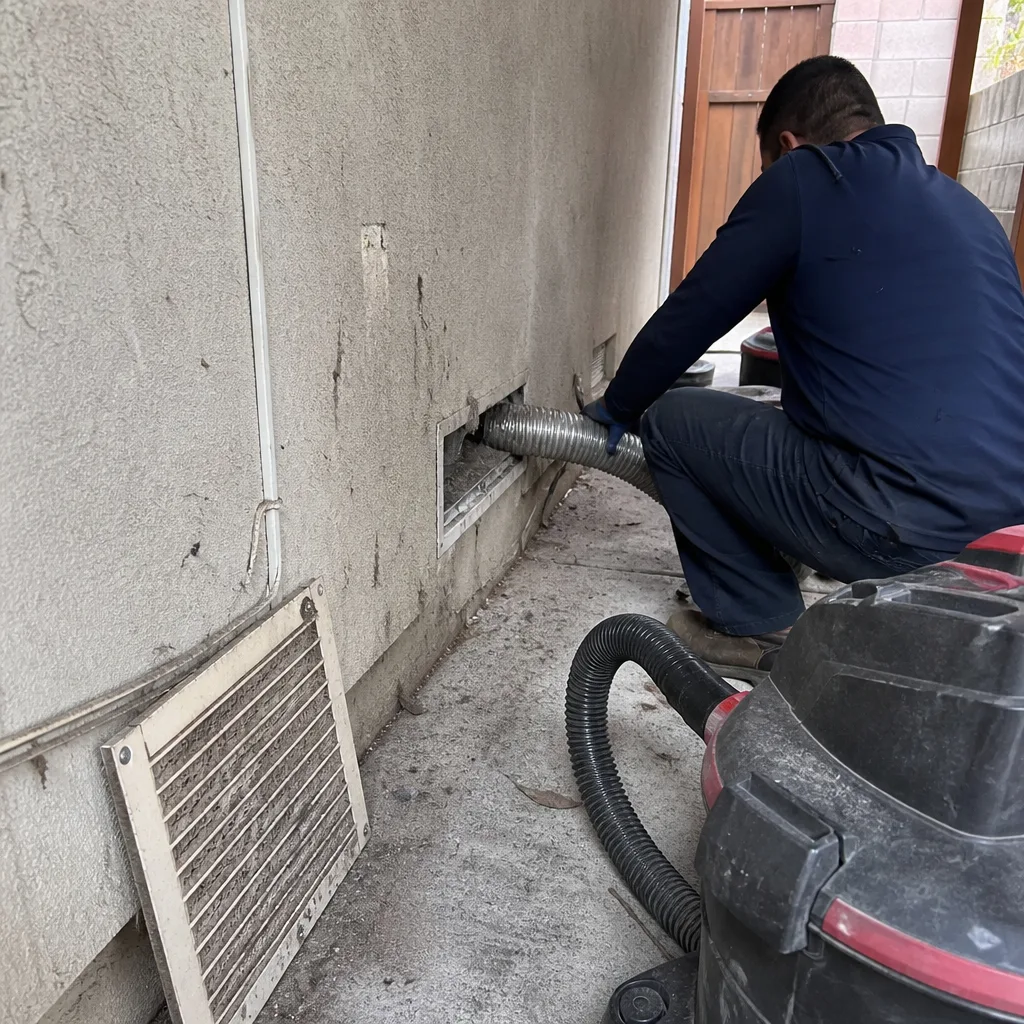 Before
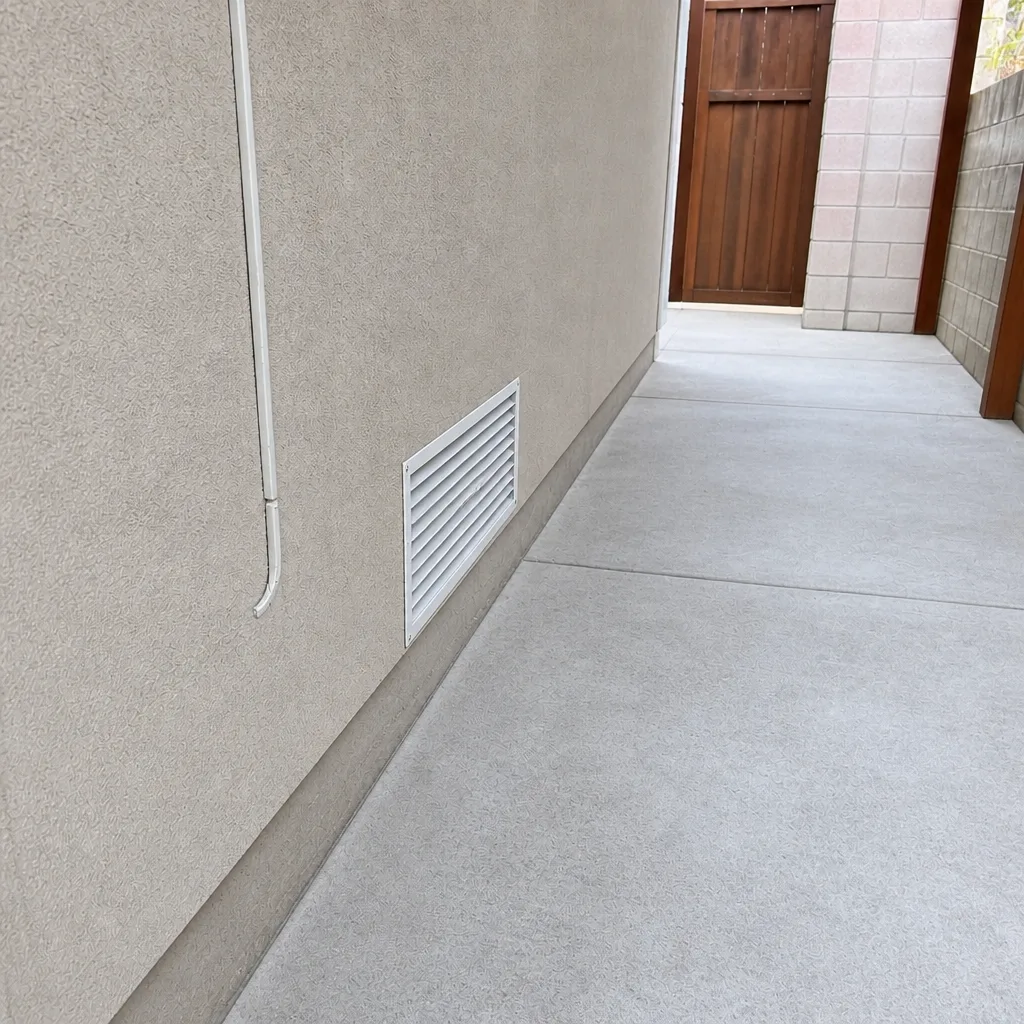 After
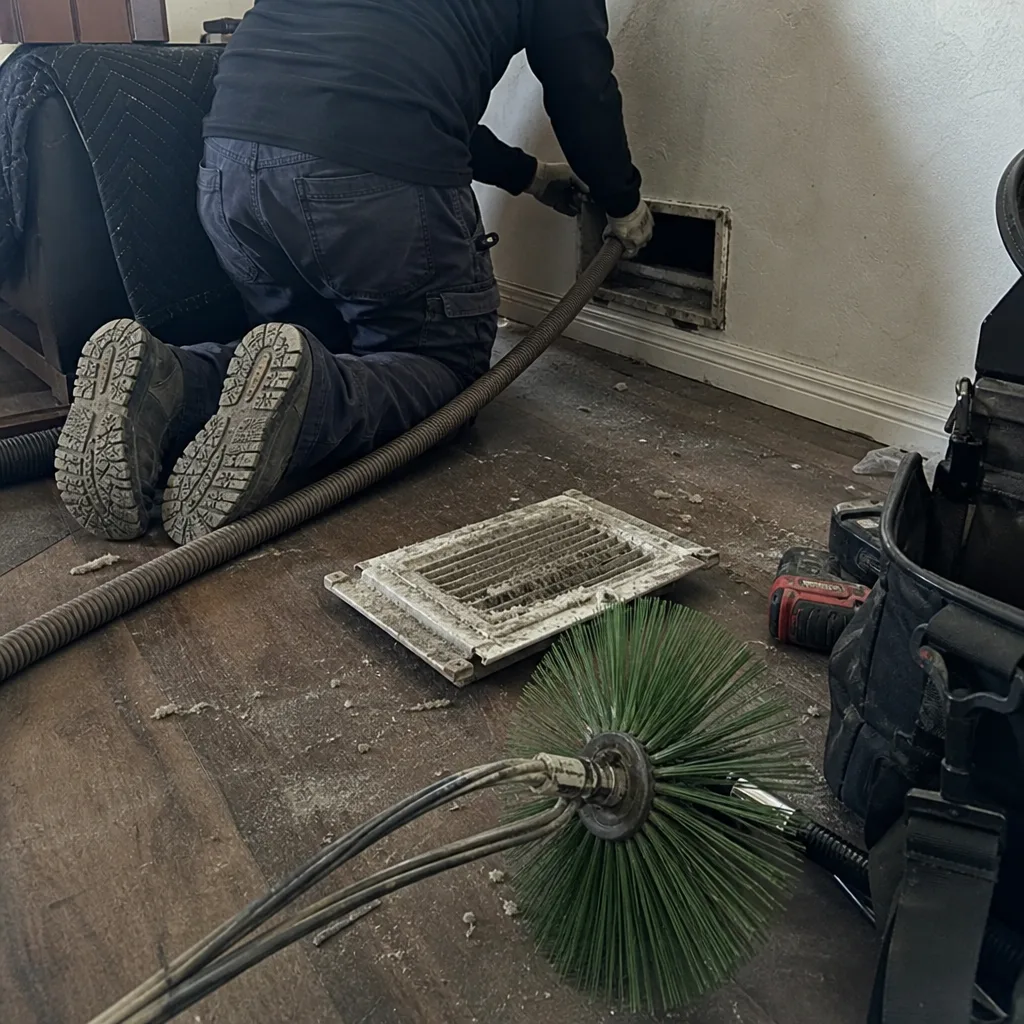 Before
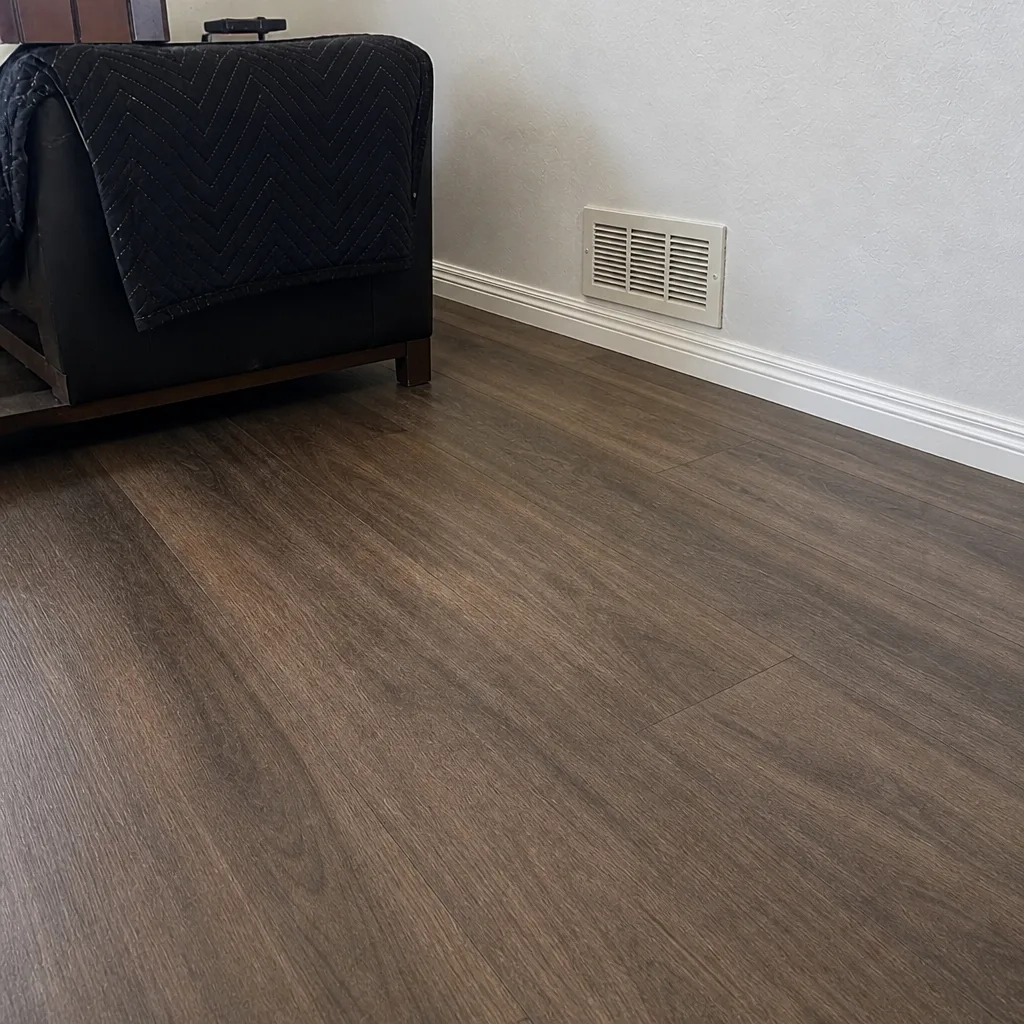 After
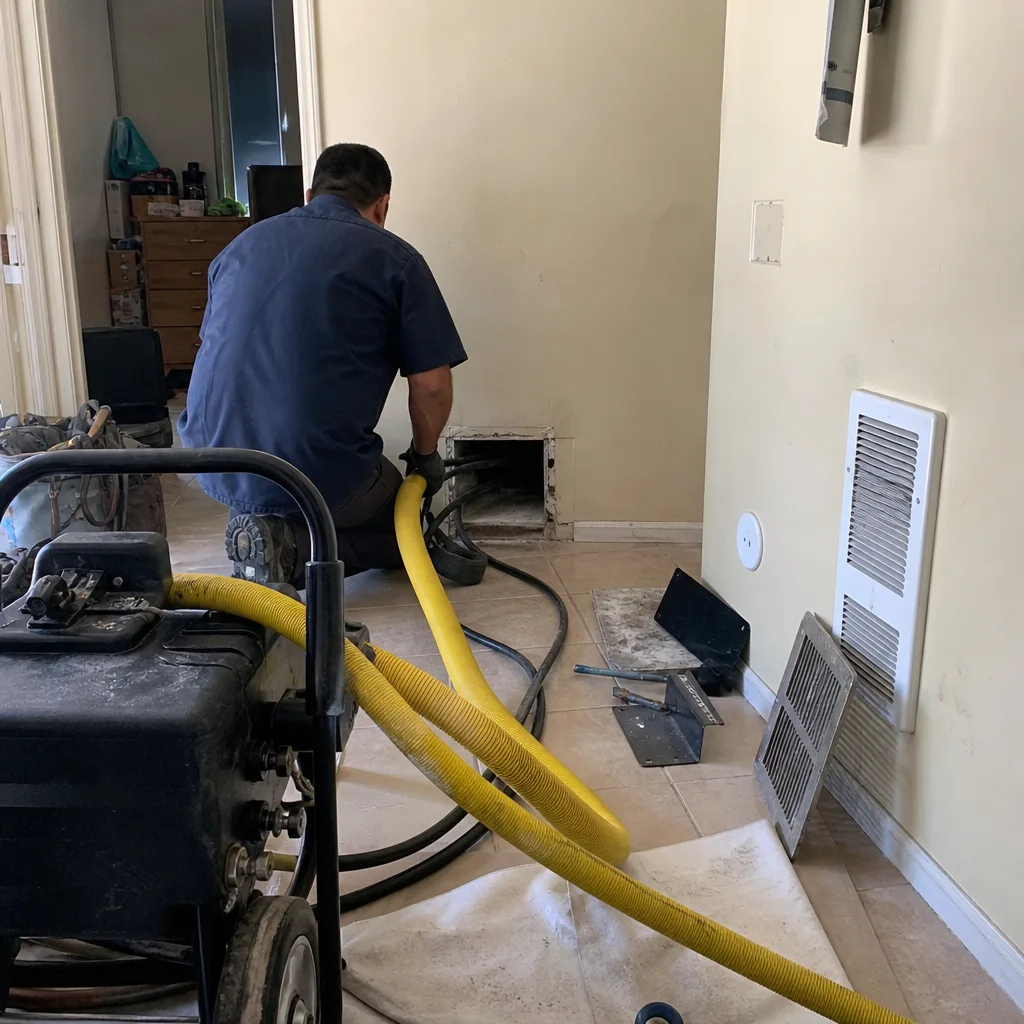 Before
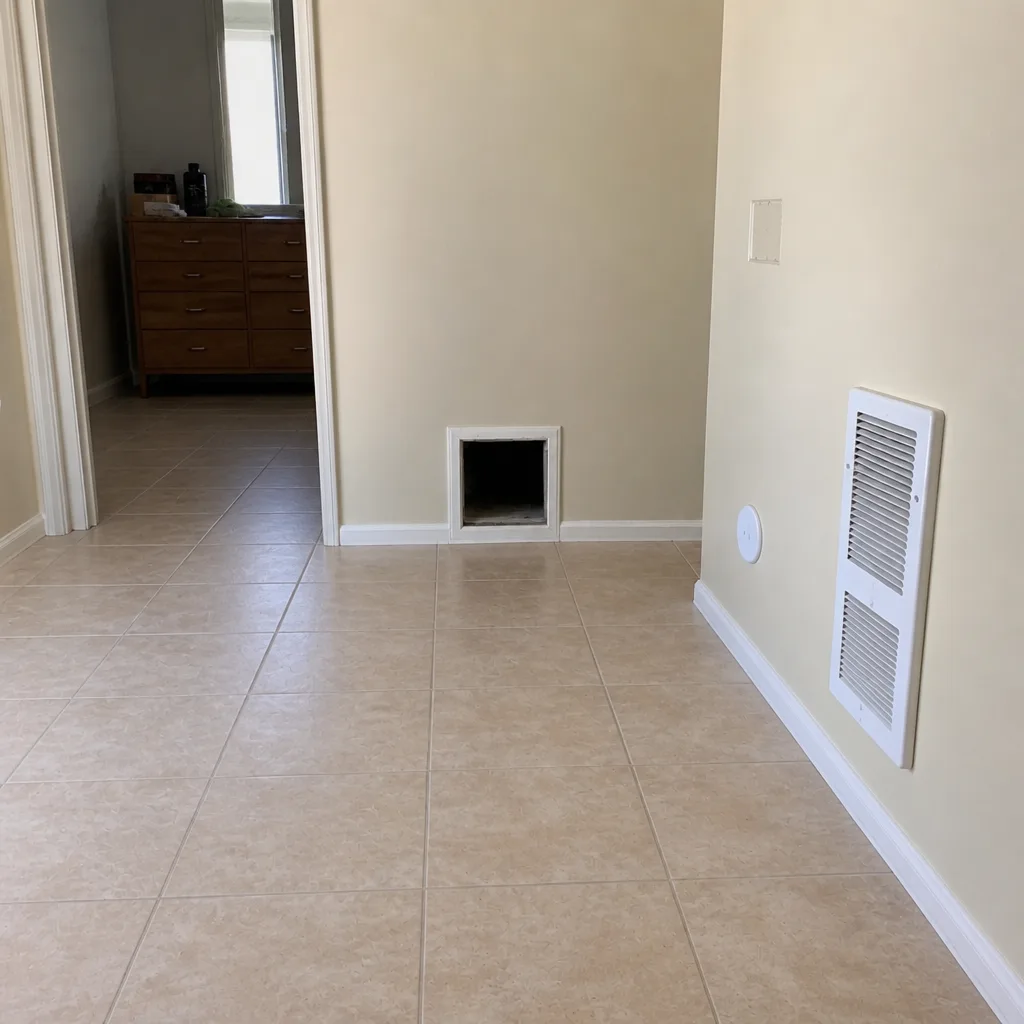 After
When to Call a Professional
Some symptoms are worth a phone call right away: a musty smell that appears every time the system starts, visible dust blowing from a register, an unexplained drop in airflow, or a home inspection report that flagged the air handler. Any of those is a sign that the system should be inspected rather than left for the next seasonal filter change. If your home has had drywall or stucco work in the last year, or if it’s never had a professional cleaning and there are allergy symptoms indoors, an inspection is the right first step. Stanton Air Duct Cleaning Pros offers free estimates in Stanton – call (877) 820-9417. We answer 24/7. Fast dispatch from 7am to 7pm, Sunday through Friday. The local pro is licensed and insured as their state requires, and we set one flat price per system before any work starts.
Frequently Asked Questions
The cost depends on the size of the system, the number of runs, and whether repair or sealing is included. That’s why we don’t quote a per-vent price – a real job is a whole-system job, and a per-vent quote encourages a surface pass. You’ll get one flat price per system in a written estimate before any work starts, and the estimate is free. Call (877) 820-9417 for an exact quote.
Usually because the equipment and scope are different, not because the company is more efficient. A quote that doesn’t include rotary brush agitation and negative-pressure extraction is a vacuum-over-the-registers job, and it doesn’t address the compacted deposit that forms in Stanton’s climate cycle. Ask what equipment is used and in what order. The quote should stand up to that question. Call (877) 820-9417 to compare what’s included in ours.
There’s no fixed interval that holds here because the local climate compacts debris differently from a stable climate. Signs matter more than the calendar: musty odor at startup, visible dust from registers, reduced airflow, or recent construction dust in the system are the trigger points. Inspect based on what you observe, not a fixed number of years. Call (877) 820-9417 to schedule an inspection.
You should have before-and-after photos of your own ducts, not stock images, plus a written report listing findings by run and a walkthrough of anything excluded from the job. If the report doesn’t let you answer that question on your own, it hasn’t done its job. We document every job this way. Call (877) 820-9417 to ask what a report from us looks like.
Return ducts are part of every full-system job we do, because they’re where Santa Ana wind events deposit most of the windborne particulate in Stanton homes. A cleaning that skips the return side leaves the largest deposit untouched. If a company quotes you without mentioning returns, that’s worth a follow-up question. Call (877) 820-9417 to talk through your system.
Yes – if the inspection finds a leak or a compromised flex run, we can repair and seal it rather than clean around it. A leaking duct pulls unfiltered air into the supply stream, which undermines the point of cleaning. Repair and sealing are part of the scope for that reason. Call (877) 820-9417 to have a system inspected and the scope explained before any work.
The Bottom Line
Air duct cleaning in Stanton is a local problem before it’s a general one. Marine-layer humidity followed by dry Santa Ana wind events creates a compacted deposit that a vacuum-only cleaning can’t touch. Stucco and drywall construction leaves silica-bearing dust settled deep in trunk lines, not at the registers. The job that works here uses rotary brush agitation followed by negative-pressure extraction, inspects the full system including coil, plenum, and flex duct integrity, and finishes with a documented report you can actually verify. If you take one thing from this guide: judge a contractor by the equipment they name, the order they use it in, and the documentation they hand you at the end. That’s the whole standard.
Call (877) 820-9417 for a free estimate. We answer 24/7. Fast dispatch from 7am to 7pm, Sunday through Friday. Visit Stanton Air Duct Cleaning Pros for the full service list. Our technicians have up to 13 years of experience, and we work with professional-grade equipment from Rotobrush, Nikro, Honeywell, Aprilaire, Abatement Technologies, and Guardsman on every job.
Written by the team at Stanton Air Duct Cleaning Pros.