
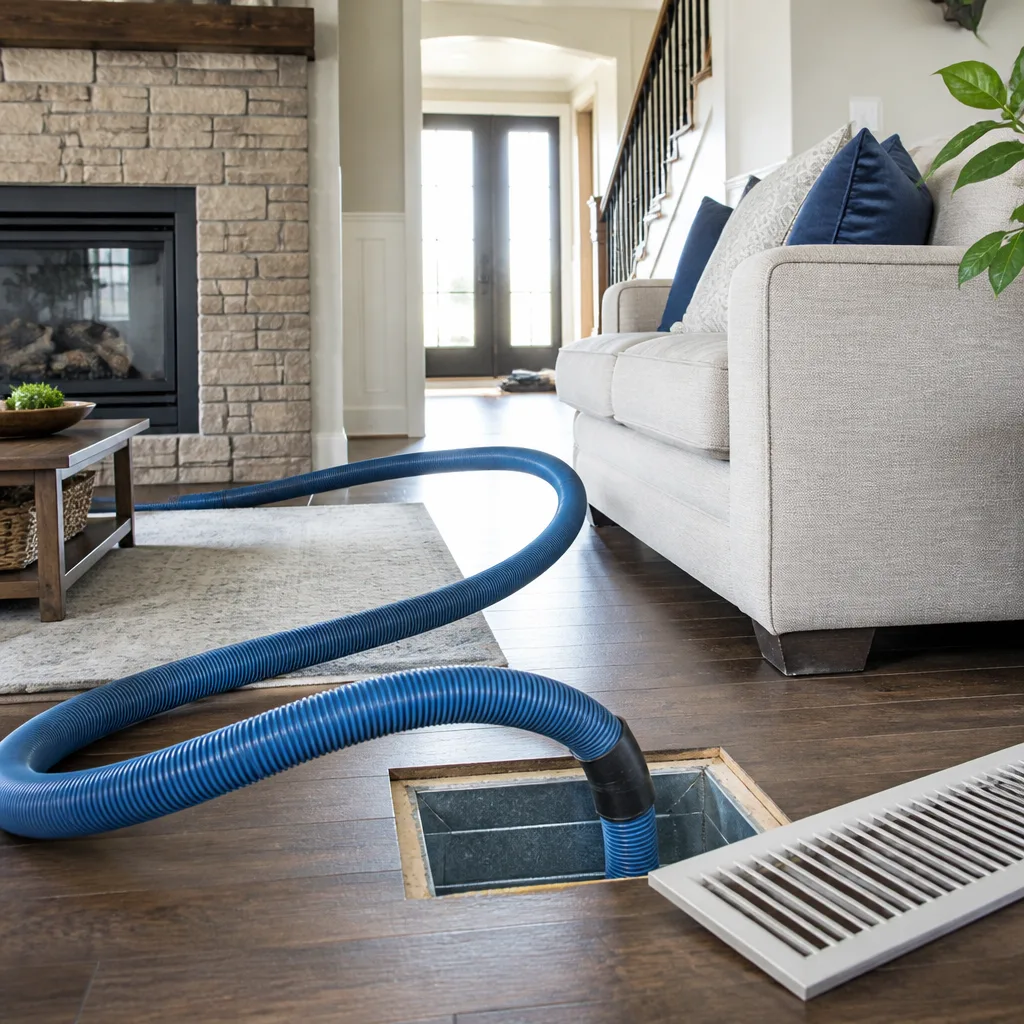
 Whole-home duct cleaning
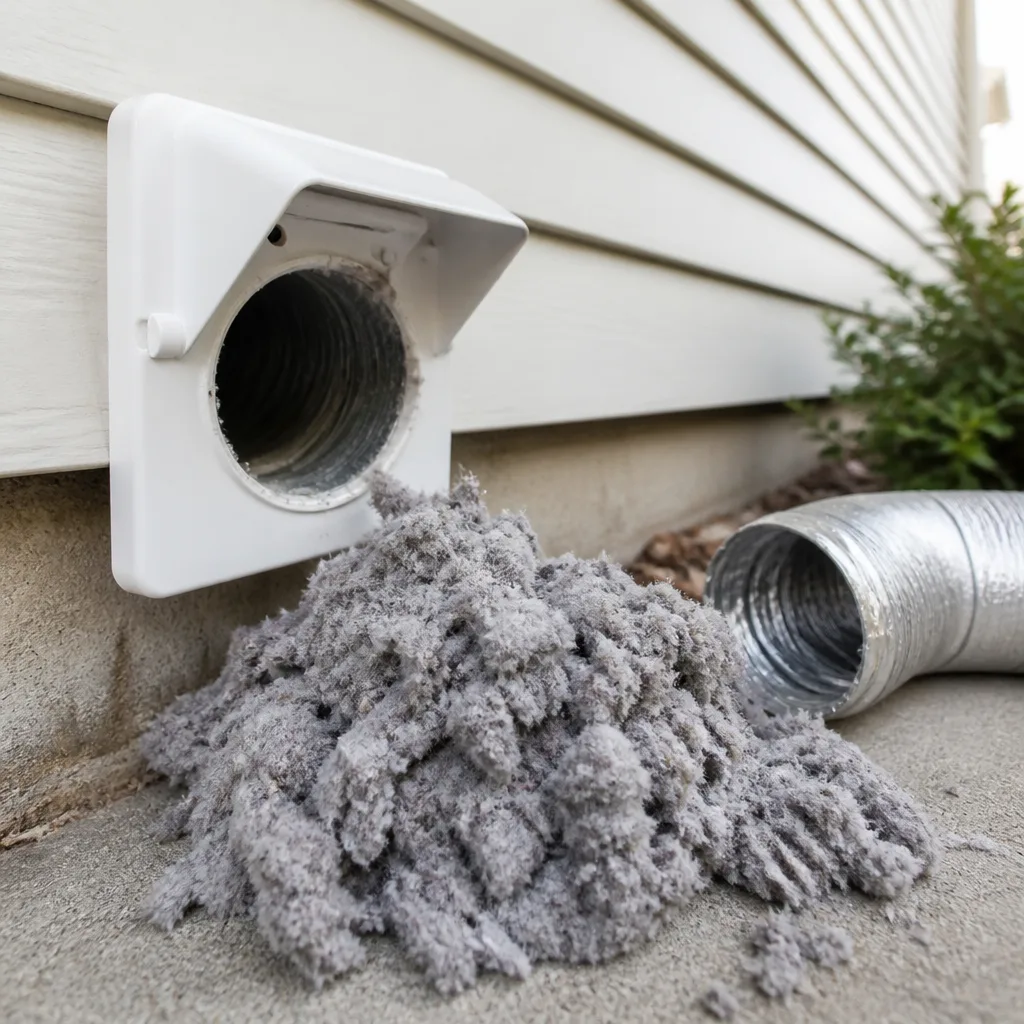 Dryer vent cleaning
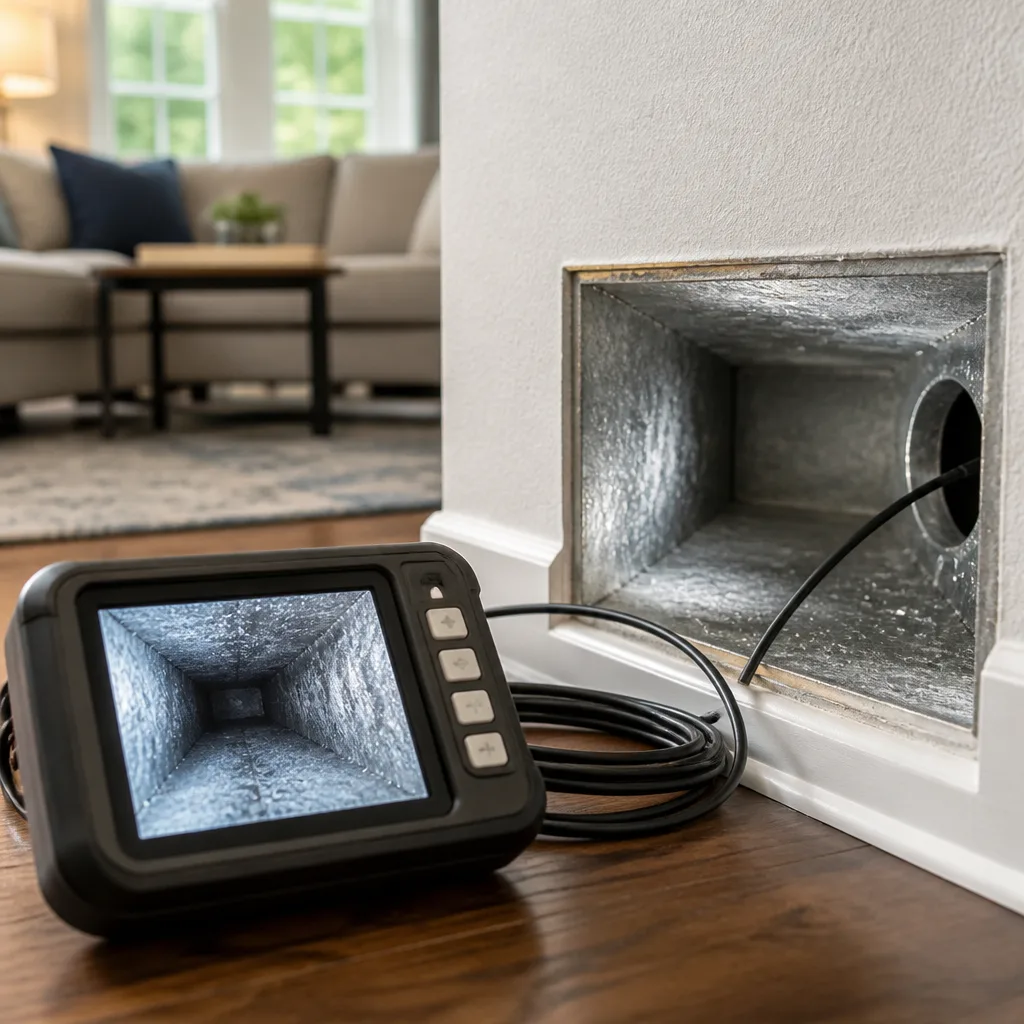 Camera inspection
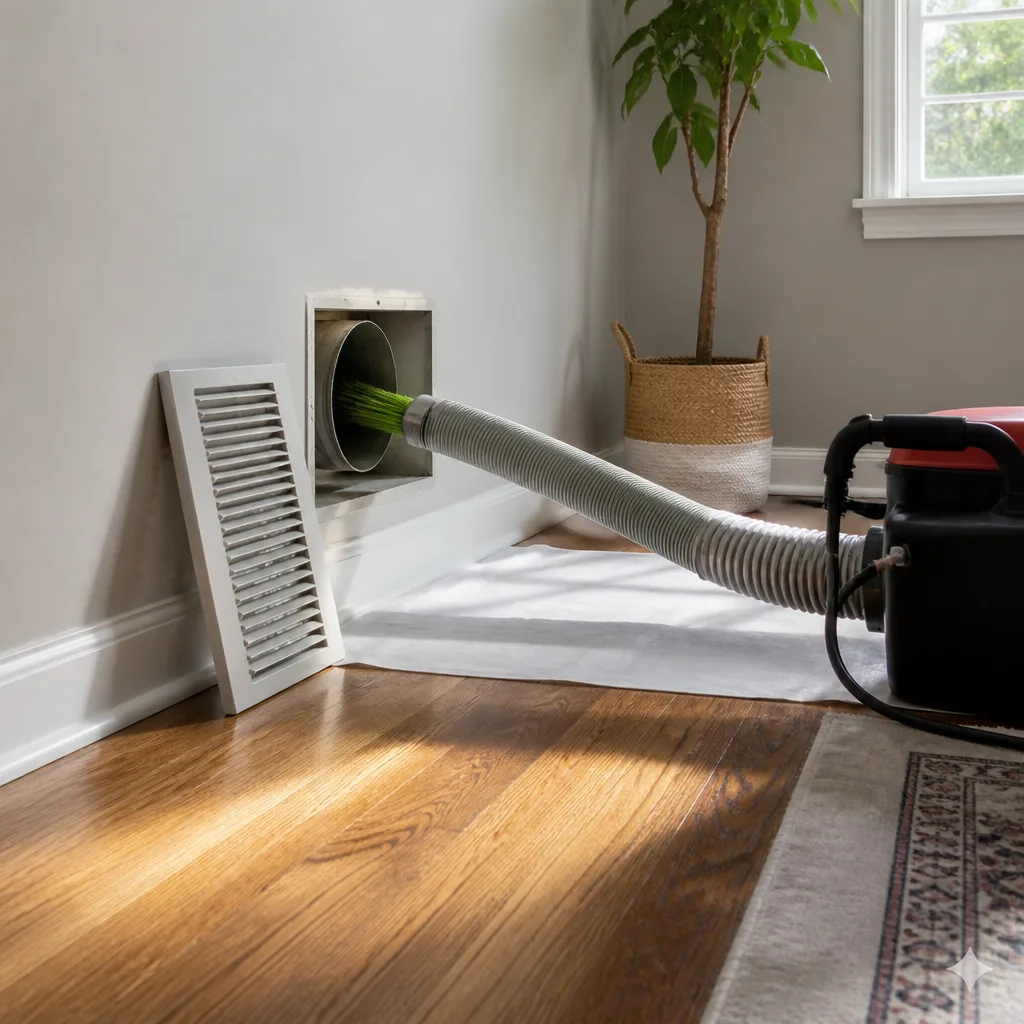 Sanitizing & deodorizing
Whole-system duct and dryer vent check with before-and-after photos - you see exactly what came out of your vents
That "$99 whole-house special" is a bait ad - the real number appears once they are in your hallway, or the "clean" is a shop-vac at the register. We photograph the inside of your ducts before and after instead.
Styles & brands we work with
- Whole-home duct cleaning
- Dryer vent cleaning
- Camera inspection
- Sanitizing & deodorizing
See the difference
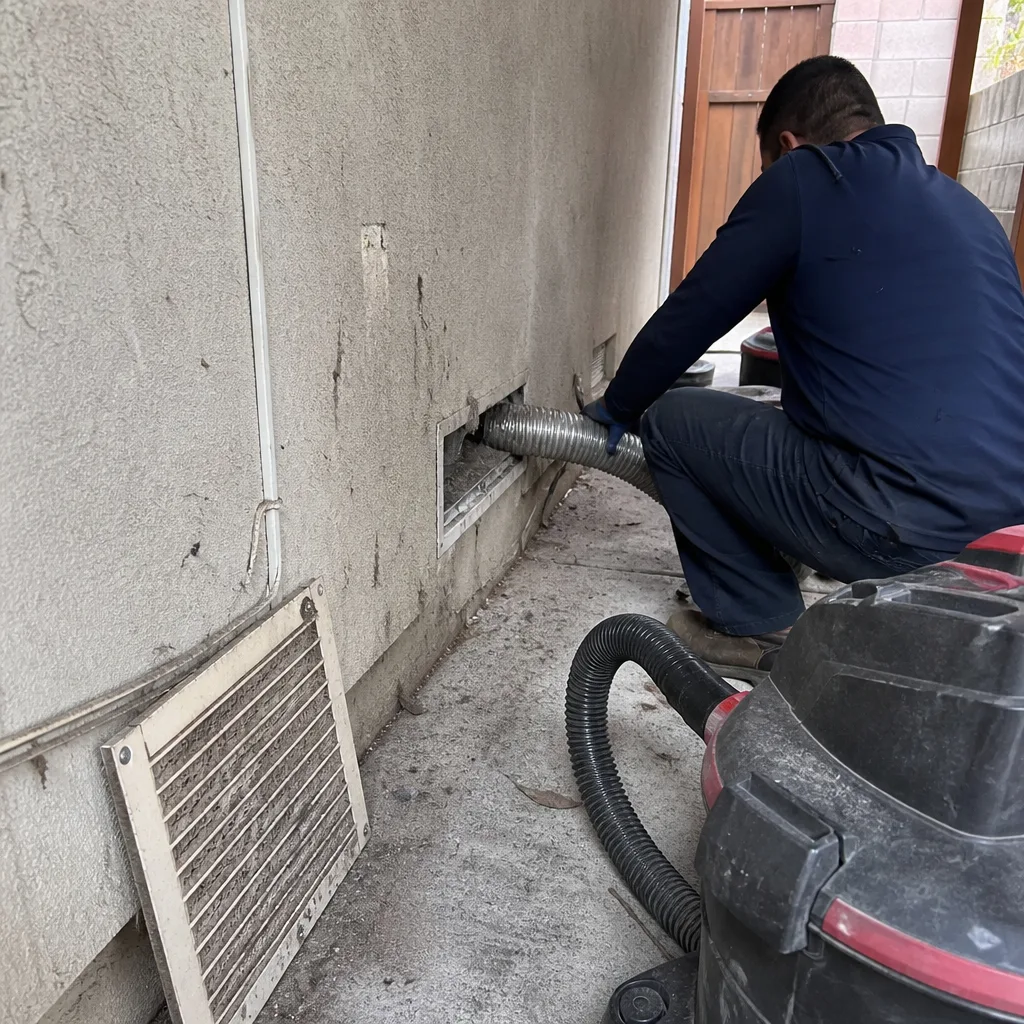 Before
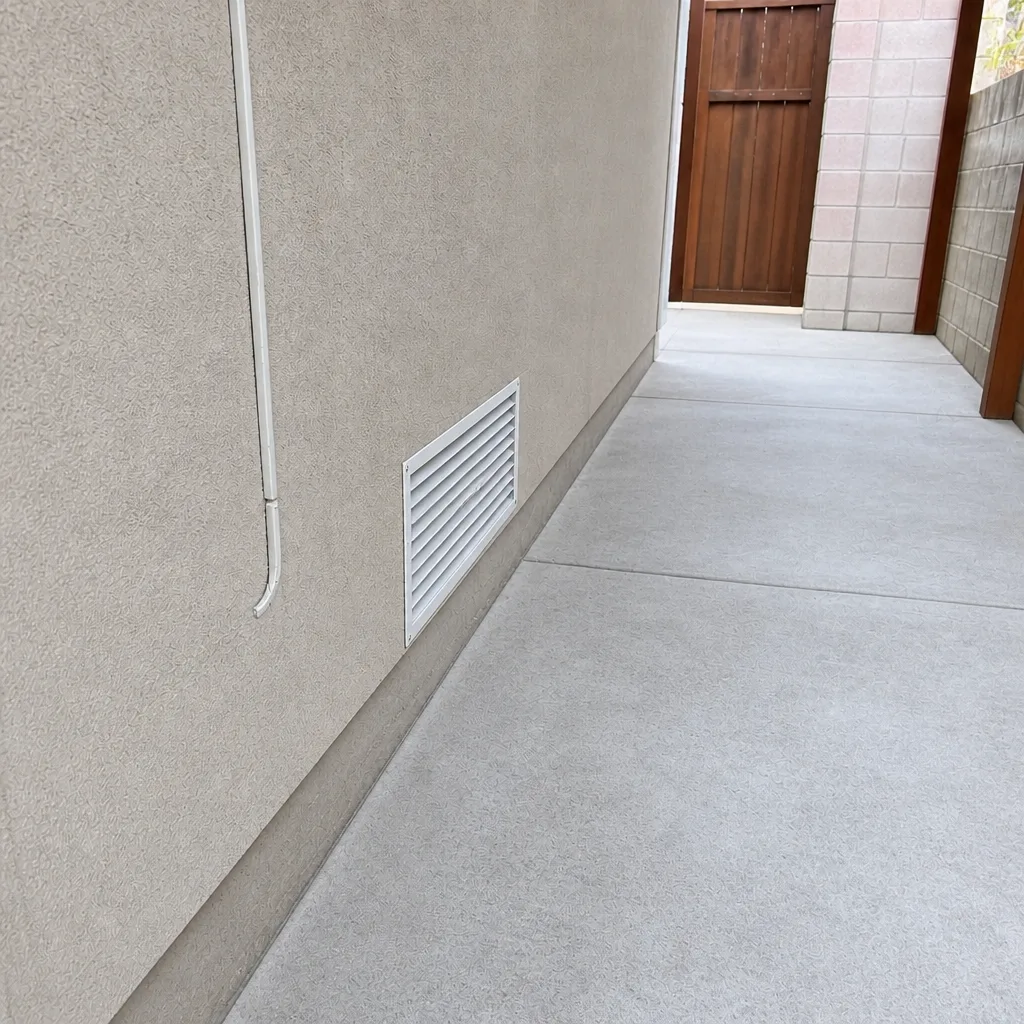 After
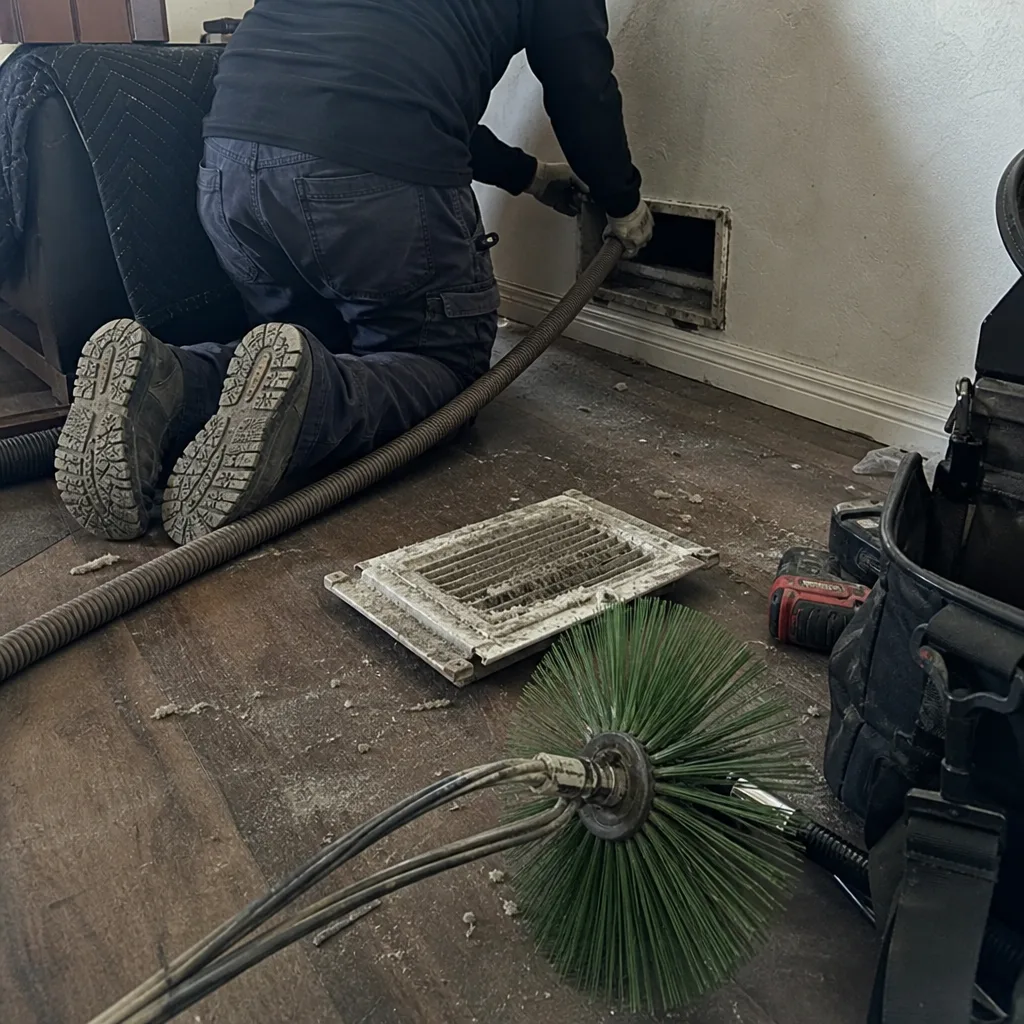 Before
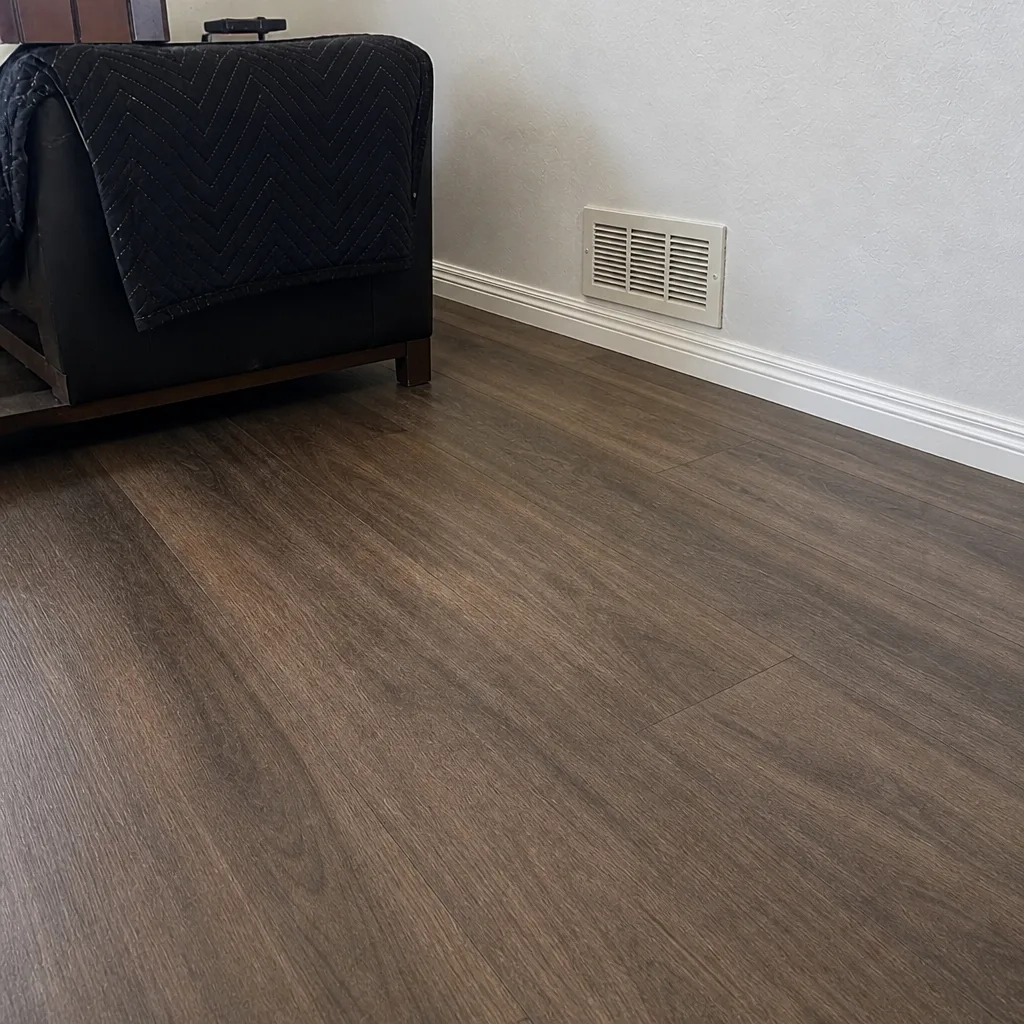 After
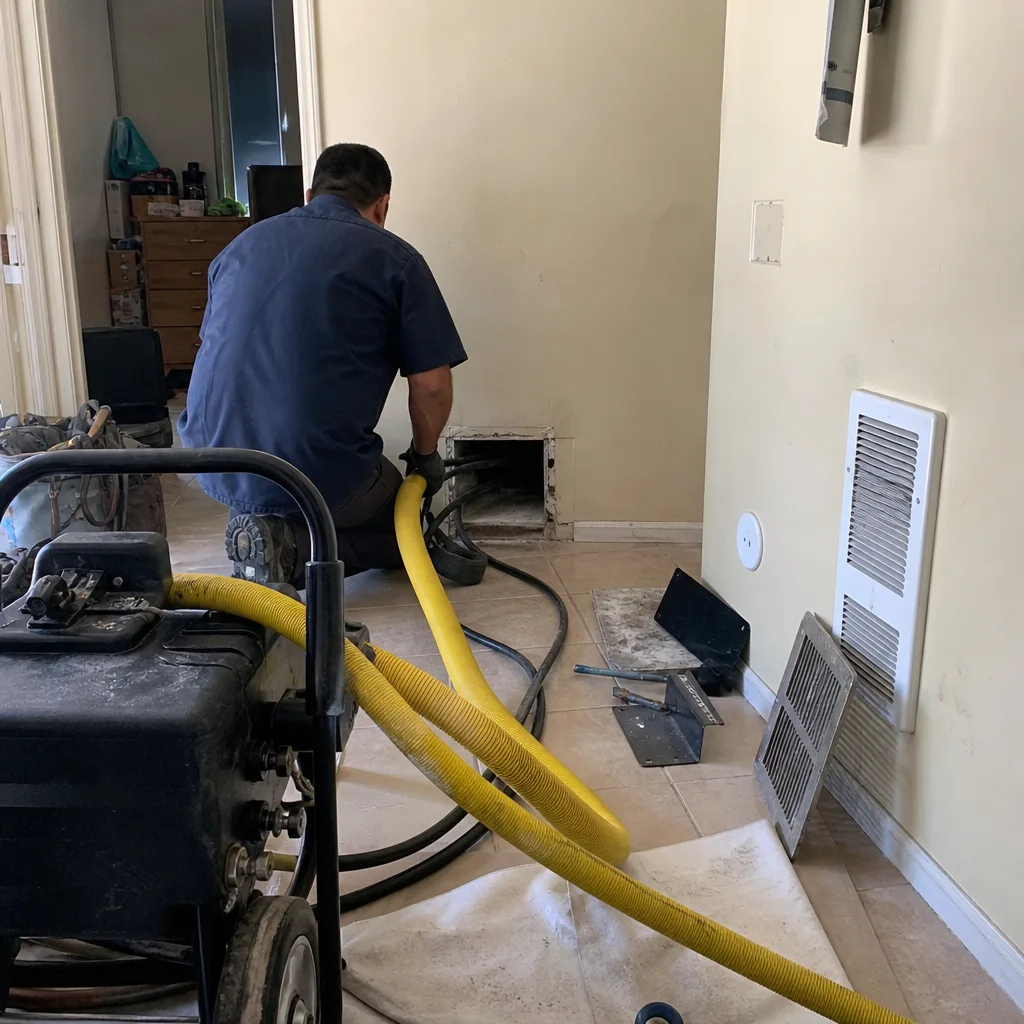 Before
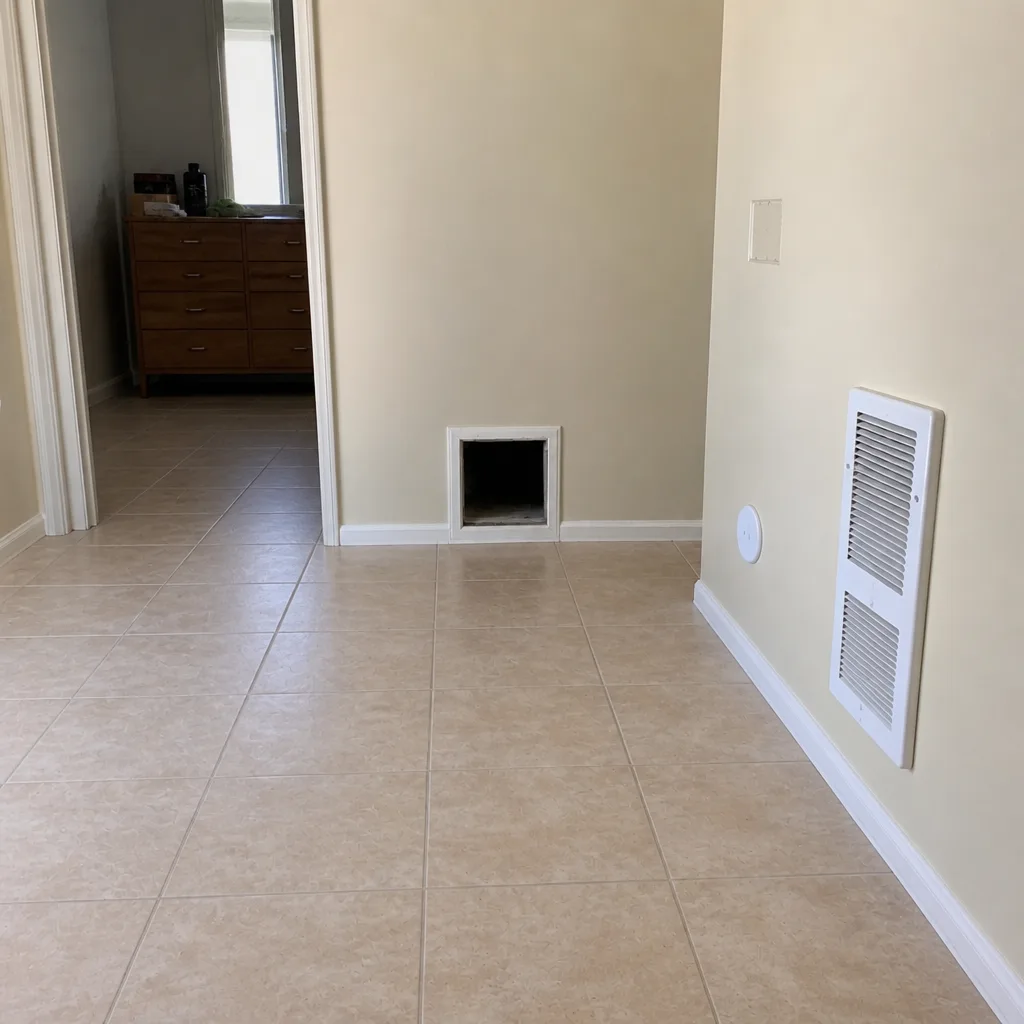 After
How Much Does Duct Repair & Sealing Cost in Stanton?
Duct repair and sealing in Stanton typically runs $350 to $1,800, with most single-family homes landing between $550 and $950 for sealing work and $700 to $1,400 when damaged sections of flex or sheet-metal duct have to be replaced. Small, isolated leaks sit at the low end at $250 to $450. Whole-house sealing with a documented pressure test on a larger system can reach $1,800 to $2,600. The written estimate sets the final price, and it’s free.
Same-day service is available, and we answer 24/7 with fast dispatch from 7am to 7pm, Sunday through Friday, closed Saturday. The local pro who performs the work is licensed and insured as their state requires. Our technicians have up to 13 years of experience, and every job is priced per home, not per square foot of ductwork.
Key Takeaways
- Typical Stanton duct sealing job: $550 to $950 for a single-family home.
- Leaking flex duct in an attic or crawl space: $250 to $450 per isolated section.
- Section replacement where duct is crushed or disconnected: $700 to $1,400.
- Whole-system sealing with before-and-after pressure testing: $1,800 to $2,600.
- Leak detection and inspection alone: $150 to $300, and it’s the step that determines everything after it.
Duct Repair & Sealing Cost Breakdown (2026)
These ranges reflect what Stanton homeowners pay in 2026 for the work itself, not just an inspection visit. Numbers below are typical estimates, not quotes. Your written estimate after a walkthrough is the price that counts.
| Line item | Typical range | What it covers |
|---|---|---|
| Duct inspection & leak detection | $150 – $300 | Visual inspection, smoke or pressure testing to find leaks behind walls and in the attic |
| Mastic or foil-tape sealing (accessible joints) | $350 – $650 | Register boots, plenum connections, and exposed joints sealed by hand |
| Aerosol duct sealing (whole system) | $1,200 – $1,800 | Sealant injected through the system to reach joints behind drywall and in built-in chases |
| Flex duct section replacement | $250 – $450 per run | Torn, crushed, or disconnected flex duct replaced from the trunk to the register |
| Rigid sheet-metal repair | $400 – $900 | Straightening or replacing damaged trunk line sections and resetting joints |
| Insulation wrap on exposed duct | $200 – $500 | Restoring insulation on duct running through attic or garage spaces |
| Register or boot replacement | $80 – $180 each | New boot and register where the connection to the wall or floor is leaking |
| Duct cleaning plus sealing (combined) | $800 – $1,600 | Full cleaning with Rotobrush and Nikro negative-air before sealing, so seals bond to clean duct |
| Whole-house sealing with test-out documentation | $1,800 – $2,600 | Aerosol sealing with a before-and-after leakage report you can keep for your records |
What pushes a Stanton quote toward the high end is almost never the sealing itself. It’s access. A 1970s single-story ranch near Beach Boulevard with ductwork in a low attic crawl takes longer to reach than a newer two-story with a straight attic run. Crushed flex duct behind a soffit, a trunk line that’s been separated at a fitting for years, or a return chase buried inside a wall all add labor before the sealing even starts. Duct that’s been wet and is harboring visible microbial growth adds a sanitizing step with Abatement Technologies filtration equipment before the system can be sealed. On the other end, a home with clean, accessible duct and only minor joint leakage can be sealed by hand in a few hours and stay well under $700.
One cost factor worth understanding: sealing over dirty duct is wasted money. Sealant won’t adhere to a layer of dust and debris, and the leak often comes back. That’s why we quote cleaning with Rotobrush rotary brush equipment and Nikro negative-air extraction alongside duct repair & sealing whenever the system has never been cleaned. It’s not an upsell; it’s the only way the seal holds. A full scope of Stanton Air Duct Cleaning Pros services lets one visit cover inspection, cleaning, and sealing in the right order.
What Affects Duct Repair & Sealing Pricing in Stanton
- Age and type of ductwork. Much of Stanton’s housing stock dates to the 1950s through 1980s. Homes of that era often have rigid sheet-metal trunks with flex branches added over time, so a job routinely involves two different repair methods on the same system. Older flex duct gets brittle and tears at the fittings, which raises the portion of the job that’s replacement rather than sealing.
- Access to the attic and crawl space. Attic duct in a low-roof house means working on hands and knees in tight quarters, and that labor shows up in the quote. A home with a straight, wide attic access and a clear path along the trunk line is a faster job and a lower estimate.
- Number of leaks found. A pressure test tells you exactly how much air the system is losing. A typical older home leaks 20% to 30% of its conditioned air before sealing. The more disconnected joints and boot gaps the test reveals, the more sealing work is quoted.
- Whether the system needs cleaning first. Sealing requires a clean surface. If the duct has never been cleaned or there’s visible buildup at the registers, a cleaning step is added before sealing so the mastic and foil tape actually hold.
- Compatibility with whole-house air quality equipment. Homes wired with Honeywell or Aprilaire filtration and fresh-air systems need the ductwork around those components handled carefully during sealing. Knowing where those controls sit and how they tie into the return means the sealing work doesn’t interfere with the air quality equipment you already own.
- Whether moisture is present. Duct that stays damp, which is fairly common in tight, unventilated attic spaces in Stanton, needs the source addressed before sealing. Sealing moisture into a duct chase causes more problems than it solves, so a sanitizing and filtration step is sometimes quoted alongside the repair.
How to Save on Duct Repair & Sealing
The single biggest thing you can do is get the inspection and the estimate together in one visit. Paying for a separate inspection, then a separate estimate, then a separate return trip to do the work can add a few hundred dollars to a job that didn’t need to be split up. We combine inspection, testing, and the written estimate in a single free visit. Call (877) 820-9417 to set it up.
- Seal now rather than replace later. A small disconnected flex run costs $250 to $450 to fix today. Left alone, that same leak pushes conditioned air into the attic, drives up the electric bill, and can eventually wet the surrounding structure. Sealing early almost always costs less than the combined repair and insulation work.
- Combine cleaning and sealing in one appointment. Booking both together avoids a second visit and second setup, and the combined price of $800 to $1,600 usually comes in lower than two separate invoices for the same work.
- Ask for the pressure test report. A documented before-and-after leakage number tells you the sealing actually worked and gives you a comparison point for future inspections. It also makes sure you’re paying for measurable sealing rather than a few visible dabs of mastic.
- Fix the obvious leaks first if the budget is tight. The register boots and plenum connection at the air handler account for a disproportionate share of leakage in most homes. Sealing only the accessible joints, in the $350 to $650 range, is a reasonable first step before committing to whole-system aerosol sealing.
- Keep your air quality equipment serviced. If you already have a Honeywell or Aprilaire filtration system, keeping filters changed and the housing sealed prevents the bypass leaks that turn into duct repair calls later.
It also helps to know what you’re looking at before anyone arrives. If a room never feels the air it should, if you smell a musty odor when the system starts, or if you can see sagging or disconnected duct in the attic, those are all signs the system is losing air. Sealing matters for air quality as much as for energy. Leaky return duct pulls attic dust, fiberglass particles, and whatever else is up there into the air you breathe. That’s why we treat repair and sealing as an air quality job, not just an efficiency fix.
How Does the Repair and Sealing Process Actually Work?
A typical job moves in four steps. First, we test the system to find the leaks and measure how much air it’s losing. Second, we clean where needed so sealant can bond. Third, we repair the damaged sections, whether that means replacing a torn flex run or resetting a separated sheet-metal joint. Fourth, everything is sealed, from the accessible joints by hand to the chase-and-wall connections with aerosol sealing, and then retested to confirm the leakage is down. You get the numbers at the start and the numbers at the end.
This is also where a dedicated duct specialist differs from a general HVAC company. A technician whose main trade is installing furnaces and air conditioners may treat duct sealing as a small add-on. We do ductwork as the focus of the job, with the same professional-grade tools, including Rotobrush rotary brush systems and Nikro negative-air machines, used on every residential call. The equipment is the same category you’d see on a commercial or restoration project, and it’s the reason we can find leaks behind drywall that a flashlight inspection misses.
One important note before anyone starts pulling at ductwork: if your home has a section of duct running through a space with an electrical panel, exposed wiring, or a gas appliance connection, that area needs to be handled carefully around those components. Sealing work near electrical or gas connections should be done by someone trained to recognize the hazard and know when to call a licensed electrician or plumber instead of working around it. We’ll flag anything like that during the inspection. It’s part of doing the job right.
Repair or Replace? How That Decision Affects Your Price
Repairing and sealing generally costs less than replacing a duct system, and for most Stanton homes it’s the right call. Replacing the whole system isn’t usually a repair job at all; it’s a construction project that involves opening walls and ceilings. Sealing fixes the air loss without that disruption. The exception is duct that’s structurally failing across most of its length, heavily contaminated with microbial growth, or installed in a way that can’t be salvaged. In those cases, a partial replacement of the worst sections is the realistic route, and the estimate will say so plainly. It reflects what the system actually needs, not what produces the bigger invoice.
If you’re unsure which way your home falls, the free inspection answers that question directly. You’ll get a written estimate with the numbers, the repair options, and a clear recommendation, and you can decide from there. Call (877) 820-9417 to book it. We answer 24/7, with fast dispatch from 7am to 7pm, Sunday through Friday.
FAQs – Duct Repair & Sealing Cost
How much does duct repair and sealing cost in Stanton?
Most Stanton homeowners pay $550 to $950 for sealing a single-family home, and $700 to $1,400 when sections of duct need replacing. Whole-system sealing with documented pressure testing runs $1,800 to $2,600. The written estimate sets the final price. Call (877) 820-9417 for a free estimate.
Is it cheaper to repair or replace leaking ducts?
Repair and sealing is cheaper in most cases, typically $550 to $1,400 versus a full duct replacement that involves opening walls and ceilings. Replacement only makes sense when duct is failing across most of its length. Call (877) 820-9417 and we’ll test the system and tell you which one your home actually needs – the estimate is free.
How much does duct sealing cost per square foot in Stanton?
We price per job, not per square foot, because a square foot of duct tells you nothing about how hard it is to reach. As a rough comparison, a typical 1,500-square-foot home sealing job at $550 to $950 works out to roughly $0.37 to $0.63 per square foot of living space, but the actual estimate depends on access, leak count, and whether cleaning is needed first. Call (877) 820-9417 for an exact quote.
Can you fix the ducts the same day?
Yes for many smaller repairs. A disconnected flex run or a leaking register boot can often be sealed or replaced on the first visit, at $250 to $450 per run. Larger whole-system sealing jobs get scheduled after the inspection because the estimate has to be written first. Call (877) 820-9417. We answer 24/7, with fast dispatch from 7am to 7pm, Sunday through Friday.
How much does duct cleaning cost if I add it to a sealing job?
A combined cleaning and sealing visit typically runs $800 to $1,600, which is less than booking the two separately. Cleaning matters because sealant won’t hold on dirty duct, so if your system has never been cleaned, it’s part of getting the sealing to last. Call (877) 820-9417 for a free estimate.
Do I need a permit for duct repair and sealing in Stanton?
Sealing and repairing existing ductwork usually doesn’t require a permit, but if the repair involves replacing a significant portion of the system or moving duct runs, check with the City of Stanton’s building department before work begins. It’s a quick call and it removes any doubt. Call (877) 820-9417 and we’ll walk you through what your specific job involves.
What should I look for on the written estimate?
A useful estimate itemizes the inspection, the cleaning if needed, each repair, the sealing scope, and whether a post-sealing pressure test is included. Comparing a $550 estimate against a $2,000 one without reading the line items tells you very little. Call (877) 820-9417 for a free, itemized estimate you can compare against any other quote.
Whether you’ve just been told by an inspector that your ducts are leaking, or you’ve noticed the system hasn’t been performing the way it used to, the next step is simple. Call (877) 820-9417 for a free estimate. Our technicians have up to 13 years of experience, we use professional-grade equipment from Rotobrush and Nikro on every job, and the price is set by the written estimate so there are no surprises when the work is done. We answer 24/7. Fast dispatch from 7am to 7pm, Sunday through Friday.
Pricing reflects the Stanton market as of 2026. Stanton Air Duct Cleaning Pros offers free estimates – call (877) 820-9417.
Written by the team at Stanton Air Duct Cleaning Pros.
What Our Customers Say
"Told me straight that our ducts were in decent shape and didn't need doing every year like the mailer companies claim."
- Tara Reed"My wife's allergies had been bad in this house since we moved in. It's been two months since they did the ducts and it's noticeably better. Not a miracle, but real."
- Ruben Torres"They photographed every return and supply before starting and sent me the file afterward. No upsell to a sanitizing treatment I didn't need."
- Javier Morales