
Aprilaire Air Duct Cleaning in Stanton: A Homeowner’s Guide
An Aprilaire Model 5000 electronic air cleaner installed in a duct system carrying years of accumulated debris is filtering what the ductwork releases into the airstream, not what comes from outside. The purifier and the contaminated ducts work against each other from day one. We see this often in Stanton: a homeowner invests in a premium whole-home air quality system, then wonders why allergy season still hits hard. The filter is doing its job. The ducts underneath it are undoing the work. This guide covers what Aprilaire equipment actually needs in Stanton homes, and how duct cleaning should be sequenced around it.
Why Aprilaire Systems Need Clean Ducts to Work
Aprilaire media filters, electronic air cleaners, and UV purification units are designed to treat air as it moves through the HVAC system. Every one of them assumes the air reaching it is the air in your home. That assumption breaks down when the return ducts are lined with dust, drywall dust from old renovations, pet dander, and the fine particulate that builds up in Southern California homes over years of closed-window cooling seasons.
Here’s the practical version: an Aprilaire Model 5000 electronic air cleaner uses charged cells to capture particles as air passes through. If the return duct upstream of the unit is shedding debris, the cells load up faster, the unit’s efficiency drops, and you end up cleaning cells more often than the manual suggests. A media filter like the 413 or 416 has the same problem from a different angle: a filter capturing duct-borne debris clogs on a compressed schedule, and a clogged filter means restricted airflow, higher static pressure, and a system that works harder than it should.
In our experience across Stanton homes, the sequence matters. Clean the duct system first. Replace media or service electronic cells second. Doing it in the other order means you contaminate a fresh filter with dust you just disturbed. That’s a lesson homeowners tend to learn once and remember.
If you’re not sure where your duct system stands, start with the basics of air duct cleaning and build the Aprilaire service schedule around that baseline.
Aprilaire Filter Maintenance Intervals in Stanton’s Air
Aprilaire’s published replacement intervals are written for average national conditions. Stanton isn’t average. Orange County’s air carries a mix of inland dust, marine-layer humidity that keeps fine particulate suspended, and the seasonal particulate load that comes with living in a dense, largely paved part of Southern California. That combination means filters and electronic cells load up faster than the manufacturer’s calendar assumes.
Here’s how we think about intervals for the common Aprilaire models in Stanton homes:
- Aprilaire 413 and 416 media filters: Manufacturer guidance often lands at annual replacement. In Stanton homes with pets, nearby construction, or heavy AC runtime, we typically see filters loading meaningfully in six to nine months. Check the filter itself, not just the calendar.
- Aprilaire 213 media filter: A thicker media filter with a longer rated life. Still worth inspecting every six months in Stanton, especially if you’re near a major road or active construction.
- Aprilaire 5000 electronic air cleaner cells: Cells need washing on a schedule that depends on the upstream duct condition. Contaminated ducts accelerate the load. Clean ducts let the cells run closer to their rated interval.
- UV purification lamps: Lamp output declines well before the lamp fails. Follow Aprilaire’s replacement guidance, and replace on schedule rather than waiting for a burnout.
The honest answer for a Stanton homeowner is this: inspect at six months, replace based on what you see, and treat manufacturer intervals as a ceiling rather than a floor.
What Technicians Need to Know Before Cleaning Around an Aprilaire System
An Aprilaire electronic air cleaner is not just another component in the duct run. It’s an energized electrical device sitting in the airstream, and it needs to be treated that way before any cleaning equipment enters the system. This is where thorough preparation separates a real duct cleaning from a rushed one.
Before work begins on a system with an Aprilaire electronic air cleaner installed, the following steps matter:
- Power down the unit at the disconnect. Electronic air cleaner cells hold a charge. The unit gets powered off and confirmed off before anything else happens.
- Remove and set aside the collection cells. Cells are handled by the frame, kept upright, and kept away from the cleaning zone so they don’t collect debris from the work itself.
- Inspect cells for damage before and after cleaning. Cracked ionizer wires, bent collector fins, and contact damage are all visible on inspection. A post-cleaning inspection catches anything that happened during the job.
- Protect the cabinet opening. With the cells out, the cabinet opening gets covered so negative-air extraction doesn’t pull debris into the electronics compartment.
- Use negative-air extraction throughout. A Nikro negative-air machine keeps the working zone under negative pressure, so disturbed debris travels to the HEPA filtration rather than settling back into the ductwork or into the home.
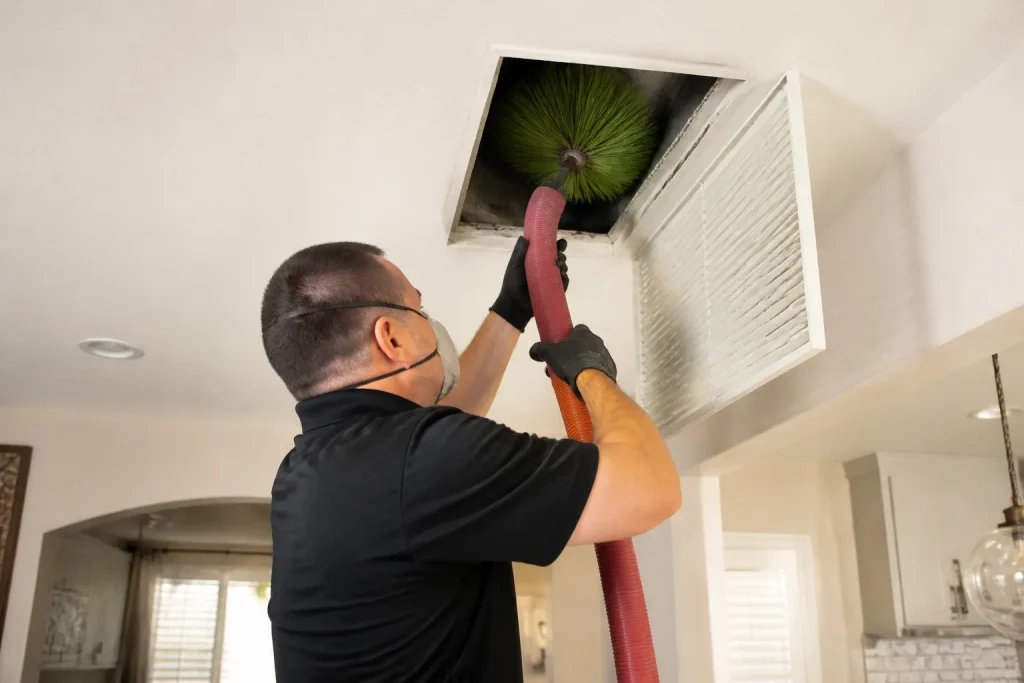
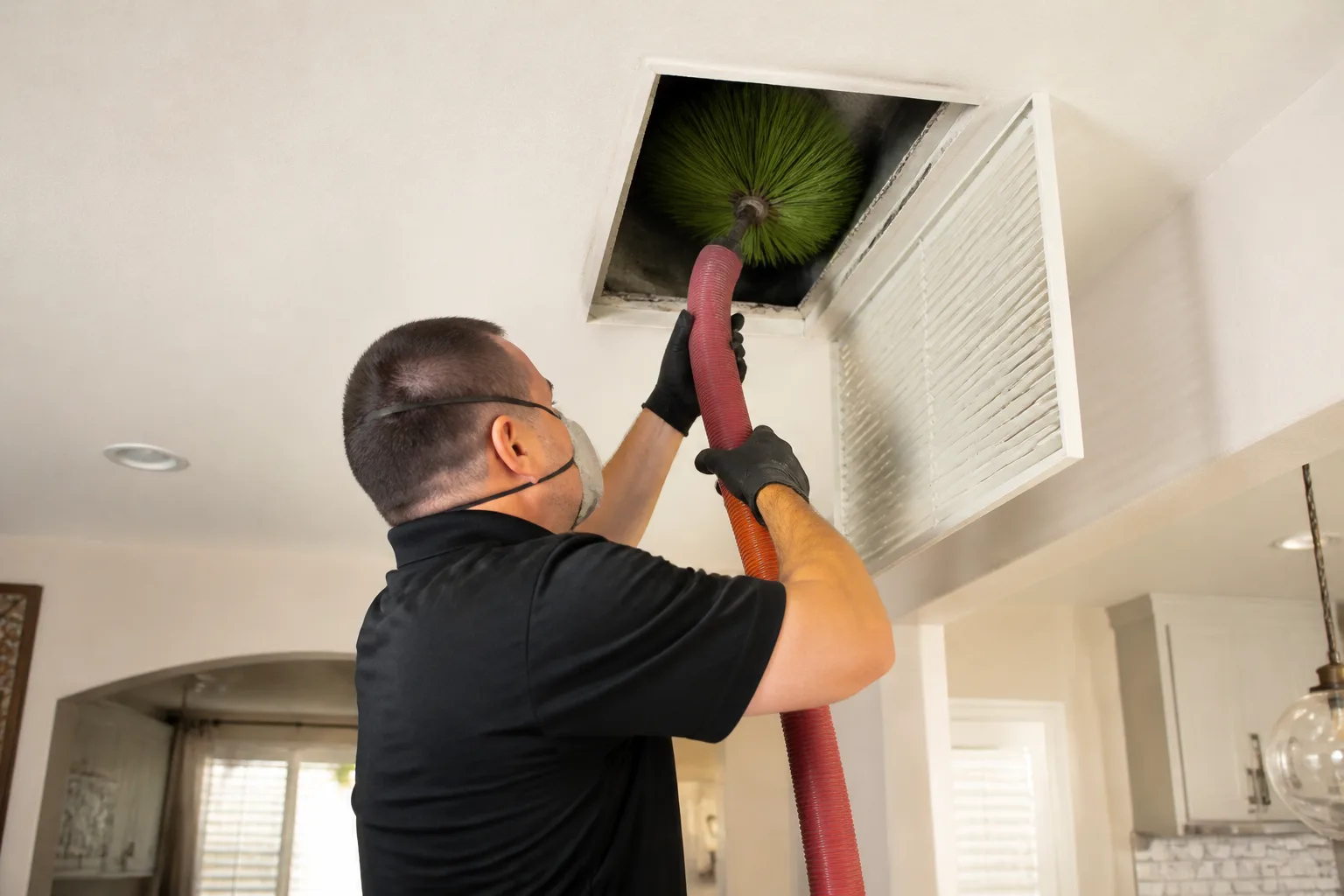
Rotobrush rotary brush systems handle the agitation inside the ducts. Nikro negative-air machines handle the capture. Together, they clean the whole duct system, not just the registers, and they do it without leaving the disturbed debris behind. That’s the standard every Stanton job should meet.
Sequencing Duct Cleaning and Aprilaire Filter Replacement
Getting the order right saves money and protects the equipment. Here’s the sequence we recommend for a Stanton home with an Aprilaire system:
- Inspect first. Camera inspection of the duct system, a look at the Aprilaire cabinet, and a check on the current filter or cell condition.
- Clean the duct system. Rotobrush rotary agitation through every branch, with Nikro negative-air extraction running the whole time.
- Repair and seal any leaks found. Duct leaks bleed air and undermine both the Aprilaire unit’s performance and your energy bill. Sealing now means the filtration system treats the air you’re actually paying to condition.
- Sanitize if needed. Where microbial growth or odors are present, an Abatement Technologies filtration setup supports a documented sanitizing step rather than a generic spray.
- Replace the media filter or service the electronic cells last. Once the ducts are clean and the system is sealed, a fresh Aprilaire filter starts its service life on clean air instead of immediately capturing what the ducts were shedding.
- Document before-and-after. Photos of the duct interior before and after cleaning give you a record of what was actually removed.
That order is not negotiable if you want the Aprilaire equipment to perform to spec. We’ve seen filters replaced first and then contaminated by the cleaning itself, which is a frustrating way to spend money twice.
Matching Aprilaire Equipment to Stanton Homes
Aprilaire offers a range of products, and the right match depends on the home and the duct system already in place.
- Smaller Stanton homes with standard forced-air systems: A media filter cabinet like the 413 or 416 is a straightforward fit. It captures fine particulate at a MERV rating that doesn’t strain the blower, and it pairs well with a clean, sealed duct system.
- Larger homes or homes with allergy-sensitive occupants: The Aprilaire 5000 electronic air cleaner adds a higher capture level on fine particles. In Stanton’s suspended-particulate environment, that extra capture can make a difference, but only if the upstream ducts aren’t shedding.
- Homes dealing with odors or microbial concerns: A UV purification component in the Aprilaire system, paired with a clean duct system and a documented sanitizing step, addresses the source rather than masking it.
- Homes with older, leaky ductwork: Before recommending premium Aprilaire equipment, we look at the ducts themselves. If the ducts are leaking or damaged, sealing comes first. A high-MERV filter on a leaky duct system is money spent in the wrong order.
Stanton’s air quality profile is a genuine factor here. Orange County’s mix of inland dust and marine humidity means MERV ratings should reflect the actual particulate load, not a national average. We recommend based on the home, the ducts, and the air the system will actually see.
For homes where duct condition is the main question, our HVAC cleaning service addresses the broader system, and dryer vents are a separate but related concern covered under dryer vent cleaning.
When to Call a Pro Instead of DIY
Filter changes and cell washing are genuinely DIY-friendly. Electronic cell cleaning is a homeowner task as long as the unit is powered down and the cells are handled carefully. What is not a homeowner task is the duct cleaning itself. Rotobrush rotary equipment and Nikro negative-air machines are professional tools, and the safety stakes with energized Aprilaire electronics, tight duct geometry, and dust control mean a homeowner attempt is likely to do more harm than good.
Call a professional when:
- Your Aprilaire filter is loading faster than the rated interval and you don’t know why.
- There’s visible debris or dust discharge at the registers.
- You smell mustiness when the system runs, even with a fresh filter.
- You’re replacing Aprilaire equipment and want to make sure the ducts won’t contaminate the new unit.
- You’ve never had the ducts cleaned and the home has had renovations or pets.
Unrelated housekeeping note: our technicians will not judge the state of your filter closet. We’ve seen worse. Probably.
If you’d rather have a qualified set of eyes on the system than guess, we’re glad to help. Stanton Air Duct Cleaning Pros is a dedicated indoor air quality specialist, not a general HVAC company where duct cleaning is a side trip. Our technicians have up to 13 years of experience, and we use Rotobrush and Nikro equipment on every job, plus Abatement Technologies filtration for sanitizing work. We answer 24/7. Fast dispatch from 7am to 7pm, Sunday through Friday.
The Bottom Line
Aprilaire equipment is only as good as the duct system it lives in. Clean, sealed ducts let media filters and electronic air cleaners perform to spec. Contaminated ducts make even a premium system look ineffective. The maintenance sequence is straightforward: inspect, clean the ducts, repair and seal, then service the Aprilaire filter or cells last. Match equipment to the home and to Stanton’s actual particulate load rather than a national average. If you’re in Stanton and need help, Stanton Air Duct Cleaning Pros offers free estimates. Call (877) 820-9417. Learn more on our Stanton Air Duct Cleaning Pros home page.
Frequently Asked Questions
Duct cleaning in Stanton is priced per job by written estimate, not by vent count. Whole-system pricing depends on the size of the home, the number of branches, and whether repair or sealing is involved. The written estimate sets the final price, and estimates are free. Call (877) 820-9417 for an exact quote.
Not when the work is done correctly. The unit is powered down at the disconnect, the collection cells are removed and set aside, the cabinet opening is protected, and the cells are inspected before and after the job. That protocol is standard on every Stanton job we connect homeowners to.
Manufacturer guidance often lands at annual replacement, but Stanton’s particulate environment, including inland dust and continuous AC runtime, usually loads filters in six to nine months. Inspect at six months and replace based on condition rather than the calendar alone.
Clean the ducts first, then replace the media filter or service the electronic cells. Doing it the other way contaminates a fresh filter with debris the cleaning disturbs. That sequencing is the single most common mistake we see in homes with Aprilaire systems.
Written by the team at Stanton Air Duct Cleaning Pros.
Need Air Duct Cleaning Help?
Call Stanton Air Duct Cleaning Pros - the local pro we connect you with is licensed and insured, here with fast help in Stanton.
(877) 820-9417