
Top Signs You Need Air Duct Cleaning Service – Don’t Ignore These
If you’ve cleaned the same surface three times in two weeks and the dust keeps coming back faster than it used to, your HVAC system is almost certainly the source. No amount of surface cleaning fixes a contaminated supply duct, because every time the blower kicks on, the system deposits a fresh layer of what’s been sitting inside it. The reliable signs of a duct problem aren’t dramatic. They’re subtle patterns in dust behavior, airflow, and when your allergy symptoms actually flare.
We’re going to walk through those patterns so you can judge your own system instead of guessing. If you’d rather have a trained eye confirm it, call (877) 820-9417.
Key Takeaways
- Dust that returns faster than it used to is a distribution problem, not a cleaning problem.
- Rooms that never heat or cool evenly point to debris or a blockage in the branch ducts feeding them.
- An odor that appears only when the blower starts is a duct smell; one that never fades is a different problem.
- Symptoms that track HVAC runtime rather than pollen season are the strongest indoor-air signal there is.
- Construction nearby and wildfire smoke add contamination faster than ordinary household dust ever will.
Sign #1: Dust Comes Back Faster Than It Used To
This is the recontamination rate test, and any homeowner can run it without equipment. Pick one flat hard surface in a central room. Clean it properly, then check it on the same day each week and note roughly how heavy the film feels. A normal home builds a light haze over a week, and it stays about the same. A home cycling dust through a dirty system builds a heavier haze each week, and the difference becomes obvious by the second or third check.
To separate surface dust from airflow dust, look at the pattern. Surface dust settles fairly evenly. Airflow dust lands in streaks and patches, and it collects more on horizontal surfaces directly under or across from a supply register. Curtain tops, the tops of door frames, and the high edge of shelving are the tell. If those fill in before your floors do, the dust is riding the air.
One more useful clue: check the return grille. A filter that loads up quickly, week after week, is doing its job against a heavy load of circulating particles. When the filter clogs fast but the supply side still blows dust, that contaminants load lives inside the ductwork.
We see this pattern constantly in air duct cleaning calls. When we open the system, the debris field usually matches exactly what the homeowner’s dust test predicted.
Sign #2: Rooms That Never Heat or Cool Evenly
Airflow asymmetry is the most underrated diagnostic sign there is. Every house has one room that runs a few degrees off. What matters is the pattern and whether it’s getting worse.
- One room is consistently stubborn. A branch duct feeding that room can be packed with debris or partially blocked. The air gets there, just in reduced volume.
- Far rooms are always the worst. Air moving through long runs loses volume when the inside of the duct is rough with accumulation. Closer rooms stay comfortable while distant ones lag behind.
- The temperature gap is widening. This is the one to pay attention to. A room that was slightly cool last year and is genuinely uncomfortable now is showing you a worsening restriction.
- Some registers feel weak while others blast. Run the back of your hand over each supply register with the system on. Big differences between registers on the same system point to a distribution problem downstream.
Here’s the honest caveat: debris is one cause of uneven air, but a failing blower, a closed damper, a collapsed flex run, or an undersized return can produce the same symptoms. A proper assessment distinguishes between them before anyone starts cleaning. That’s part of why we look before we clean, and why duct repair and sealing belongs in the same conversation as cleaning. On some jobs the accumulated debris is the problem. On others, a leak is dumping conditioned air into a crawlspace, and cleaning alone won’t fix the imbalance.
In Stanton, our technicians have up to 13 years of experience reading airflow patterns, and the register test is usually where we start.
Sign #3: Odors That Follow the HVAC Cycle
Odor patterns tell you what kind of problem you have, and the differences matter for urgency. The single most useful question is: does the smell come and go with the blower?
- Musty smell that appears a few minutes after the system starts and fades after it stops. This is a classic dirty duct smell. Dust, skin cells, and pet hair have collected on the interior surfaces, and moisture has left them smelling stale. It’s unpleasant but rarely urgent.
- A persistent musty or earthy smell that never really goes away. This can point to an active moisture problem rather than accumulated dust. If you also see staining around registers or on ceiling drywall near the air handler, treat it as urgent and get it assessed. Mold needs moisture, and cleaning a damp system without finding the moisture source only buys time.
- Sharp, acrid, or ammonia-like smell, or droppings visible in the ducts or around the furnace. This can mean an animal intrusion. It’s a different problem with a different urgency – the animal has to be removed and the affected area decontaminated, not just cleaned.
- Dusty or “dirty carpet” smell near your vents. Usually a simple contamination load building up inside the supply runs.
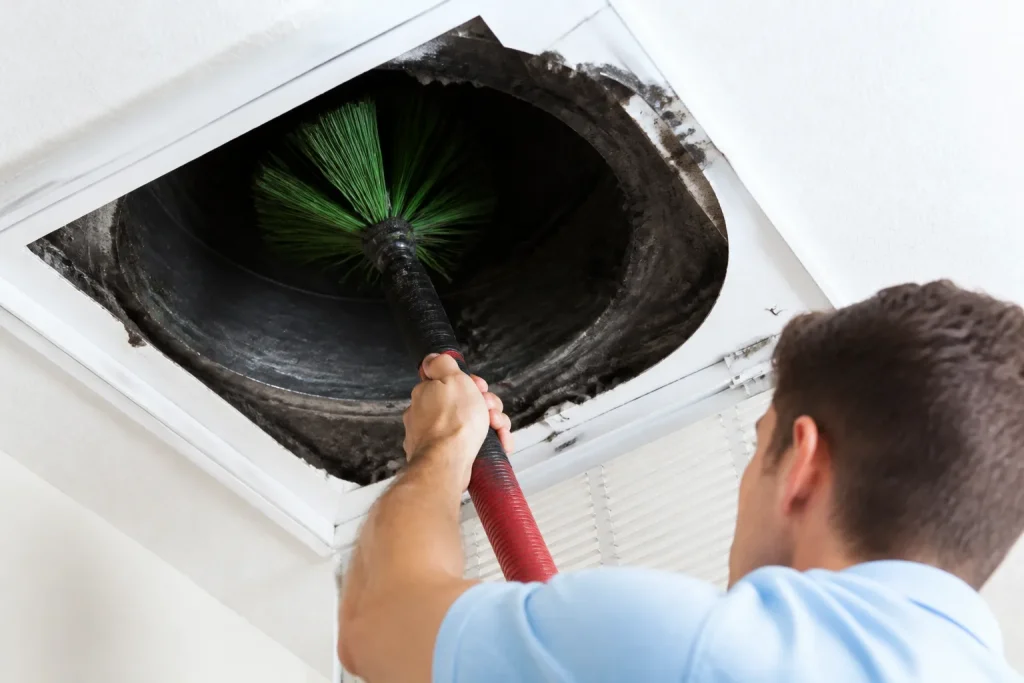
When we work through a smell complaint, we use a Nikro negative-air machine to pull contaminants out of the workspace rather than pushing them into the living room. Filters and household air moving through a dirty system aren’t the problem. We want the particulate captured, not aerosolized.
Sign #4: Allergy Symptoms That Track Your HVAC Runtime
This is the single strongest sign your ducts need attention, and it’s the one most homeowners misread. The logic is simple: if you’re reacting to pollen, your symptoms track the pollen calendar. If you’re reacting to what’s inside your ducts, your symptoms track when your system runs.
So watch the timing. Do symptoms get worse in the evening after a warm day, when the AC ran hard? Do they ease on mild days when the system is mostly off? Do they flare when you first walk in after work, before anything else has happened in the house? Do you notice more congestion in the bedroom, and is that the room with the strongest supply register?
A pollen allergy doesn’t care whether your blower is running. A duct problem does. When symptoms and system runtime move together, the source is inside the house.
In our experience, homeowners often blame old carpet or seasonal changes for exactly this pattern, and it turns out the dust that’s raising the symptoms is riding the supply air. A contaminated system distributes the same material every time it cycles, which is precisely why the symptoms feel environmental.
Sign #5: Nearby Construction, Smoke Events, and the Air Around Stanton
What’s happening outside your house shortens the timeline for what builds up inside your ducts. If your duct system was last cleaned a while back and you’ve experienced any of these, your contamination has gone further than the calendar suggests.
- Construction nearby or on your own home. Drywall dust, sawdust, and fine renovation particulate find their way into returns and into open registers during work. A renovation is worth an inspection afterward even if the ducts were fine before.
- Wildfire smoke events. When smoke settles over an area for days or weeks, particles keep entering the system and any gaps in the ductwork let it in uninvited. This is a real concern in this part of Southern California.
- Seasonal PM2.5 levels in the area. On days when the air quality index climbs, your system is drawing in a finer grade of particulate than it does on a clear day, and microfiltration matters more.
- A house built in a dusty period or left vacant between owners. Vacant homes don’t run their air handlers, but they still build up dust, and that first year of occupancy pushes it all through the system.
This is why we like whole-home air quality systems from Honeywell and Aprilaire when we find homeowners are fighting a persistent particulate load. Filtration upgrades help, but they work far better once the duct system itself is clean. A high-rated filter on a dirty distribution system is still moving dirty air through dirty ducts.
When to Call a Pro
If you can confirm one sign on this list, keep an eye on it. If you can confirm two or more, book an inspection. And if you see any of the following, call sooner rather than later:
- Visible mold on or around registers, or an active moisture problem in the system.
- Signs of animal intrusion: droppings, nesting material, or scratching sounds near the air handler.
- Airflow that’s dropped off suddenly rather than gradually.
- A smell that’s strong, chemical, or worsening rather than fading.
These sit beyond cleaning in the ordinary sense, and they need a specialist who can find the source, not just clear the duct. That’s why we treat duct repair and sealing as part of the job. Your whole duct system, not just the registers, is where the problem lives.
Related services in Stanton: If your dryer is taking longer than it used to, dryer vent cleaning addresses a similar build-up in a separate system. And if your HVAC unit itself needs attention alongside the ducts, HVAC cleaning rounds out the job.
The Bottom Line
Your ducts probably need cleaning if dust returns faster than it used to, if one side of the house never heats or cools evenly, if you smell mustiness when the blower kicks on, or if your allergy symptoms follow your HVAC system rather than the calendar. Add nearby construction or a recent smoke event, and the case gets stronger. These signals are subtle, but they’re consistent, and they point to the same thing: the system cycling contaminated air through every room.
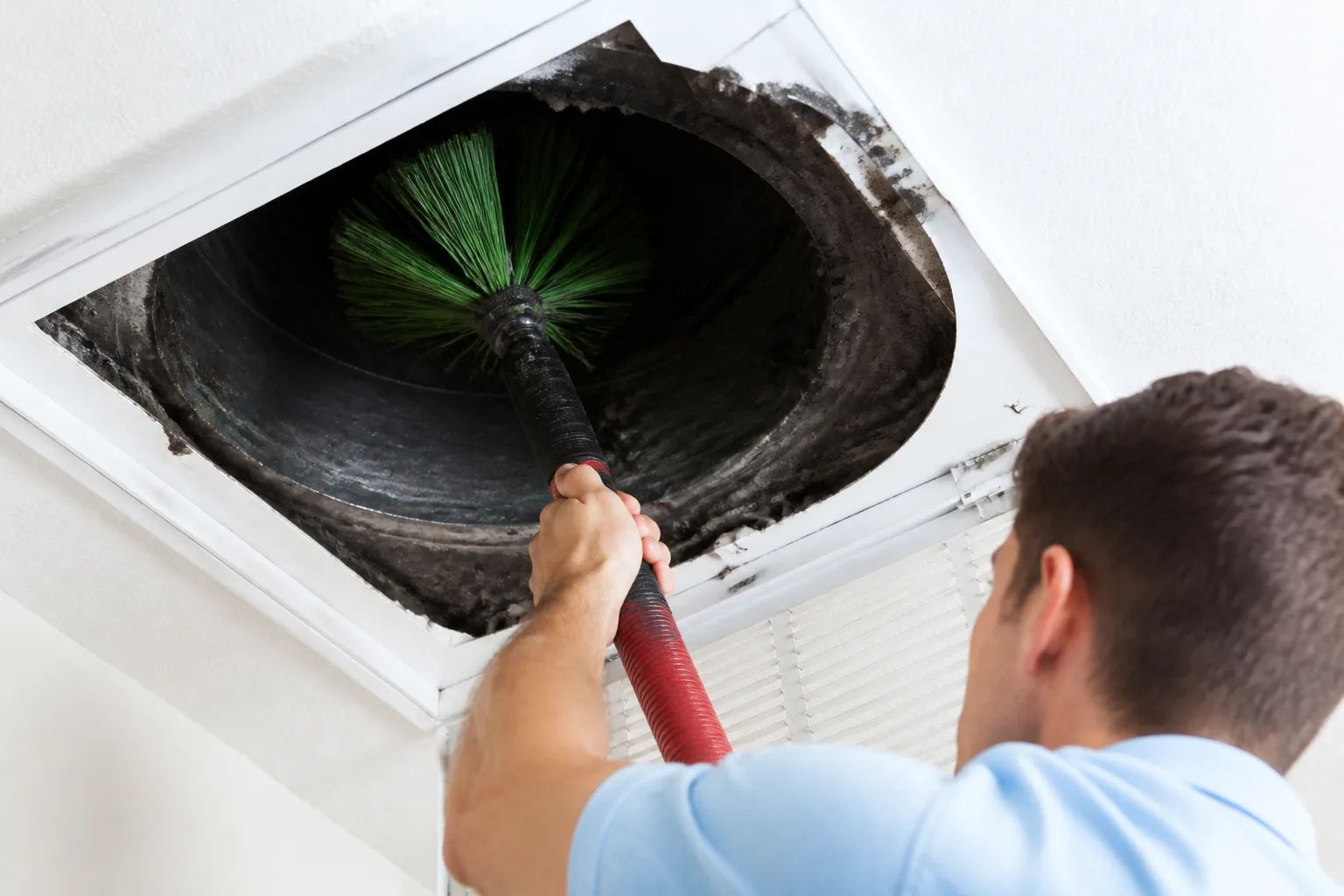
If you’re in Stanton and need help, Stanton Air Duct Cleaning Pros offers free estimates. We use professional-grade equipment on every job, including Rotobrush rotary cleaning and Nikro negative-air extraction, and we clean it, we seal it, and we document what we found. Call (877) 820-9417. We answer 24/7.
Frequently Asked Questions
Most homes don’t have a fixed interval. The honest answer is that timing depends on your home, not your calendar: pets, renovations, nearby construction, smoke events, and how well your filter has been maintained all shift the timeline. The signs in this article are a better guide than a number of years. If two or more of them describe your home, it’s time for an inspection. Call (877) 820-9417 for a free estimate.
Look at where it collects. Surface dust settles evenly and gathers more on floors and fabrics. Duct dust rides the air, so it lands in streaks and patches, and it builds up fastest on horizontal surfaces directly across from supply registers, curtain tops, and door frames. Clean one spot and check it on the same day each week for three weeks. If the film gets heavier each week, the ducts are the likely source. Call (877) 820-9417 if you’d like us to confirm it in person.
It can, when the ducts are the source. The clearest evidence is symptom timing: allergies to outdoor pollen follow the pollen season, while reactions to contaminated supply air track your HVAC runtime. If your symptoms flare after the system runs and ease when it’s off, cleaning removes the material that’s circulating. It’s worth having the system assessed before assuming your carpet is at fault. Call (877) 820-9417 for an inspection.
Ask for before-and-after photos of your own ducts, and expect a clear description of what equipment was used and what was found. On every job we run Rotobrush rotary cleaning with Nikro negative-air extraction, and we use Abatement Technologies filtration equipment in sanitizing work, the same category of equipment used in restoration and mold work. That gives you documented, defensible results rather than a vague assurance. Call (877) 820-9417 to schedule an estimate.
Written by the team at Stanton Air Duct Cleaning Pros.
Need Air Duct Cleaning Help?
Call Stanton Air Duct Cleaning Pros - the local pro we connect you with is licensed and insured, here with fast help in Stanton.
(877) 820-9417