
How to Choose the Right Air Duct Cleaning Company in Stanton
Most homeowners pick a duct cleaning company the same way they pick a pizza place: whoever shows up first on the search results and answers the phone. That’s how a living room ends up dusted in whatever was sitting in the return chase. Choosing right in Stanton comes down to one practical test almost nobody applies. Ask the company to name their equipment, explain how they hold negative pressure during the job, and tell you where the debris actually goes. A real specialist answers all three in under a minute. If you’d rather skip the guesswork and talk to someone who can, call (877) 820-9417 for a free estimate.
Why Stanton Homeowners Get Burned by Cheap Duct Cleaning
The low-ball quote that grows into a much bigger invoice once the technician is on site is the oldest trick in this trade, and it works because most homeowners don’t know what a real job involves. The pattern is predictable. A crew arrives with a shop vac and a spinning whip, runs it through a couple of registers, and calls it done. No containment. No negative pressure. Nothing sealed off. The dust that was resting in the ducts is now resting on your furniture.
Stanton has its own wrinkle here. Much of the housing stock is older, with duct systems that were installed decades before anyone thought hard about sealing joints or filtering return air. In a mild-winter climate like ours, the HVAC system often runs for cooling far more than heating, which means the return side pulls air through a lot of dusty attic and crawlspace space for most of the year. Ducts in that kind of setup accumulate debris steadily. They also leak. A cheap cleaning on a leaking system is money spent twice, because whatever gets removed comes right back.
That’s why the questions matter more than the price. A company that can’t explain its process usually doesn’t have one. In our experience, the outfits that get defensive about equipment questions are the same ones that pad the invoice with add-ons nobody asked for.
The Equipment Litmus Test: What to Look For
Professional duct cleaning isn’t one machine. It’s a system working together, and the names of that equipment are a fast way to separate specialists from pretenders. Here’s what each piece actually does, in plain terms:
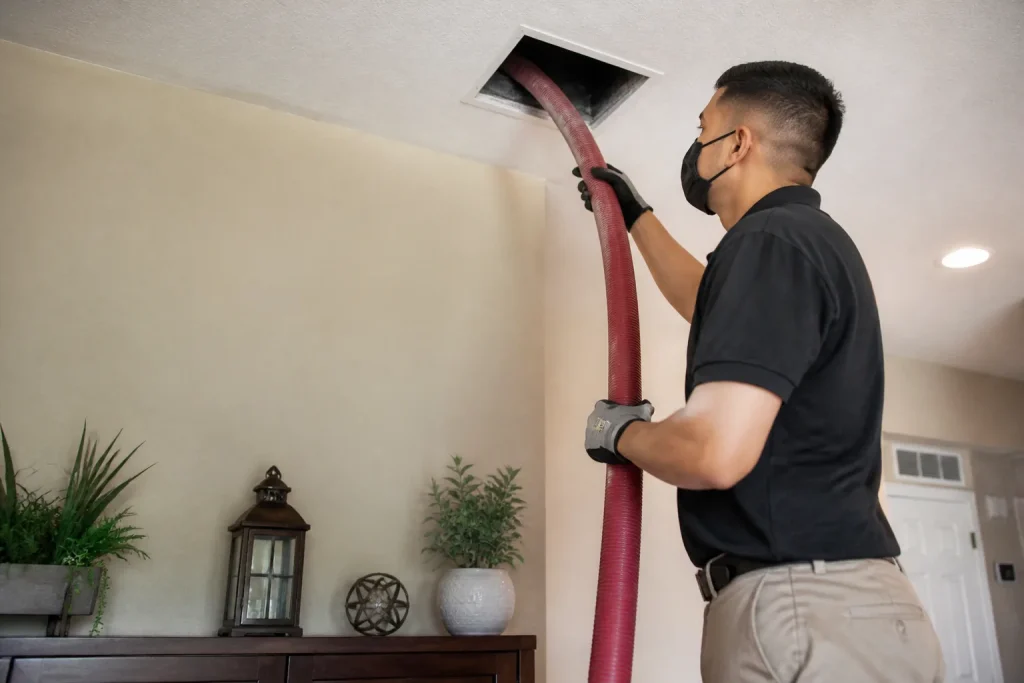
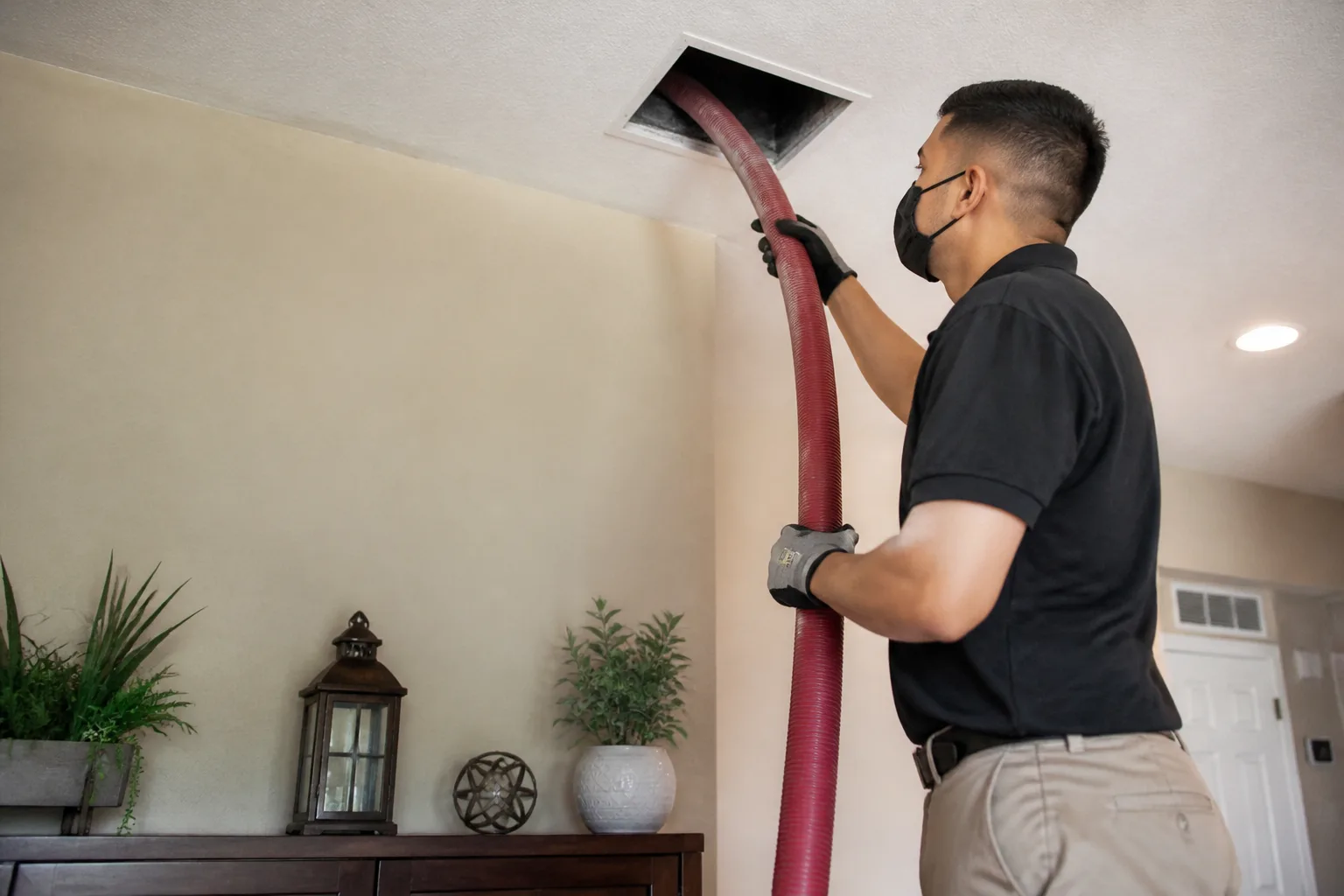
- Rotobrush rotary brush systems – a motorized brush on a flexible shaft that scrubs the inside walls of the duct as it travels. Loose dust gets vacuumed away; caked-on debris gets mechanically agitated first. That distinction is the whole point. Suction alone doesn’t move what’s stuck.
- Nikro negative-air machines – high-volume vacuum units that put the duct system under negative pressure during the job. Air flows toward the machine, not into your rooms. This is the piece that keeps your living room from becoming a dust cloud.
- Abatement Technologies filtration equipment – the same category of gear used in mold and restoration work. It captures fine particulate that a standard vacuum would exhaust back into the space.
A company that owns this equipment has committed money to the trade. A company that rents it for occasional jobs hasn’t. Neither is automatically bad, but the owner-operator with his own Rotobrush and Nikro rigs is in this business for a reason. We use both on every residential job because there’s no shortcut that does the same thing.
Why ‘Add-On’ Duct Cleaning Can’t Match a Specialist
Your HVAC contractor, your carpet cleaner, and the guy who does your annual furnace tune-up can all offer duct cleaning as an add-on. The business model explains why that rarely works out well. Duct cleaning is a side service to them, something to upsell while they’re already in the house. It gets a couple hours and whatever equipment is already on the truck. It doesn’t get a dedicated crew, a full containment setup, or a technician trained specifically on duct work.
A dedicated specialist does the opposite. The whole business is duct-and-air-quality work, which means the technician who shows up has spent their career inside duct systems rather than splitting time between three trades. Our own technicians have up to 13 years of experience, and it shows in how fast they spot a disconnected run or a crushed flex section that’s been quietly starving a bedroom of airflow for years.
The scope difference matters too. A generalist cleans ducts and leaves. A specialist offering air duct cleaning alongside HVAC cleaning, dryer vent work, duct repair and sealing, and air sanitizing can walk the whole system and tell you what’s actually wrong. That’s a different conversation than “your ducts are dirty, sign here.”
Three Questions to Ask Before You Book
These three questions separate trained technicians from unskilled workers with a vacuum. Ask them on the phone before you schedule. A legitimate company answers without hesitation.
- “What equipment do you run, and do you own it?” They should be able to name their systems. Vague answers about “advanced technology” are a warning sign. “Rotary brush plus a negative-air machine” is the right kind of answer.
- “How do you maintain negative pressure during the job, and where does the debris go?” The correct answer describes a containment setup and a HEPA-filtered capture point. The wrong answer is a shrug.
- “Are you trained and licensed to do duct cleaning in California, and can you show me the proof?” Ask to see it before the crew arrives, not after.
If you get a runaround on any of these, especially the third, take that as your answer. A specialist in Stanton should clear all three in a single phone call. If you’re also overdue on the vent that handles lint and heat, the same company should be able to handle dryer vent cleaning without a referral.
What a Proper Pre-Job Walkthrough Looks Like
A real job starts before any equipment comes in the door. The technician walks the house with you. They count registers. They locate the air handler and the return chase. They ask whether you’ve noticed musty smells, dust streaks around the vents, or rooms that never seem to cool. They check whether the system has flexible or rigid ducts, and whether any section looks crushed, disconnected, or taped together with the wrong material.
In a Stanton home, that walkthrough often turns up things the homeowner didn’t know about. Flex duct that’s sagging into a crawlspace. A return register sucking air from an unconditioned space. A bathroom fan venting into the attic instead of outside. The technician should tell you all of it before quoting anything, and the quote should be one flat price for the whole system, not a per-vent tally that grows with every register they count.
Skipping the walkthrough is the single clearest red flag we know of. A crew that shows up and starts running equipment without inspecting the system first either doesn’t care what they find or doesn’t know how to look. Either way, you’re the one paying for it. The same walkthrough logic applies to HVAC cleaning: the coil and blower cabinet deserve a look, not a guess.
How to Verify Licensing and Insurance in California
California doesn’t hand out a single “duct cleaning license.” What you’re actually verifying is whether the business is a legally registered entity and whether it carries the insurance that protects you if something goes wrong in your house. Here’s what to check and where to look:
- State registration: Look up the business on the California Secretary of State website to confirm it’s a registered entity and active. Any legitimate company operating in Stanton should appear there.
- Contractor license, if applicable: If the company also does duct repair or sealing work, ask whether they hold a contractor license through the California State License Board. Duct cleaning alone may not require one, but repair work is a different scope.
- Liability insurance: Ask for a certificate of insurance before the crew arrives. A company with real coverage can produce it without drama. This is the one that protects your floors, your walls, and your HVAC equipment from damage.
- Written estimate: In California, home improvement contracts over a certain value have specific requirements about what must be in writing. Ask for the estimate in writing regardless of the job size. It’s your documentation if the invoice changes.
The local pro is licensed and insured as their state requires. That line matters because it’s verifiable, not because it’s a slogan. If a company can’t produce an insurance certificate on request, you’re footing the risk.
Want the background on the parent company before you start making calls? Read more about Stanton Air Duct Cleaning Pros and the full scope of what we do.
The Bottom Line
Choosing the right air duct cleaning company in Stanton comes down to three things: real equipment, a real walkthrough, and real proof of licensing and insurance. Ask the questions before the crew arrives. Watch for a technician who can explain negative pressure, containment, and debris capture without reaching for a brochure. Ask for a flat, written, whole-system price. A company that answers all of it clearly is worth the fair price. A company that dodges is worth skipping.
Our technicians have up to 13 years of experience, we use Rotobrush rotary cleaning and Nikro negative-air equipment on every residential job, and we’ll walk your system with you before we quote anything. If you’re in Stanton and need help, Stanton Air Duct Cleaning Pros offers free estimates. Call (877) 820-9417. We answer 24/7, with fast dispatch from 7am to 7pm, Sunday through Friday.
Frequently Asked Questions
Ask three questions before you book: what equipment they run, how they maintain negative pressure during the job, and how they’re licensed and insured. A dedicated specialist answers all three clearly. A company that dodges is telling you something. Call (877) 820-9417 for a free estimate if you’d like to ask those questions directly.
Cheap quotes usually skip the equipment that does the actual work. A shop vac and a spinning whip cost almost nothing to operate. A rotary brush system plus a negative-air machine plus containment setup costs real money. The low price often grows once the crew is on site, or the job gets done in half the time with none of the debris actually removed. Fair quotes reflect the work involved. Call (877) 820-9417 for a straight answer on what a real job costs.
Ask for before-and-after photos of your own ducts. A legitimate company documents the job, not just the invoice. You should also see the containment setup in place and hear the equipment running throughout the visit. If a crew finishes in twenty minutes and shows you no documentation, you probably got a surface pass. Call (877) 820-9417 to schedule a job you can verify.
Most homes here benefit from a full cleaning every three to five years, though it depends on the duct system’s condition, pets, recent renovation work, and whether the returns pull from dusty attic or crawlspace areas. A system with leaking joints needs repair and sealing first, or the cleaning doesn’t hold. Call (877) 820-9417 and we’ll tell you honestly whether it’s time.
Written by the team at Stanton Air Duct Cleaning Pros.
Need Air Duct Cleaning Help?
Call Stanton Air Duct Cleaning Pros - the local pro we connect you with is licensed and insured, here with fast help in Stanton.
(877) 820-9417