
Emergency Air Duct Cleaning Near Me: What Stanton Homeowners Should Do First
If you’re smelling something burning or finding black dust on your vents, the duct system may be the symptom, not the source. Cleaning it before diagnosing the cause can make the underlying problem worse. The first 30 minutes matter: run a short triage, decide whether this is a dirty-duct job, a mold event, a pest intrusion, or an HVAC component failure, and only then pick up the phone. If you’d rather skip the guesswork and have a specialist assess it, call (877) 820-9417.
We’re Stanton Air Duct Cleaning Pros, and we’ve walked into plenty of homes where the “emergency” turned out to be a failing blower, not dirty ducts. That’s why this guide leads with diagnosis, not a service pitch.
What Counts as an Air Duct Emergency in Stanton?
A duct emergency is any condition where the air handling system is actively pushing something harmful into living space, or where a component failure is compounding the problem. In Stanton, with our mild winters and long cooling season, we see the same handful of situations repeat. Knowing which one you’re facing changes your first call.
- Burning or electrical smell from vents: usually a blower motor or wiring issue, not dirt. Shut the system off and treat it as an HVAC repair first.
- Musty, earthy, or “basement” smell: a strong sign of moisture and possible microbial growth inside the ductwork or on the evaporator coil. Cleaning alone won’t fix it if the moisture source stays.
- Scratching, droppings, or a dead-animal odor: pest intrusion. This needs removal and sanitizing, not a standard brushing pass.
- Black soot or dust settling on registers and nearby surfaces: could be a failing blower, a loose belt, or a combustion issue. Diagnose before cleaning.
- Sudden weak airflow or a whistling from one room: often a disconnected or crushed duct run, or a damper that’s shifted. That’s repair and sealing territory.
Each of those gets a different specialist. Sending a duct crew at a burning-motor problem wastes your money and delays the actual fix. In our experience, the homeowners who get the fastest resolution are the ones who can describe the smell, the location, and the timing in one sentence when they call.
Should You Shut Your HVAC Off or Leave It Running?
Shut the system off if you smell burning, see smoke, or notice soot. Otherwise, run it briefly to confirm the symptom and then shut it down while you wait. The idea is simple: don’t keep circulating whatever’s already in the ducts. Every minute the fan runs, it pushes the same contaminated air back into the rooms.
Here’s a short decision guide for the first half hour:
- Smell smoke or burning? Turn the thermostat to OFF at the unit (not just the wall panel if you can reach the breaker safely). Call for HVAC diagnosis.
- Smell musty or earthy? Shut the fan off. Look for visible condensation on ducts or a wet spot near the air handler. Note it for the technician.
- Smell like something died? Shut the fan off. If you can identify a register with the strongest odor, avoid opening it yourself. Pest removal and sanitizing come first.
- Just heavy dust on registers? You can leave the system on briefly while you gather details, but expect a scheduled cleaning and a repair inspection rather than an emergency push.
A word of caution from the trade: we don’t recommend pulling panels off the air handler or reaching into ductwork yourself while the system is powered. Blower wheels can spin up unexpectedly, and the wiring inside is live. Better to shut it down cleanly and hand it to someone trained.
Why Containment Equipment Matters in an Emergency
In an emergency, the biggest risk isn’t what’s sitting in the ducts. It’s what’s already airborne and what happens when a technician disturbs it. Quality containment equipment is the difference between cleaning a system and blowing debris back into the room.
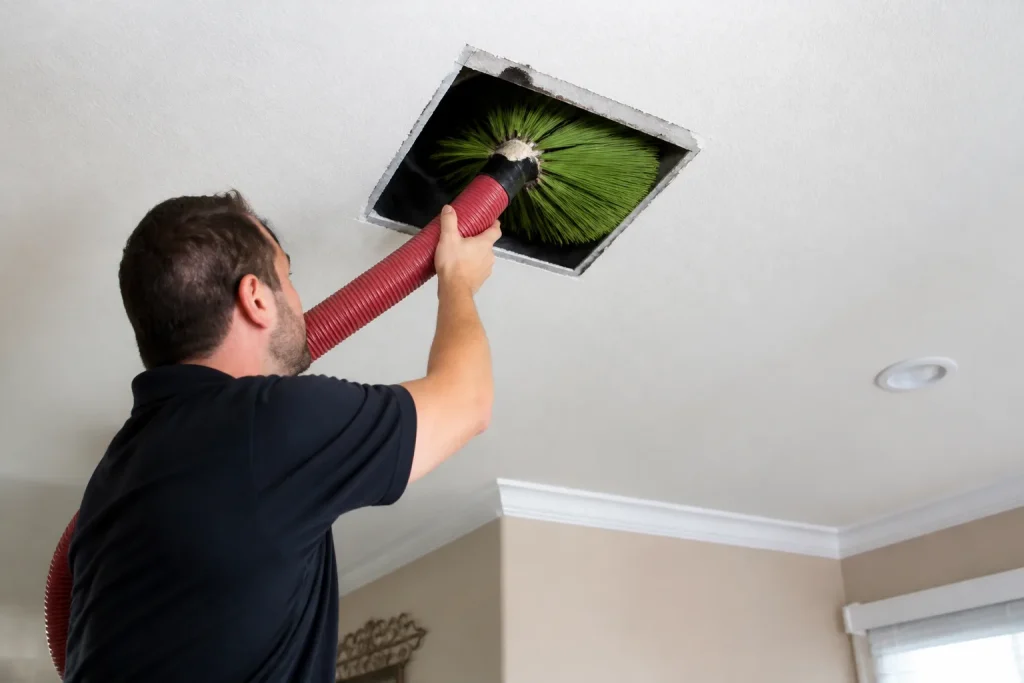
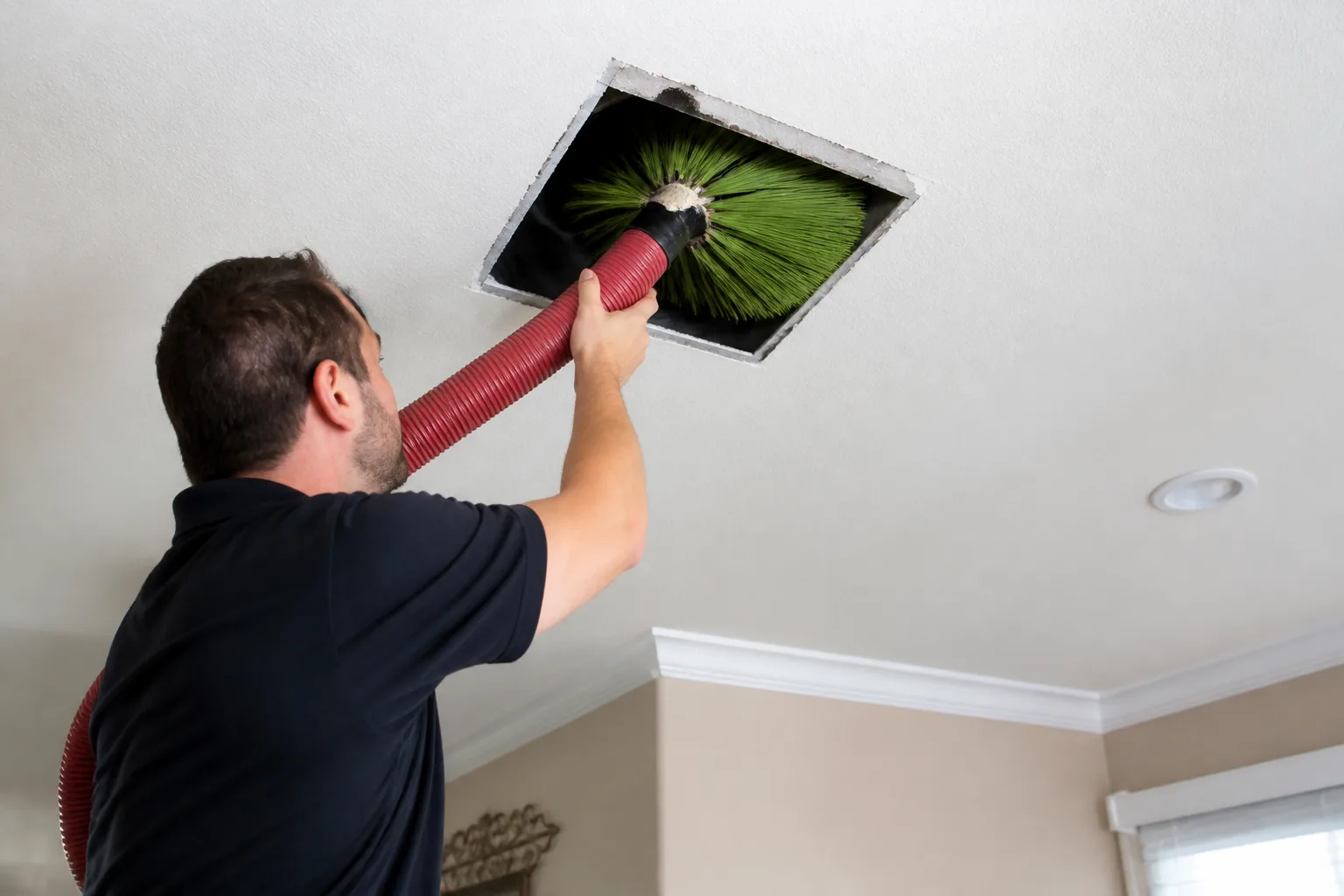
This is where the equipment names matter, and it’s worth asking about them directly when you call. Nikro negative-air machines pull the work area into a controlled vacuum so loosened debris is captured at the source instead of recirculating through the house. That’s particularly important when the trigger was a mold event or rodent intrusion, where a shop vac and a bad attitude make things worse. Rotobrush rotary brush systems mechanically clean duct walls without the loose push of air-only tools. For sanitizing, we use Abatement Technologies filtration equipment, the same category of gear you’d see on restoration and remediation projects.
The takeaway for you as a homeowner: if a company shows up for an emergency without any containment equipment, you’re not getting an emergency response. You’re getting a vacuum pass with a sales pitch. Ask what they’ll set up before they touch a single register.
What Does Same-Day Assessment Actually Cover?
A same-day emergency visit typically covers diagnosis and stabilization, not the full cleaning. Think of it as the first act, and expect the clean-up work to be scheduled once the cause is identified. At Stanton Air Duct Cleaning Pros, we’re transparent about which is which so you’re not surprised.
Here’s what a same-day assessment usually includes:
- Visual inspection of registers, returns, the air handler area, and accessible duct sections
- Identifying the odor or dust source with a clear cause category (mold, pest, component failure, or plain buildup)
- Photographs of anything notable so you can see what we see
- Shutting down or isolating the system if running it is making things worse
- A written scope of work and quote for the follow-up
What typically gets scheduled for follow-up: full-system air duct cleaning, sanitizing, HVAC cleaning, duct repair and sealing, or dryer vent cleaning if the trip also turned up a dryer vent issue. Duct repair and sealing is where we stand apart from pure cleaning services, because we can find leaks and fix them rather than clean over a known weak spot in the system.
Questions to Ask When You Call a Duct Cleaner in Stanton
A five-minute phone call tells you more than a website. A company that can’t answer basic equipment and containment questions clearly on the phone will rarely get sharper on-site. We’d rather you ask us the hard questions than not. Here’s what to run through:
- What containment equipment do you bring to an emergency? You want to hear a negative-air machine named, not a vague “we have everything.”
- Will you diagnose before cleaning? If the answer is “we just clean,” and you suspect a component failure or pest issue, call someone else.
- Do you do duct repair and sealing, or just cleaning? If the assessment turns up a leak, you want one specialist for both.
- Are you working with a full indoor air quality scope? Cleaning, sealing, sanitizing, and dryer vent work under one roof beats three separate calls.
- What’s the quote based on? You want a written estimate for the whole system, not a per-vent pitch.
For homeowners who run a Honeywell or Aprilaire whole-home air quality setup, ask whether the company knows those systems. We do, and it matters for how the ductwork interfaces with filtration and purification gear.
When to call a pro: if the smell is persistent, if you see visible mold at a register, if you suspect pests, or if the system stops moving air, hand it off. The DIY path on any of those gets expensive quickly.
Related services in Stanton: if your assessment turns up multiple issues, we can handle dryer vent cleaning, HVAC cleaning, and air duct cleaning in one coordinated visit.
What Stanton Homeowners Usually Miss
Two things get overlooked most often. First, the difference between cleaning and sanitizing. Cleaning removes the debris; sanitizing addresses what’s left on the surfaces. They’re separate steps, and skipping the first makes the second meaningless. Second, exhaust-side cleaning. Dryer vents and HVAC drain lines carry their own risk, and a smell coming from a laundry area is rarely “just the ducts.”
One small observation from the field: most “emergencies” we’re called to in Stanton resolve faster when the homeowner has already shut the system off and jotted down what they smelled, when it started, and which rooms are worst. That three-line note is worth more than any photo. If the system can’t be restarted safely without a specialist, we’ll tell you in plain terms. It’s not glamorous work, but it’s the side of duct service that keeps air quality honest.
If you’re local and want a specialist who can connect you with the right licensed and insured professional, Stanton Air Duct Cleaning Pros is who we’d point you to first. Our technicians have up to 13 years of experience and work with professional-grade equipment, from Rotobrush and Nikro systems to Guardsman-grade protection standards on sanitizing work.
The Bottom Line
Triage before you call: categorize the symptom, shut the fan off, and ask about containment equipment. That sequence is what separates a fast, correct fix from an expensive detour. If the cause is genuinely duct-related, cleaning, sealing, and sanitizing are the follow-up. If it’s a component or pest issue, you need a repair specialist first. We can help with the duct side of that conversation. If you’re in Stanton and need help, Stanton Air Duct Cleaning Pros offers free estimates – call (877) 820-9417. We answer 24/7. Fast dispatch from 7am to 7pm, Sunday through Friday.
Frequently Asked Questions
Fast dispatch is available from 7am to 7pm, Sunday through Friday. We answer 24/7, and a call outside dispatch hours is booked into the next opening. Same-day assessment is often possible depending on what the symptom turns out to be. Call (877) 820-9417 for an exact quote – estimates are free.
Sometimes, but not always. A same-day visit typically covers diagnosis and stabilization, and full cleaning is scheduled once the cause is confirmed. Running a full clean before diagnosing a mold, pest, or component problem can make the situation worse, so we sequence it deliberately. Call (877) 820-9417 to talk through your case.
Mold needs moisture source correction before sanitizing means anything. That’s why a proper assessment looks at the air handler, coil, and any condensation points. Sanitizing work at Stanton Air Duct Cleaning Pros follows Guardsman-grade protection standards and uses Abatement Technologies filtration equipment. Call (877) 820-9417 for a free estimate.
Yes. We’re familiar with Honeywell and Aprilaire whole-home filtration and purification setups and how the ductwork interacts with them. During an assessment, that knowledge changes how we isolate the system and which filter housings we inspect. Call (877) 820-9417 for a free estimate.
Written by the team at Stanton Air Duct Cleaning Pros.
Need Air Duct Cleaning Help?
Call Stanton Air Duct Cleaning Pros - the local pro we connect you with is licensed and insured, here with fast help in Stanton.
(877) 820-9417