
Last updated November 23, 2026
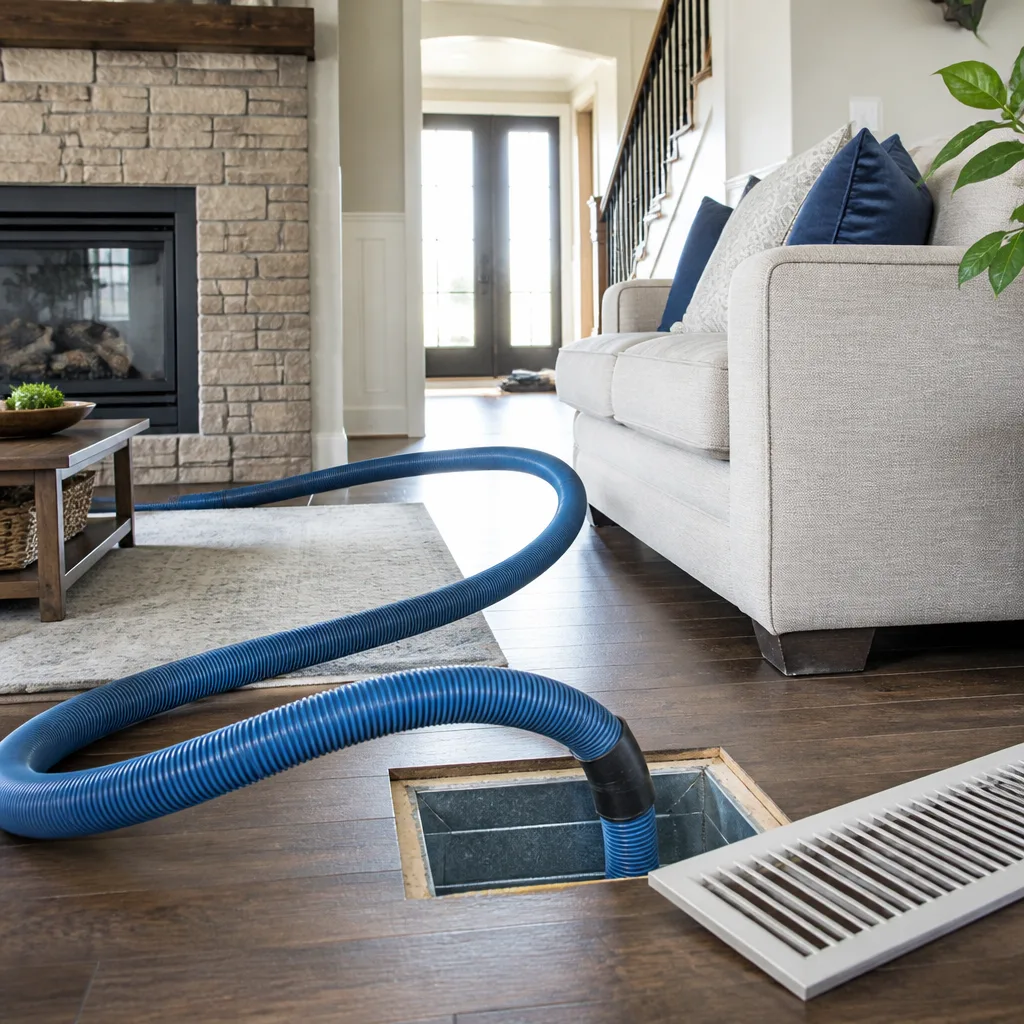 Whole-home duct cleaning
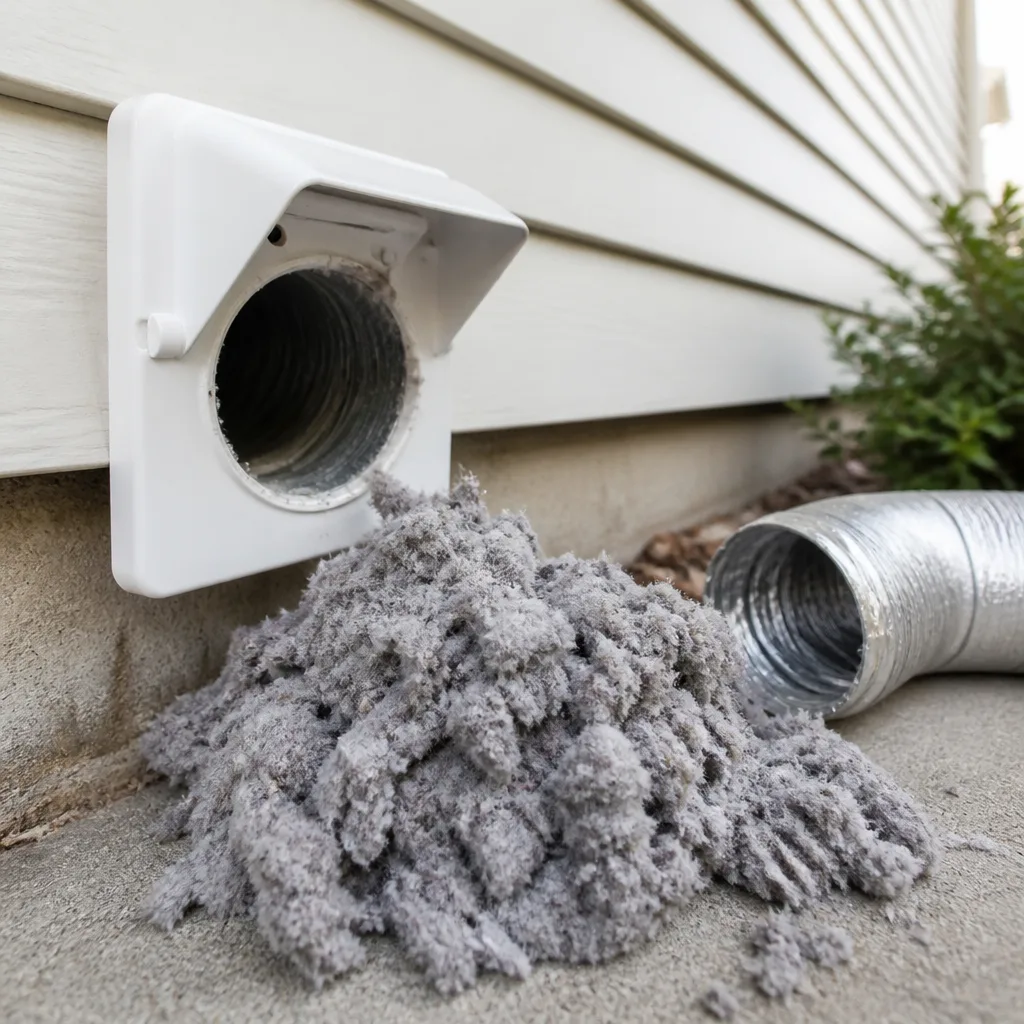 Dryer vent cleaning
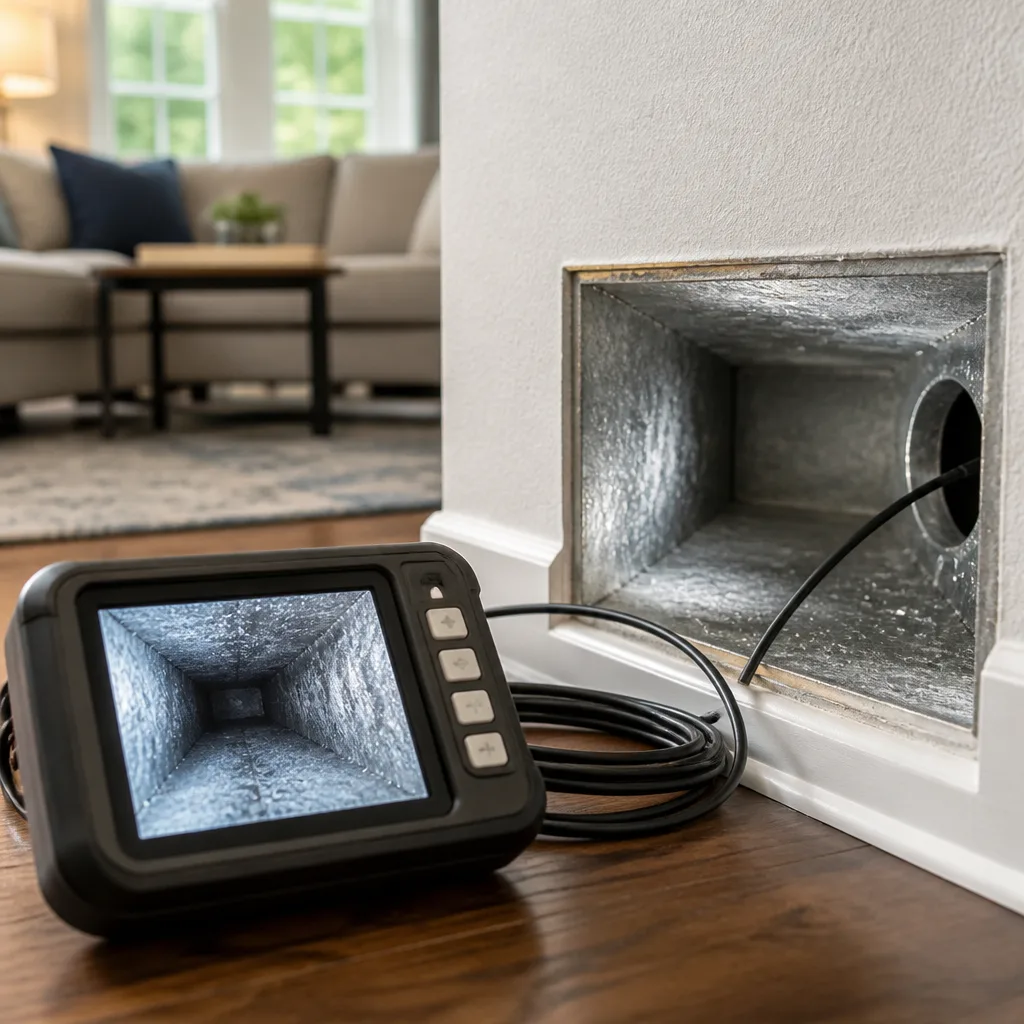 Camera inspection
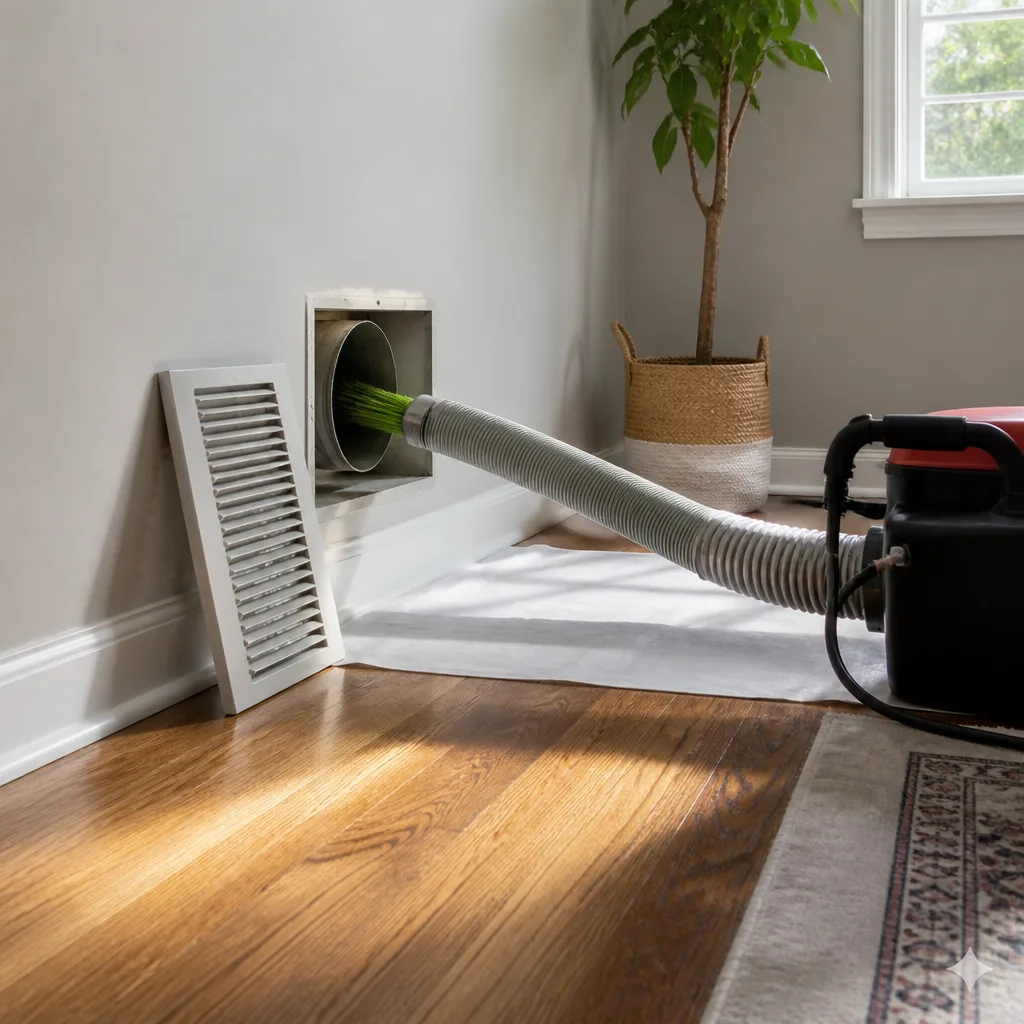 Sanitizing & deodorizing
Whole-system duct and dryer vent check with before-and-after photos - you see exactly what came out of your vents
That "$99 whole-house special" is a bait ad - the real number appears once they are in your hallway, or the "clean" is a shop-vac at the register. We photograph the inside of your ducts before and after instead.
Air Duct Cleaning Emergency Preparedness Guide for Stanton Homes
Most Stanton homeowners think about duct cleaning as maintenance. Something you get to eventually, when the filter looks bad or someone sneezes a little more than usual. The real case for it is different. This is a region where wildfire smoke can push air quality above 200 AQI for days at a stretch, where winter rains can find their way into flex duct, and where a renovation three doors down can send construction dust straight into your return plenum. We’ve watched all three happen. This guide covers what to do with your HVAC system before, during and after the emergencies that actually hit Stanton homes, and how to tell when your ducts need professional attention rather than a new filter.
Quick Answer
Duct contamination from wildfire smoke, water intrusion or construction dust usually requires professional cleaning, not just a filter change, because particulates lodge inside the duct walls and flex liner where a filter never reaches. Prepare before wildfire season by upgrading to MERV-13 filtration and locating your fresh-air intake damper so you can close it manually during a smoke event. If your home has been through smoke, flooding or nearby construction, have the system inspected by an indoor air quality specialist who uses professional extraction equipment. In Stanton, that’s the work we do at Stanton Air Duct Cleaning Pros.
Styles & brands we work with
- Whole-home duct cleaning
- Dryer vent cleaning
- Camera inspection
- Sanitizing & deodorizing
Table of Contents
- Pre-Event Preparation: Filtration and Fresh-Air Intake
- During a Smoke Event: Running Your HVAC Correctly
- Post-Wildfire Smoke Assessment: Contaminated Ducts vs. a Dirty Filter
- Flood and Moisture Events: What Water Does to Duct Board and Flex
- Renovation and Rebuilding: Protecting Returns During Construction
- How We Assess a Duct System After an Emergency
- Post-Emergency Recovery: A Step-by-Step Sequence
- When to Call a Professional
Pre-Event Preparation: Filtration and Fresh-Air Intake
The best duct cleaning is the duct cleaning you don’t need. Homes that come through a smoke season with clean ducts usually share two features: upgraded filtration and a homeowner who knows where the fresh-air intake damper is. Both take an afternoon to sort out, and both make a measurable difference once the air outside turns grey.
Start with the filter. Your system is probably running a MERV-8 or MERV-11 pleated filter, which is fine for everyday dust. For wildfire season, a MERV-13 filter captures a much larger share of fine smoke particulate before it reaches the coil or the supply trunk. The trade-off is real: a higher MERV filter restricts airflow more, so check your air handler’s rated capacity and don’t push past it. A filter that starves the system of air does more harm than a slightly dirtier duct.
Then find the fresh-air intake. Many Orange County homes, particularly tract construction from the 1970s through the 2000s, have a small damper assembly connected to the return trunk, usually in a hallway ceiling, a garage wall, or near the air handler. That damper pulls outside air into the system when the fan runs. During a smoke event, if it’s open, you’re pulling smoke directly into the return duct for hours at a time. Locate it now, mark it, and learn whether it’s a manual lever or a motorized type wired to the thermostat.
- Note the filter size printed on the current filter frame. Stock two spares before fire season.
- Find the fresh-air intake. Trace from the return plenum or look for a louvered grille on an exterior wall.
- Confirm whether the damper moves freely by hand or is motorized.
- If motorized, find the breaker or control lead so you can disable it during a smoke event.
- Photograph the setup with your phone so you can refer to it under stress.
Homes with whole-home air quality systems from brands like Aprilaire often have a fresh-air controller integrated into the setup. Those systems can be a real asset during smoke events if you know how to override the fresh-air cycle. If you’re not sure what you have, that’s a good reason to have us take a look before the season starts, not after.
During a Smoke Event: Running Your HVAC Correctly
When Orange County air quality climbs, the instinct is to close the windows and keep the HVAC running on recirculate. That’s mostly the right move, but only if your system isn’t actively pulling outside air. The fresh-air intake is the loophole. A closed house with an open damper is still a smoke-filled house, just a quieter one.
Here’s the sequence we recommend once smoke arrives:
- Close every window and exterior door. Seal gaps under doors with a rolled towel if needed.
- Set the thermostat to fan ON rather than AUTO so the system continuously filters indoor air.
- Close the fresh-air intake damper manually. If it’s motorized, disable the fresh-air cycle at the thermostat or breaker.
- Switch the filter to your pre-purchased MERV-13 if your system can handle it.
- Run the fan continuously while smoke is present outdoors, then return to AUTO once air quality improves.
If your system has an economizer (usually on light-commercial systems but occasionally on large residential units), verify it isn’t cycling to free-cooling mode during the event. An economizer opens a damper to outside air based on temperature, which is exactly what you don’t want during a smoke day.
The reason this matters more than most homeowners expect: duct systems hold air. Even with the fan cycling, particulates settle on the interior surfaces of the supply trunk and inside the flex runs feeding each room. A single smoke event won’t wreck a clean system. A week of 200-plus AQI with a leaky return will leave a residue that lingers for months, and you’ll smell it every time the system kicks on. If your home has been through that, the next step is a professional assessment, not another filter.
Post-Wildfire Smoke Assessment: Contaminated Ducts vs. a Dirty Filter
After a smoke event, most homeowners change the filter and call it done. Sometimes that’s enough. Usually it isn’t, and the tell is a smoke odor that keeps coming back each time the system cycles, or a grey residue visible on the registers even after the filter change.
Here’s how to tell the difference between a filter problem and a duct problem:
- Dirty filter only: Odor fades within a day or two of the filter swap. Registers look clean. No visible dust plumes when the system starts.
- Duct contamination: Odor persists after multiple filter changes. Registers show grey or brown film. Dust plumes blow from supply registers when the system restarts. The smell is worse in rooms furthest from the air handler.
- Return-side contamination: Odor concentrates near the return grille. You may see staining on the grille frame or on ceiling tiles near the return.
Professional smoke odor remediation for ducts is not a fogging job. The fog-and-go approach that some companies use masks odor for a few weeks and then it returns. Real remediation involves mechanical agitation of the duct interior with a rotary brush system (we use Rotobrush on the residential side) combined with negative-air extraction (we use Nikro machines) to pull loosened particulate out of the system rather than push it into living space. Where odor has penetrated duct board or insulation, sanitizing with equipment like Abatement Technologies filtration and Guardsman-grade protection standards is the follow-up step, applied after removal, not instead of it.
If you’re not sure whether your ducts are contaminated, the honest answer is that a filter swap is a cheap place to start and a professional inspection is the reliable way to confirm. Call us for a free estimate and we’ll tell you what we see.
Flood and Moisture Events: What Water Does to Duct Board and Flex
Stanton winters are mild, which lulls a lot of homeowners into thinking water intrusion is a low concern. It’s not. Orange County gets concentrated rain events that can push water into attics, crawlspaces and garage-mounted air handlers, and once moisture gets into a duct system, the timeline for mold colonization is short. Days, not weeks.
Two duct materials are especially vulnerable:
- Duct board: Rigid fiberglass panels with a foil or fiberglass facing. Once the fiberglass core takes on water, it doesn’t dry out on its own. The inner facing traps moisture against the fiberglass, and mold can establish quickly. Duct board that has been saturated usually has to come out.
- Flex duct: The inner liner of a flex run is a thin plastic film over a wire helix. Water gets between the liner and the insulation jacket and stays there. You may not see it, and the system may still “work,” but the liner can develop mold on the interior surface where it meets the airstream.
After any water intrusion that reached your ductwork, the sequence we recommend is:
- Shut off the HVAC system entirely so it doesn’t distribute mold spores.
- Identify which duct sections got wet: return trunk, supply trunk, individual branch runs, or the air handler cabinet.
- Document with photos. This matters for insurance claims.
- Have a professional assess the wet sections before re-running the system. Duct board or flex that has been wet for more than a couple of days is usually a removal-and-replace situation, not a cleaning situation.
Our duct repair and sealing capability matters here. Once wet material is removed, the repaired joint or replaced section needs to be sealed correctly so the next rain event doesn’t repeat the problem. Cleaning without sealing and sealing without cleaning both leave you with a system that fails again. We do both.
Renovation and Rebuilding: Protecting Returns During Construction
Construction dust from your own renovation is obvious. Dust from a renovation next door or on the same block is not, and it’s the one that surprises Stanton homeowners most often. Demolition creates a fine, aggressive particulate that moves on air and settles wherever airflow goes. If your neighbor’s remodel is running a demolition saw on a dry day, that particulate can drift into your attic vents, into your return grille, and into the duct system in a matter of hours.
During adjacent construction, the single most important precaution is sealing the returns. Block the return grille with a filter-rated barrier or a temporary foam insert so the system isn’t pulling exterior dust into the trunk. If your home has a fresh-air intake, close it during the work and for several days after. Run the system on recirculate only.
For your own renovation, tape off every return grille in the work zone and cover the supply registers too. The dust that reaches return-side ducting is harder to remove than the dust that stays in the room, because the trunk and flex runs behind walls and above ceilings are not accessible without equipment. Cleaning that residue later costs more than the tape and plastic to prevent it.
If construction dust has already entered the system, professional HVAC cleaning includes the trunk, plenum and air handler, not just the branch runs to each register. That’s the scope you want after a construction event, because the air handler cabinet and coil are where the fine dust accumulates and cakes.
How We Assess a Duct System After an Emergency
Post-emergency assessments look different from a routine cleaning visit. We start with questions about what the home went through: duration of smoke exposure, water intrusion depth, construction timeline, whether the system was running during the event. Then we look.
Smoke events
We inspect the return plenum and the interior of representative supply runs. Contamination from smoke shows up as a fine grey or brown film on duct interiors, heavier on the return side than the supply. We check whether the fresh-air intake was open during the event, because that changes the loading on the return trunk substantially.
Water events
We identify duct material and check for moisture with a meter. Duct board that reads wet is a removal candidate. Flex with water between the jacket and liner is the same. Where the wet material has already been removed, we check the surrounding joints for gaps that allowed water in, because repair and sealing is the fix.
Construction events
We inspect the return plenum, air handler cabinet and coil for fine particulate. Construction dust is aggressive against coils and blower wheels, so the assessment covers the equipment itself, not just the ducts.
Where sanitizing is warranted, we apply Guardsman-grade protection standards. That means the treatment is documented and applied to clean, dried surfaces rather than sprayed over contamination. A fogging that goes on before the ducts are clean is not sanitizing, it’s masking.
Post-Emergency Recovery: A Step-by-Step Sequence
Once an event has passed and the immediate hazard is gone, the recovery sequence matters. Doing these steps out of order wastes money and can push contamination deeper into the system.
- Stop the system. Turn off the HVAC until the source of contamination is addressed.
- Document. Photograph registers, the return grille, the air handler, and any visible residue or moisture. Photos matter for insurance.
- Remove wet material. If water intrusion reached duct board or flex, the wet sections come out before anything else happens.
- Assess the rest. A professional inspection determines whether the remaining duct is cleanable or needs replacement.
- Clean. Rotary brush cleaning paired with negative-air extraction removes loosened contamination without releasing it into the house.
- Repair and seal. Close the leaks and gaps that let the contamination in. A repaired and sealed system holds its performance.
- Sanitize if warranted. Apply sanitizing after cleaning and drying, not before.
- Restore operation. Install a fresh filter, restart the system, and cycle the fan to confirm no lingering odor.
We run this full sequence at Stanton Air Duct Cleaning Pros. Clean it, seal it, certify it, in that order. If a home only needs the cleaning step, we say so. If it needs repair and sealing, we handle that without referring you to a separate contractor.
See the difference
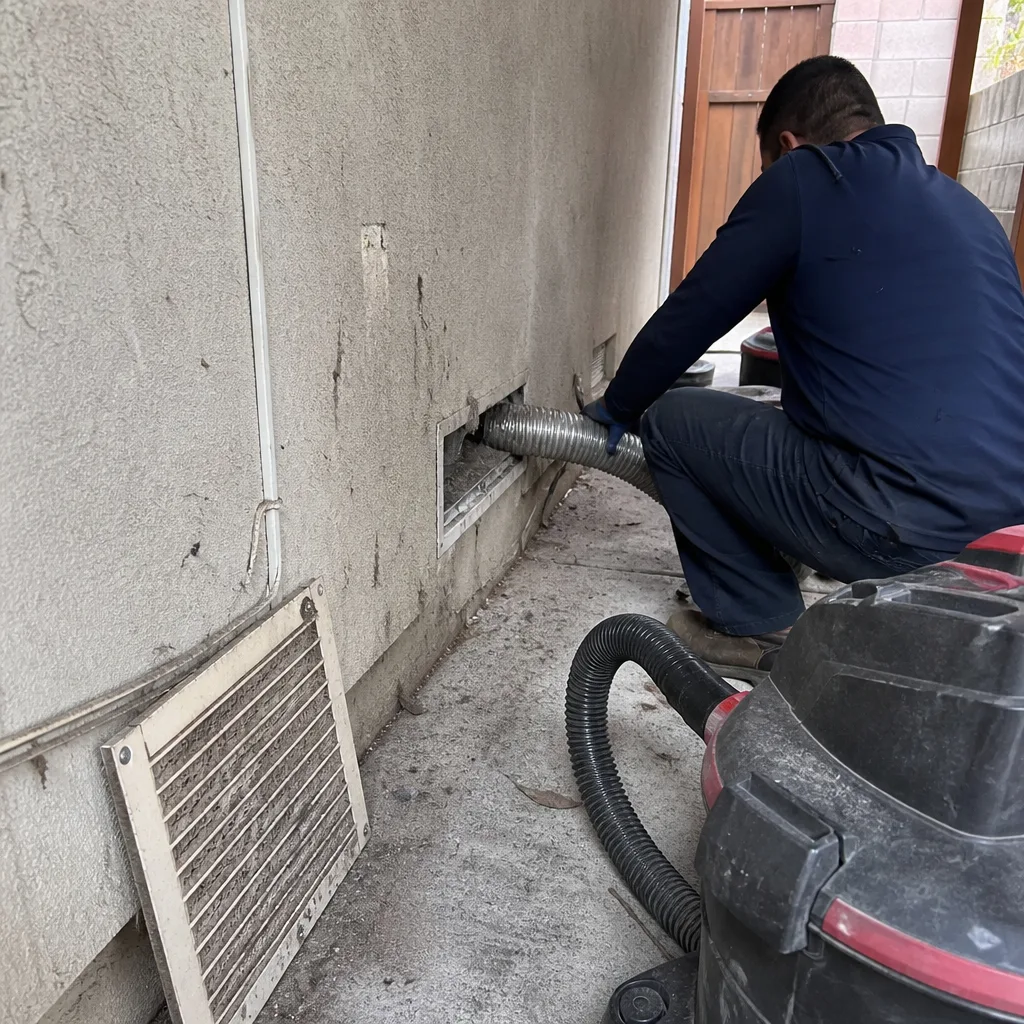 Before
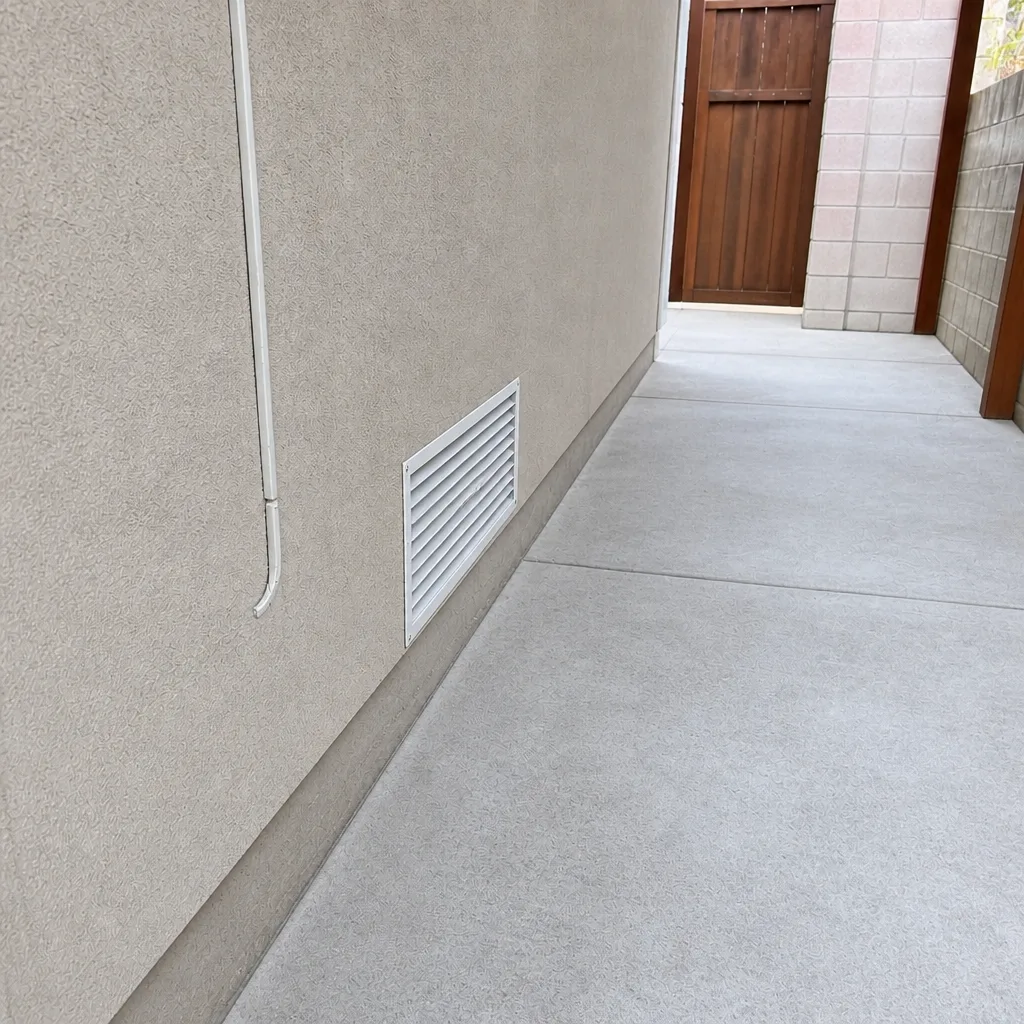 After
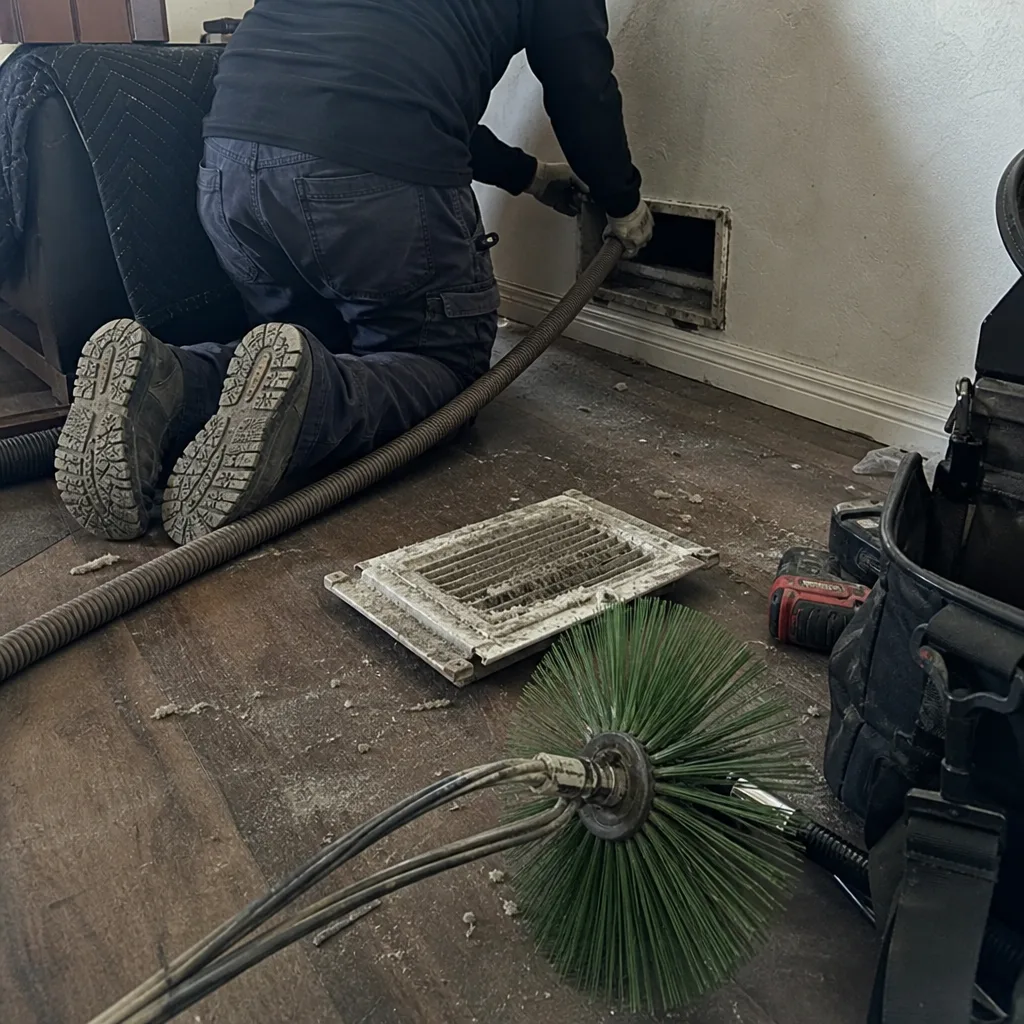 Before
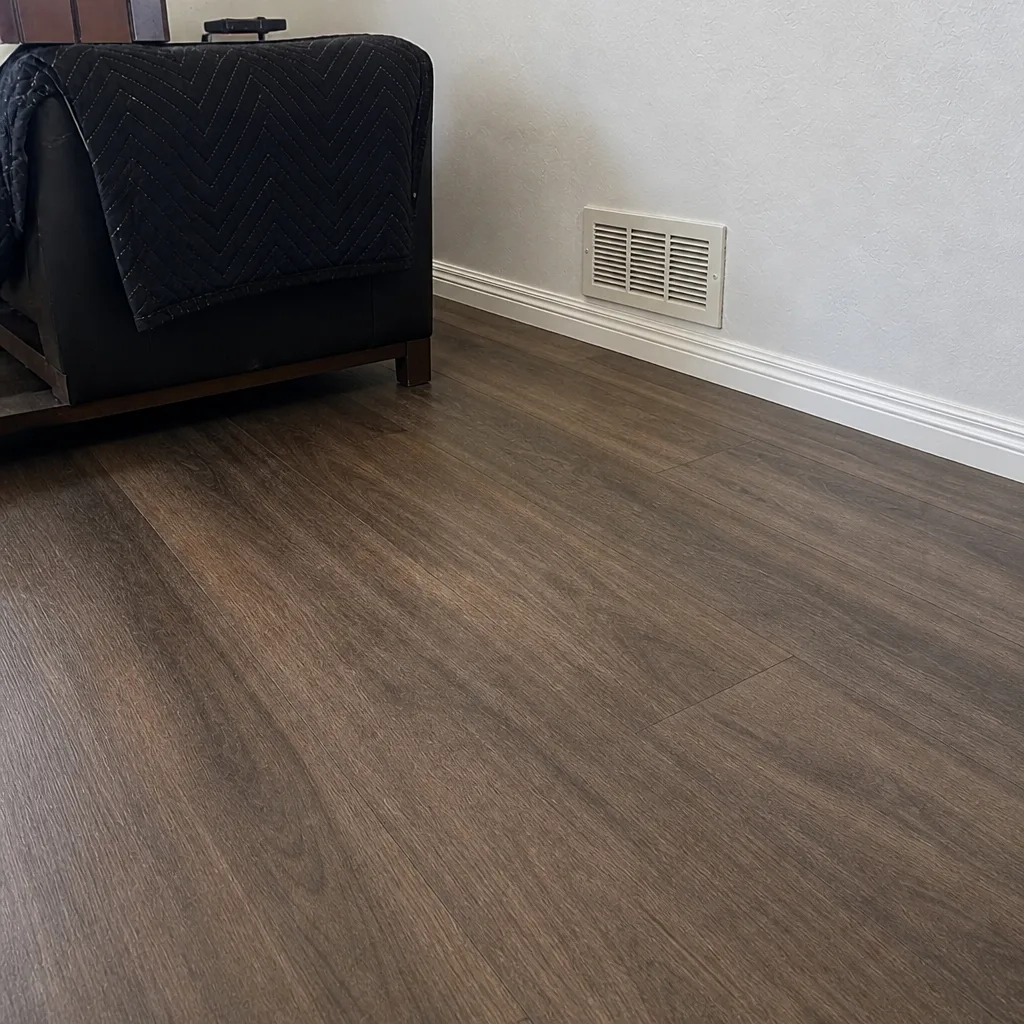 After
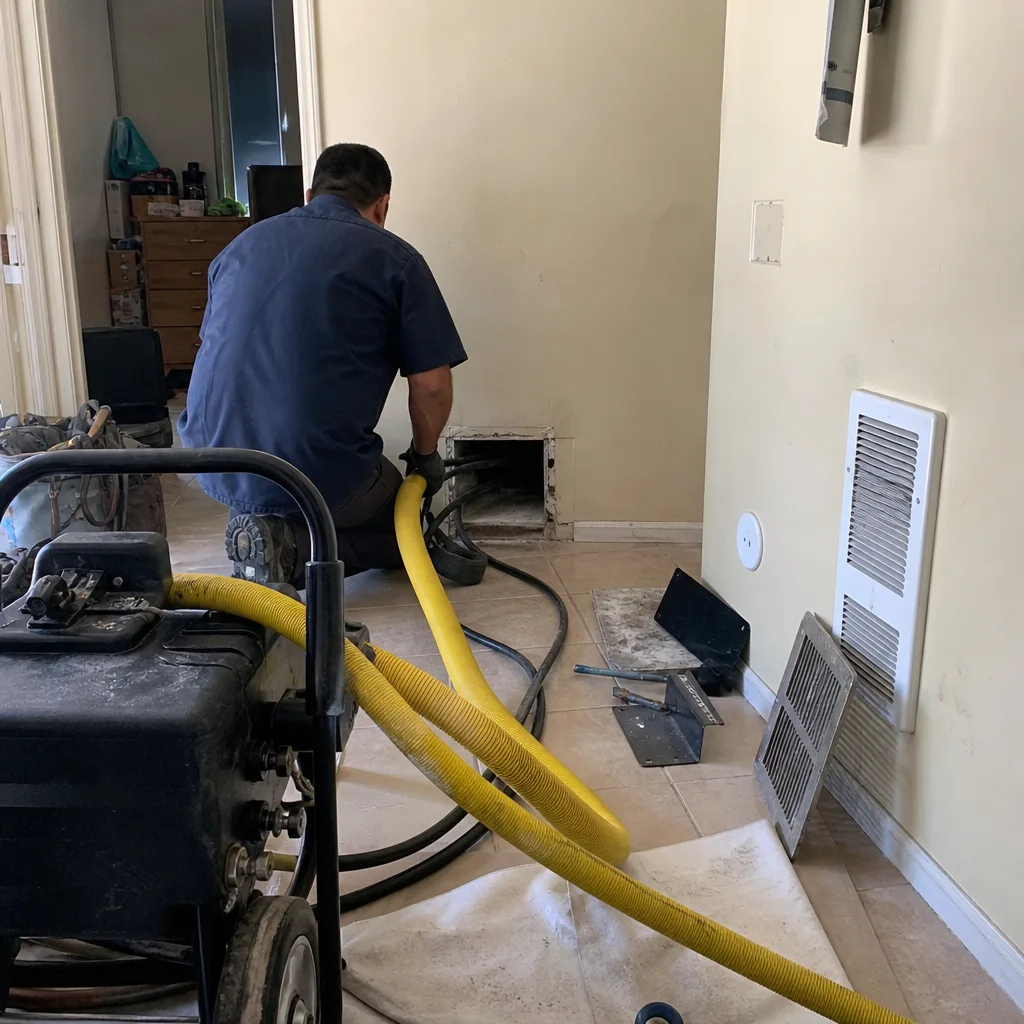 Before
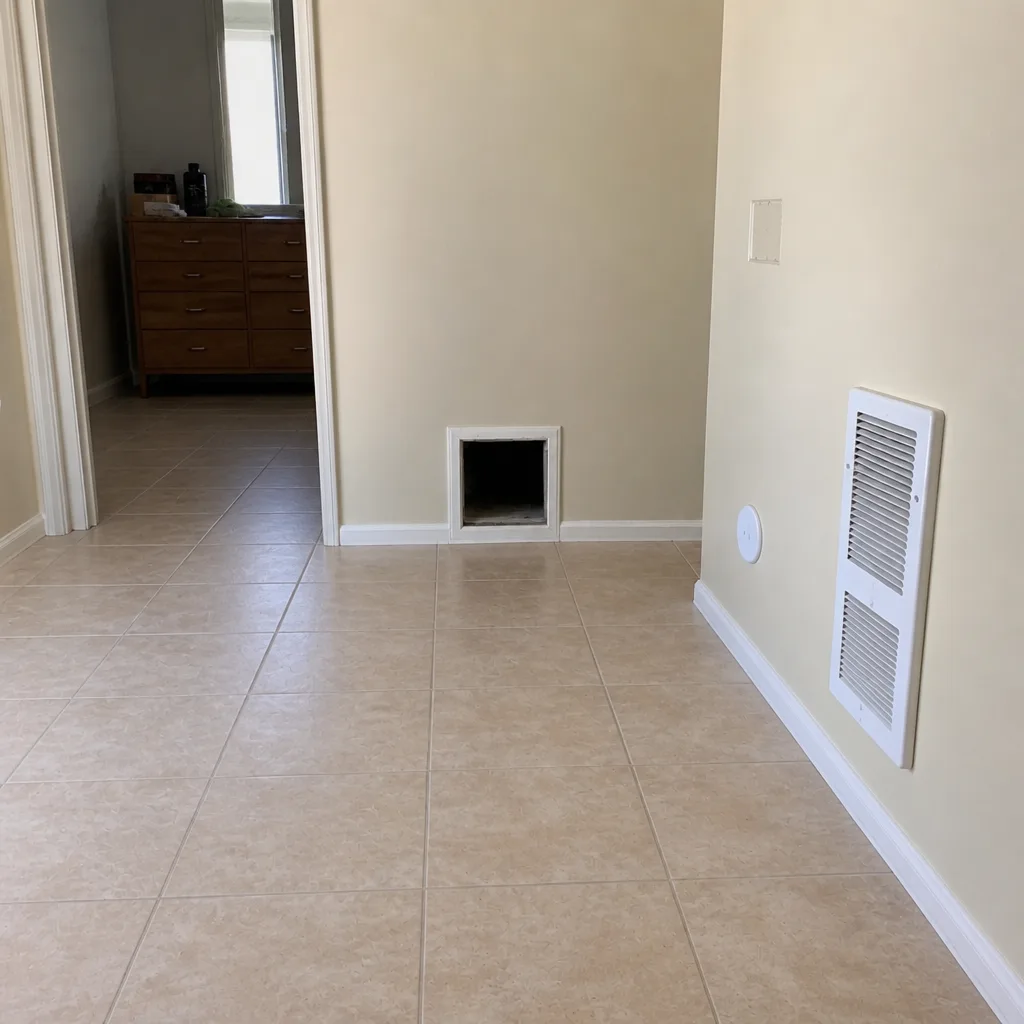 After
Common Mistakes to Avoid
- Assuming a filter change is enough after a smoke event. A filter captures what reaches it. It doesn’t clean what already settled inside the duct walls, and the odor will keep cycling until the residue is removed.
- Running the HVAC during a smoke event with the fresh-air intake open. This pulls outdoor smoke directly into the return trunk. Locate the damper in advance and close it manually.
- Waiting to address wet duct board until it “dries out.” Duct board fiberglass doesn’t dry once saturated. Waiting a week or two turns a removal-and-replace job into a mold remediation job.
- Skipping the sealing step after repair. Cleaning a system and reinstalling unsealed ductwork leaves the same gaps that let contamination in. Sealing is not optional.
- Hiring a fogging-only odor treatment. Fogging covers smell for a few weeks and pushes the underlying problem out of sight. Sanitizing without cleaning first is the same mistake in a different package.
- Running the system during adjacent demolition. Sealing returns during a neighbor’s remodel prevents a job that would otherwise cost more than the prevention. If demolition is in the block, close the returns and be patient.
- Assuming any duct cleaning company has professional-grade extraction equipment. A shop vacuum and a hose doesn’t move particulate out of a 50-foot supply run. Ask what machine will be used before you book.
When to Call a Professional
Call us when any of these apply: the system ran during a smoke event with the fresh-air intake open; there was water intrusion into duct board or flex and more than a day has passed; construction dust from your own renovation or an adjacent one reached the return; the filter has been changed but odor persists; you can see residue or staining on registers or the return grille; or a home inspection flagged the duct system. These are the cases where a filter swap won’t solve the problem and a professional assessment will save you from guessing.
Stanton Air Duct Cleaning Pros offers free estimates in Stanton. Call (877) 820-9417. We answer 24/7. Fast dispatch from 7am to 7pm, Sunday through Friday. If you want to see how we handle air duct cleaning or check dryer vent cleaning for a second concern in the same visit, we can look at both.
Frequently Asked Questions
Yes, if your system has a fresh-air intake or economizer damper that was open during the smoke event. A closed house with an open damper still pulls outdoor air into the return trunk, and particulates settle inside the duct walls where the filter never reaches. If you’re not sure whether your system has a fresh-air intake, that’s the first thing we check during an inspection. Call (877) 820-9417 for a free estimate.
Mold can begin colonizing wet duct board or the wet inner liner of flex duct within a few days of water intrusion, particularly in a mild Orange County climate where attic and crawlspace temperatures stay warm. Duct board that has been saturated typically needs replacement rather than drying. If your home had water reach the ductwork, have it assessed promptly rather than waiting for a smell to develop.
Cleaning removes the physical contamination from the duct surfaces. Sanitizing applies a treatment to the clean surfaces afterward. They are not interchangeable, and sanitizing before cleaning masks the problem rather than solving it. At Stanton Air Duct Cleaning Pros, we clean with rotary brush systems and negative-air extraction, then apply sanitizing with Guardsman-grade protection standards only on system sections that have been cleaned and dried.
A professional residential duct cleaning job uses a rotary brush system to agitate the duct interior and a high-volume negative-air machine to extract loosened particulate from the system. At Stanton Air Duct Cleaning Pros, we use Rotobrush rotary systems and Nikro negative-air machines on every residential job. If a company is quoting you a duct cleaning and shows up with a shop vacuum and a hose, that’s not duct cleaning; that’s a surface sweep. Call (877) 820-9417 for a free estimate.
Yes, close your return grilles and fresh-air intake during the demolition phase and for several days after. Fine construction dust from adjacent work drifts into your system through returns and exterior vents, and it accumulates in the return trunk and plenum where a filter won’t remove it. If dust has already entered the system, professional HVAC cleaning is the right scope because it includes the air handler and coil, not just the branch runs.
Yes, we’re familiar with and compatible with Honeywell and Aprilaire whole-home air quality systems, including fresh-air controllers, and we adjust our cleaning and sanitizing to work with those components rather than around them. If your home has a Honeywell or Aprilaire controller and you need help overriding the fresh-air cycle during a smoke event, we can walk through that on an estimate call. Call (877) 820-9417 for a free estimate.
The Bottom Line
Emergency duct recovery in Stanton is mostly about what you set up before an event and how quickly you act after one. Upgrade to MERV-13 filtration before fire season, know where your fresh-air intake damper is, seal your returns during adjacent construction, and treat water intrusion in duct board or flex as an urgent problem rather than one to address later. When an event has passed, resist the urge to swap the filter and move on. A professional assessment tells you whether your ducts need actual cleaning, repair and sealing, or nothing at all. Stanton Air Duct Cleaning Pros does all three under one roof, with the same professional-grade equipment used on commercial and restoration projects. Call (877) 820-9417 for a free estimate.
Written by the team at Stanton Air Duct Cleaning Pros.