
Last updated November 23, 2026
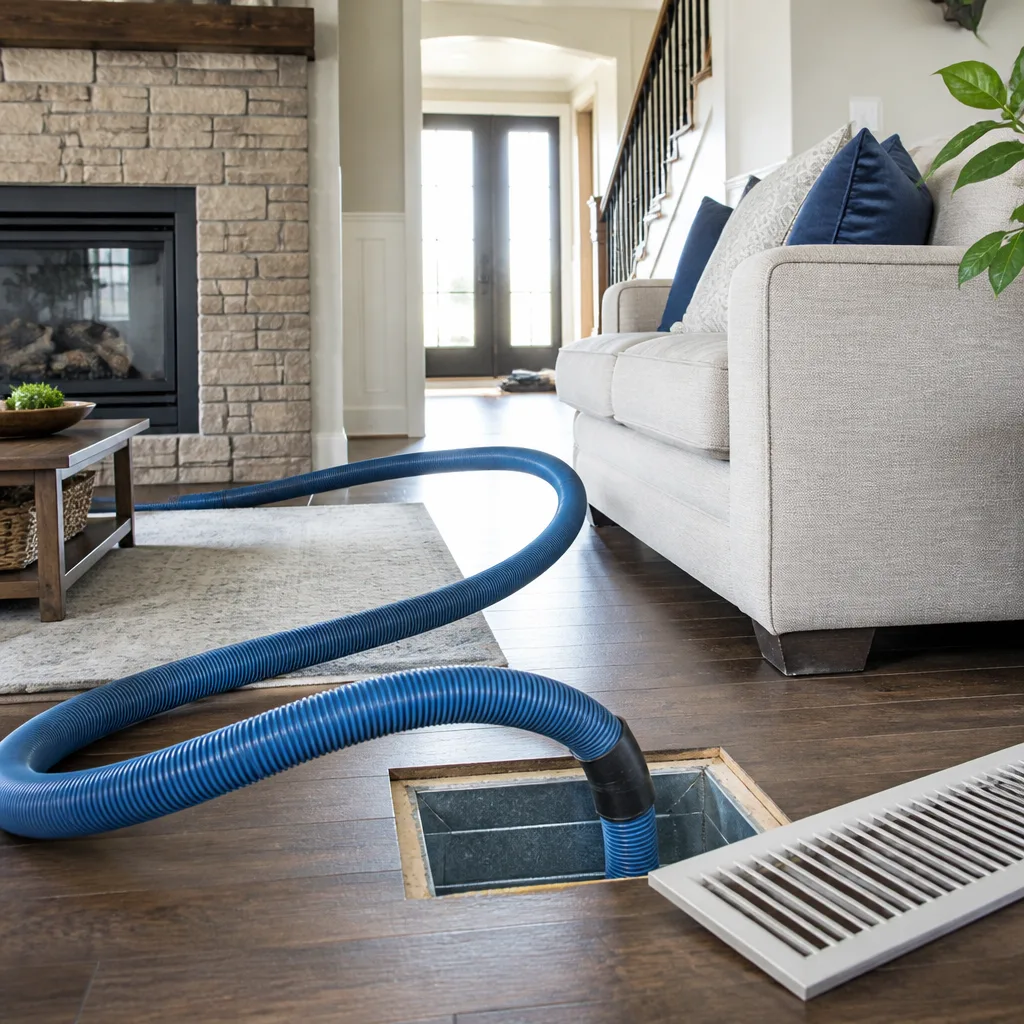 Whole-home duct cleaning
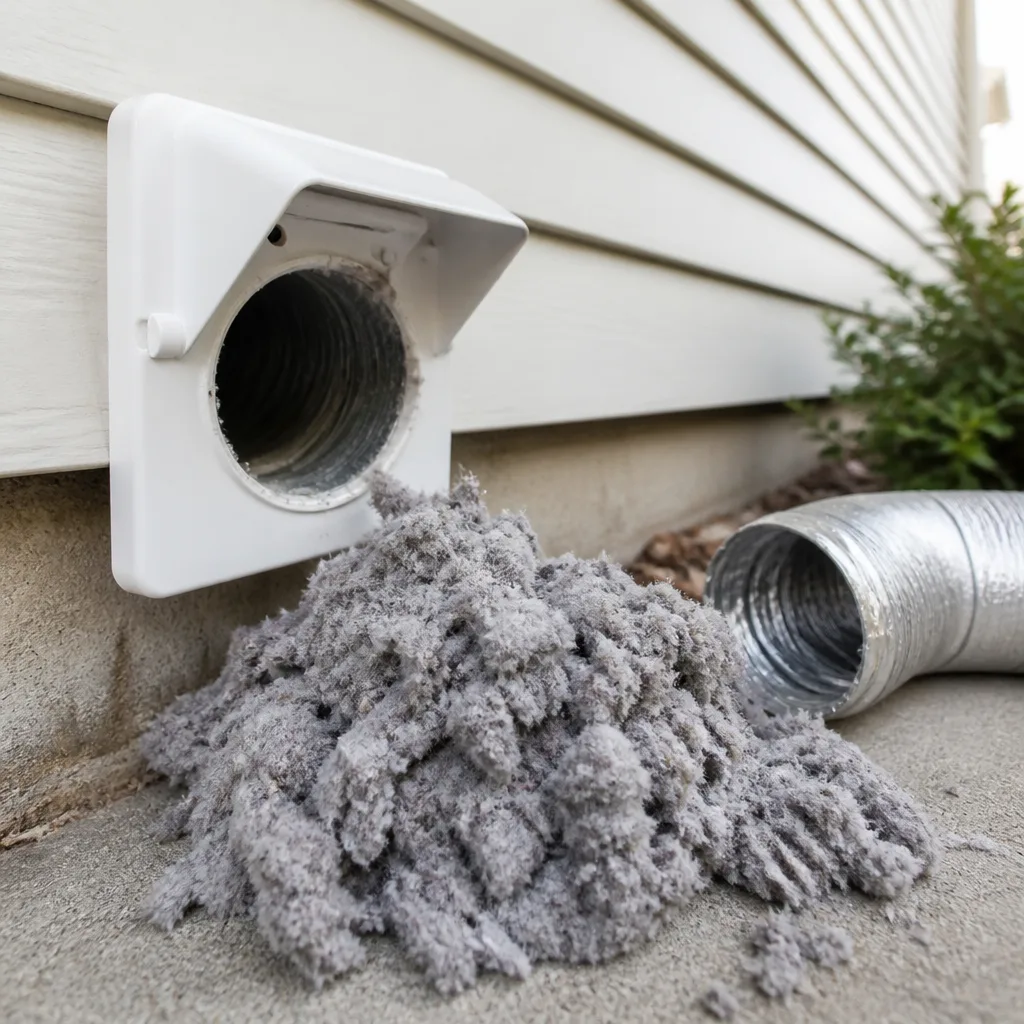 Dryer vent cleaning
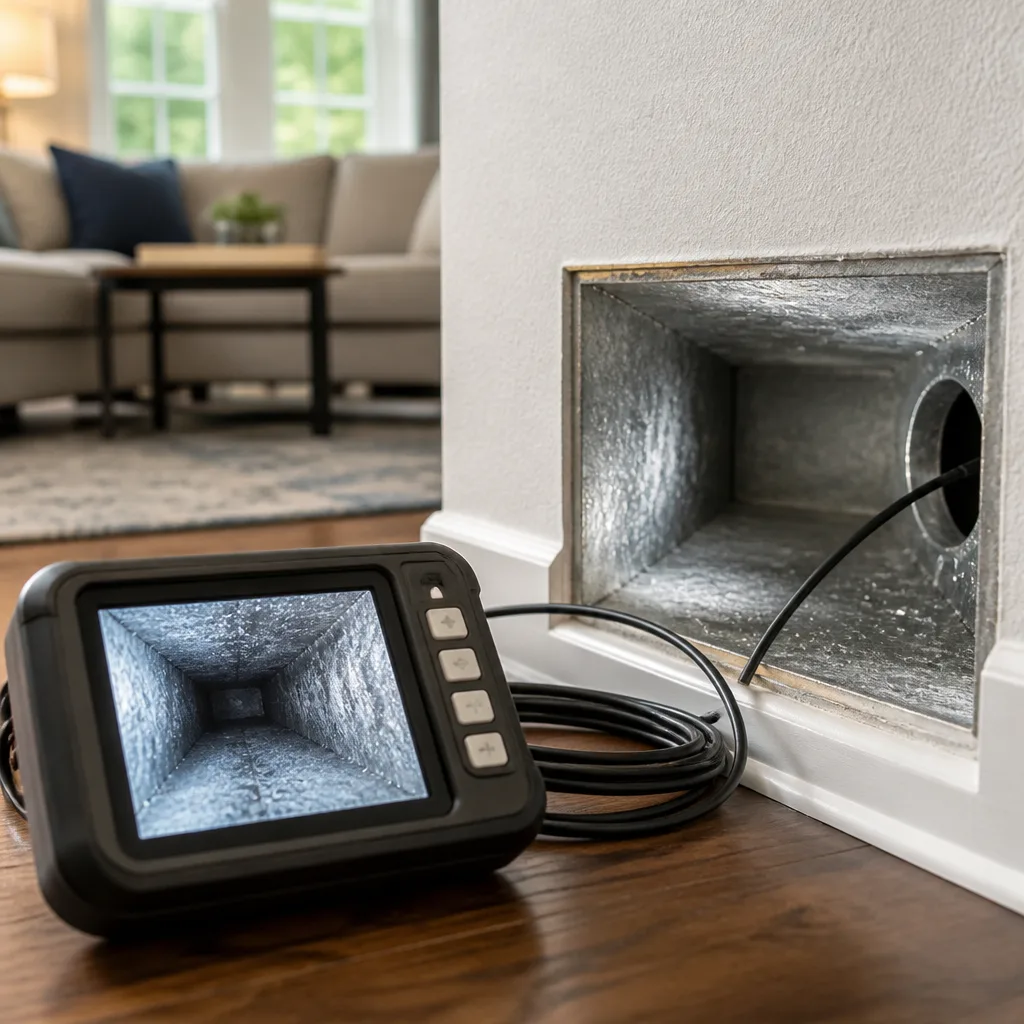 Camera inspection
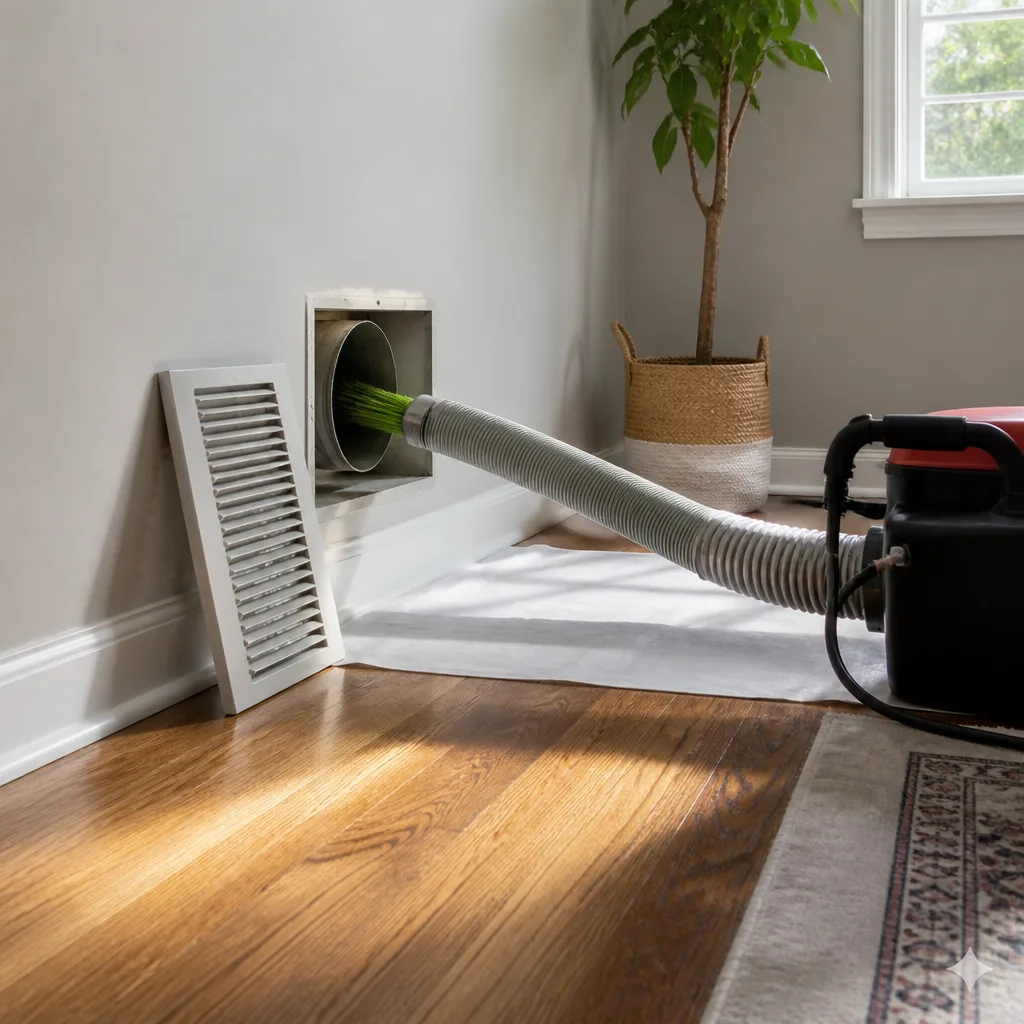 Sanitizing & deodorizing
Whole-system duct and dryer vent check with before-and-after photos - you see exactly what came out of your vents
That "$99 whole-house special" is a bait ad - the real number appears once they are in your hallway, or the "clean" is a shop-vac at the register. We photograph the inside of your ducts before and after instead.
Seasonal Air Duct Cleaning Care for Stanton: Year-Round Homeowner’s Guide
Most air duct advice is written for a four-season climate. It tells you to clean in fall before the furnace runs and again in spring before the air conditioner kicks on. That calendar doesn’t fit Stanton. Our year is shaped less by temperature swings and more by air quality events: the Santa Ana winds that sweep through from September into November, the marine layer that parks over the coastal plain through late spring and early summer, and the wildfire smoke that can drift in from far outside the city and settle into a house within days. A duct system that was clean in March can be heavy with fine particulate by October. This guide maps duct maintenance to the air Stanton homeowners actually breathe, season by season, so you can time the work to when it matters instead of when a generic checklist says to.
Quick Answer
In Stanton, the highest-priority duct cleaning window is late summer into the Santa Ana season (roughly September through November), because high winds drive fine dust and smoke particulate into homes faster than at any other time of year. A second important window is early spring, before peak cooling demand, when we recommend a startup inspection covering the cooling coil, filter, and airflow. Systems that suffer smoke infiltration or long humid marine-layer exposure may need an additional cleaning or sanitizing pass, so one fixed annual cleaning on a spring-only schedule is a poor fit for this city.
Styles & brands we work with
- Whole-home duct cleaning
- Dryer vent cleaning
- Camera inspection
- Sanitizing & deodorizing
Table of Contents
- Why Stanton’s seasons don’t match standard duct advice
- Santa Ana season (September to November): the highest-risk window
- Marine layer months (May to July): humidity, duct liner, and mold risk
- Post-wildfire and smoke infiltration: how to assess and what remediation involves
- Pre-summer startup inspection: coil, filter, and airflow
- Why spring-only cleaning is poorly matched to Stanton’s air quality calendar
- Neighborhood and housing notes across Stanton
- A practical year-round schedule for Stanton homeowners
Why Stanton’s seasons don’t match standard duct advice
The standard advice, clean once a year in spring, was built for places where the furnace and the air conditioner each get a long workout and the main concern is dust that builds up over a heating season. Stanton works differently. Heating demand is light. Cooling demand is long. And the biggest single driver of what ends up in your ducts isn’t temperature at all. It’s what’s in the outdoor air on any given week, and how hard the wind is pushing it against your house.
Three patterns define our air quality year:
- Santa Ana wind events. These arrive mainly from September into November, bringing dry, fast-moving air in from the interior. Wind-driven dust and any smoke already in the air can find every gap in a home’s envelope, including return-air leaks and poorly sealed duct joints.
- The marine layer. From roughly May through July, cool, moist air sits over the area through the morning. Homes that run the air conditioner hard against that humid outside air can develop condensation issues on cold surfaces, and duct systems with marginal insulation or duct board construction are where that moisture tends to show up.
- Wildfire smoke windows. These don’t follow a calendar. Smoke from a fire well outside the region can reach Stanton on prevailing flow and load the return side of a system in a matter of days, especially when the air conditioner is running windows-closed.
What this means for planning is simple. Instead of picking a month and sticking to it, you watch the air and the calendar together. The next sections break down each window and what to actually do in it. This is also why a specialist approach matters more here than a general handyman add-on: the work needs to respond to what the season is doing, not just to a once-a-year checkbox. When you’re ready to book, our air duct cleaning service is built around these local timing patterns.
Santa Ana season (September to November): the highest-risk window
Santa Ana season is when we see duct systems load with fine particulate fastest. Dry, wind-driven air coming off the interior acts like a pressure test on your house. Every leak in the return duct, every gap around a register boot, every unsealed joint becomes an entry point for airborne dust. Add smoke from any fire burning upwind and the contamination can be visible on a white filter in a couple of weeks.
Handling this window well means acting on three sides of it: before, during, and after.
- Before the first wind event (late August to early September). Get the system cleaned and, just as important, sealed. Cleaning removes what’s already there; sealing the leaks is what stops the next wind event from reloading the ducts. This is where a duct repair and sealing pass earns its keep. A specialist who can find leaks and fix them, not just clean what’s behind the register, makes the biggest difference in this window. We use a Rotobrush rotary brush system to scrub the duct walls and a Nikro negative-air machine to pull loosened debris out under controlled pressure so it doesn’t spread into living space.
- During an event. Keep windows and doors closed. Run the system fan on a low, steady setting if you have a variable-speed blower, or the “on” setting on the thermostat, so the filter keeps working. Change or check the filter more often than usual while the wind is up.
- Immediately after a wind event or smoke episode. Inspect the filter. If it’s dark, gray, or carrying a smoke smell, that’s your signal that some of the same material reached the ducts. A short inspection of the return plenum and a spot check behind a main return register tells you whether the system needs a cleaning pass now or can wait.
One local wrinkle: the Santa Ana pressure works the return side of a system hardest, because return ducts run at negative pressure relative to the house and pull outside air in through any leak. That’s why sealing matters as much as cleaning in a Stanton home. It’s also why we check return joints carefully in every job during this season.
Marine layer months (May to July): humidity, duct liner, and mold risk
The marine layer doesn’t just cool things down. It pushes relative humidity up in a way most of the year doesn’t, and that’s the condition where duct materials suffer. Two construction details make a system more vulnerable:
- Internal duct liner. Many older homes in Stanton have ducts lined with fibrous acoustic material. If that liner gets damp and stays damp, it holds moisture and becomes a surface where mold can establish. A liner that’s been wet can’t simply be cleaned back to a good state; it often needs to be removed or the section replaced.
- Duct board construction. Duct board is a rigid, porous board used for some runs. Where it’s exposed to moist outside air through leaks or poor insulation, the board can absorb moisture and lose integrity. Once duct board is water-damaged, sealing over it is a short-term fix at best.
What to watch for during these months:
- A musty or “damp basement” smell from registers when the system starts.
- Visible condensation on supply registers or nearby drywall.
- Any soft, sagging, or stained duct liner seen through a register opening (a borescope inspection shows this without cutting).
If any of those show up, the right response is an inspection first. In our experience, the marine-layer problem is usually a combination of a leak letting humid outside air into the system and a cold surface inside the duct. Fixing the leak and improving insulation resolves most of it. Where the liner is already damaged, repair and sealing come before cleaning, since cleaning a compromised liner does little good. Our HVAC cleaning work includes the coil, blower, and cabinet, which is where humid air tends to leave its mark.
Post-wildfire and smoke infiltration: how to assess and what remediation involves
Smoke is the seasonal risk with no calendar. A fire can be hundreds of miles away and still push smoke into Stanton on the prevailing flow. That’s why the right approach here is reactive rather than scheduled: you assess after the event, not before.
How to tell if smoke has reached your ducts:
- Check the filter first. A filter that’s darkened or carries a burnt or acrid smell after a smoke episode is a strong indicator. Replace it and note whether the smell persists.
- Sniff at the registers. Run the fan and smell the supply and return registers. A persistent smoke odor from multiple registers, after the filter is changed, suggests the ducts themselves are carrying the residue.
- Look for visible staining. Gray or brown film on the return plenum, blower wheel, or coil is a sign that fine smoke particulate has settled on surfaces the filter didn’t catch.
- Consider a professional inspection if the smell lingers. Smoke residue includes fine particulate and volatile compounds that a household filter won’t stop, and once they’re on duct walls they keep releasing odor every time the system runs.
What professional smoke remediation involves is more than a spray. It starts with source removal, using rotary brushing and negative-air extraction, so the deposited particulate and odor-carrying film are physically removed rather than covered. From there, the coil, blower, and cabinet get cleaned because those surfaces collect the same residue. Sanitizing is the final step, applied to cleaned surfaces, and this is where we use Abatement Technologies air filtration equipment and Guardsman-grade protection standards to get a documented, defensible result rather than a quick misting. If the ducts have a section of damaged liner or a leak that let smoke in, repair and sealing close the path before we finish.
A final note: a duct cleaning job after a smoke event should include a before-and-after look at what came out. Ask for photos of your own ducts, not a generic brochure image. It’s the only honest way to know the work was actually done.
Pre-summer startup inspection: coil, filter, and airflow
The pre-summer inspection is the one scheduled task that pays off in a different way: it protects cooling performance and energy use during the months your system runs hardest. In Stanton, the air conditioner is doing the work of a whole season, and if the coil is fouled or the filter is choked, you feel it in run time and in the bill.
What a startup inspection should cover:
- Coil cleaning. The evaporator coil is a finned surface that collects dust and, over time, biological film. A dirty coil loses efficiency and holds moisture. Cleaning it properly involves the coil, the drain pan, and the condensate line, not just a rinse.
- Filter upgrade. Match the filter to the system. A filter that’s too restrictive strangles airflow; one that’s too coarse lets fine particulate through to the coil. If your system is built for one, a whole-home air cleaner from Honeywell or Aprilaire is a more reliable solution than stacking cheap filters. We’ll tell you what your system can actually handle.
- Airflow check. Static pressure, register velocity, and return capacity tell you whether the system is moving air the way it should. A system that’s been quietly starved of return air, a common issue in homes where a return was added or reduced during a remodel, will run hot and work harder all summer.
- Duct integrity check. Look for disconnected joints, crushed runs, and leaks. Sealing them now, before the cooling season, saves the most.
- Sanitizing (as needed). If the system has been through a smoke event or a humid season with a damp smell, a sanitizing pass after cleaning makes sense.
Doing this in late spring, before the first real heat, is the right timing. Doing it after the system has already been struggling all summer is a repair, not a tune-up.
Why spring-only cleaning is poorly matched to Stanton’s air quality calendar
Here’s where the standard one-annual-cleaning-in-spring advice fails a Stanton home. That advice is designed around a heating season that loads the ducts with dust and soot, and a cooling season that follows. Our loading pattern is different. The big loading windows in Stanton are late summer into fall, driven by Santa Ana winds and smoke, and any reactive window opened by a wildfire smoke event. If you clean in March and then go through a heavy Santa Ana season in October and a smoke episode in November, you’ve spent the money and cleaned at the wrong time.
A better model, in our experience, works like this:
- Spring: inspection and coil clean, filter set for cooling, sealing checked. This is the maintenance baseline.
- Late summer (before Santa Ana season): cleaning if the system has loaded, plus a sealing pass.
- After a significant smoke event: assess, and clean if the filter and register smell indicate infiltration.
- Marine-layer months: watch for moisture signs; inspect if you smell a damp, musty note.
That’s more like a maintenance rhythm than a single appointment, and it fits the city’s air. In some homes, especially those with pets, duct board, or heavy filtration needs, two cleans a year is the honest answer. In others, one well-timed clean plus sealing and good filtration does the job. The point is to set the schedule to the air, not the calendar.
Neighborhood and housing notes across Stanton
Duct work in Stanton isn’t uniform across the city. Housing age and construction type both affect what a system needs and when. A few patterns we see:
- Older 1960s and 70s tract homes near the central corridor. These often have original or partially replaced ductwork, more likely to include duct board or lined runs, and more likely to have developed leaks at joints over the years. Sealing is usually as important as cleaning here.
- Homes near Beach Boulevard and the commercial frontage. Return leaks tend to pull in more road dust and pollen, so filter strategy matters more.
- Larger homes and multi-story builds toward the city edges. Longer duct runs mean more static pressure loss, so airflow checks are worth doing before cleaning, since a choked system needs that addressed first.
- Rentals and multi-unit properties. Property managers often want a documented cleaning schedule for multiple units. Timing the cleaning to the pre-summer window and a post-Santa Ana pass works well across a portfolio.
None of that changes the fundamental seasons. It changes where we look first.
A practical year-round schedule for Stanton homeowners
Here’s the schedule we’d suggest for a typical Stanton home. It’s a starting point, and the right version for your house depends on what the inspection finds.
- Early spring (March-April). Startup inspection: coil cleaning, filter check, airflow check, duct integrity check. Sealing if needed.
- Late spring (May-June). Begin the marine-layer watch. Check registers for musty smell, condensation, or visible liner issues. Inspect if any sign shows up.
- Late August to early September. Pre-Santa Ana cleaning and sealing pass. This is the single most important appointment of the year for a Stanton home.
- September to November (Santa Ana season). Keep windows closed during wind events. Check filters more often. Note any smoke smell.
- Post-smoke, whenever it happens. Assess filter, registers, and visible surfaces. Clean if infiltration is confirmed.
- Dryer vent cleaning once annually, ideally with the spring inspection. A blocked dryer vent is a fire risk, and it’s easy to fold into the same visit. Our dryer vent cleaning handles the full vent path, from the dryer to the exterior termination.
The full scope we offer, cleaning, dryer vents, HVAC cleaning, repair and sealing, and air quality and sanitizing, exists so this whole calendar can be handled by one specialist rather than half a dozen calls. If you want the backstory on the company, the home page at Stanton Air Duct Cleaning Pros lays it out.
Common Mistakes to Avoid
- Treating duct cleaning as a spring-only item. Spring matters, but the heavier loading in Stanton happens late summer into fall, driven by Santa Ana winds. Clean at the wrong time and you’ll be cleaning again in a few months.
- Cleaning without sealing. A cleaned system with leaky return joints reloads within a Santa Ana season. Sealing is what makes the clean last.
- Ignoring the return side. Return ducts run at negative pressure, so they pull outside air in through every gap. A “clean” that only addresses supply runs misses where most of the contamination entered.
- Using a shop-vac and calling it a job. Negative-air extraction with a proper machine keeps debris from spreading into the house. A shop-vac at a register does the opposite.
- Over-filtering a system that can’t handle it. Stacking high-MERV filters in an older Stanton home can strangle airflow. Match the filter to the system or use a whole-home unit like a Honeywell or Aprilaire setup.
- Putting off a marine-layer moisture smell. A musty note during May to July is a warning, not a quirk. Damp liner and duct board don’t improve on their own.
- Choosing a quote with no documented result. If a company can’t show before-and-after photos of your own ducts, you have no way to know what was done. Insist on photos.
See the difference
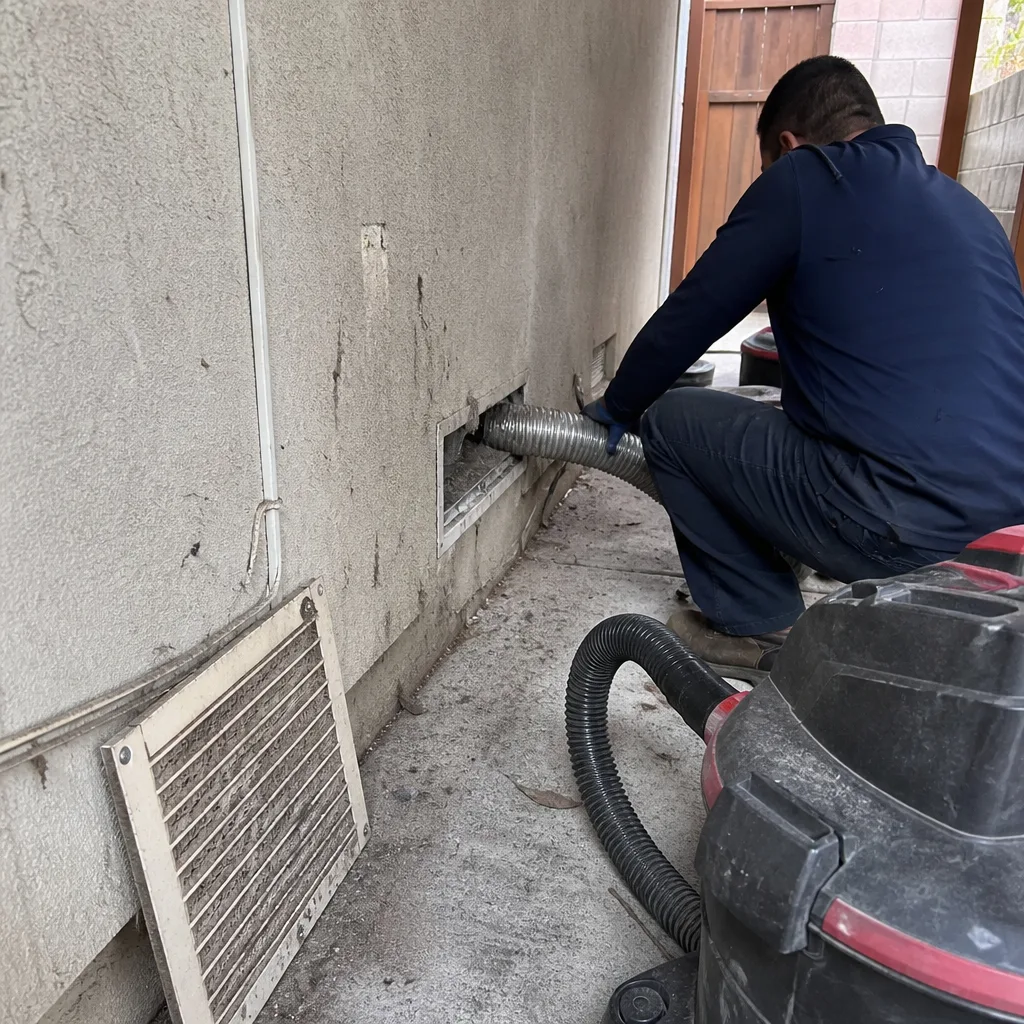 Before
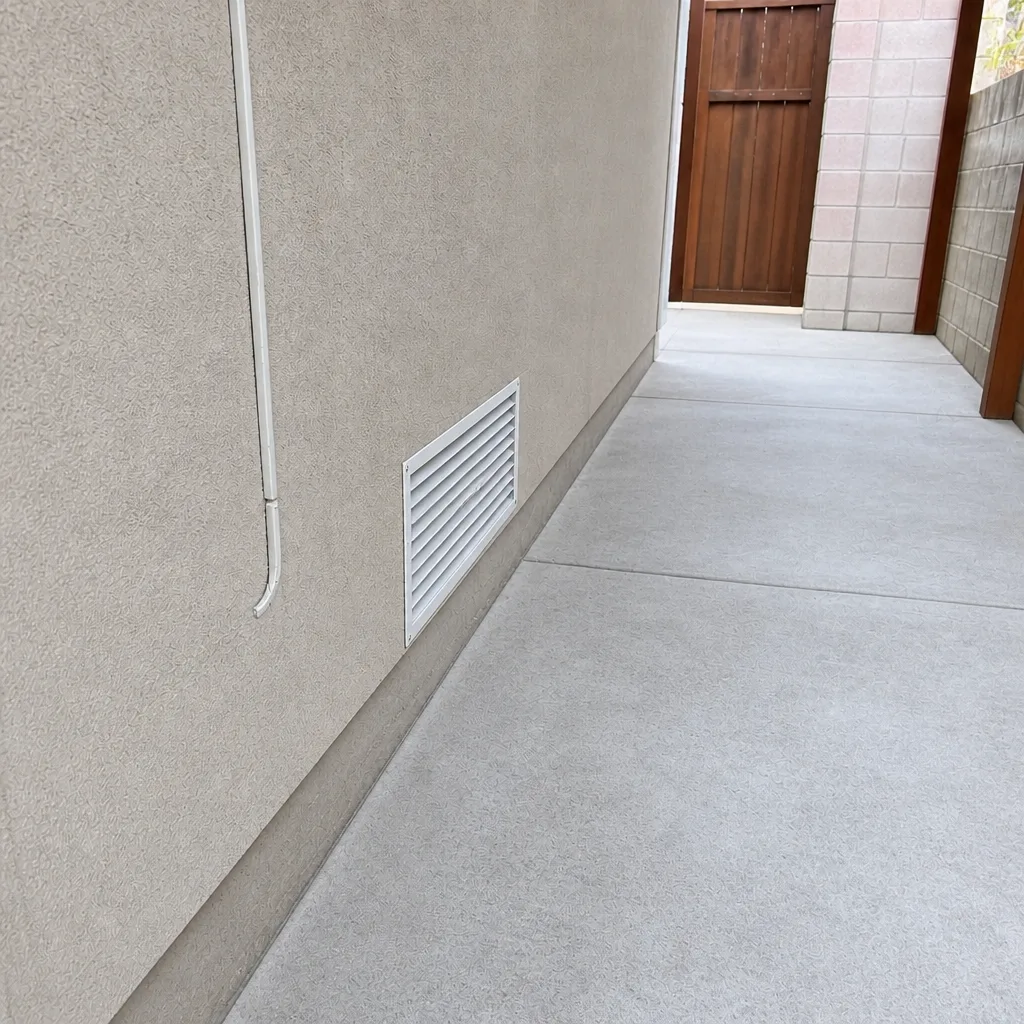 After
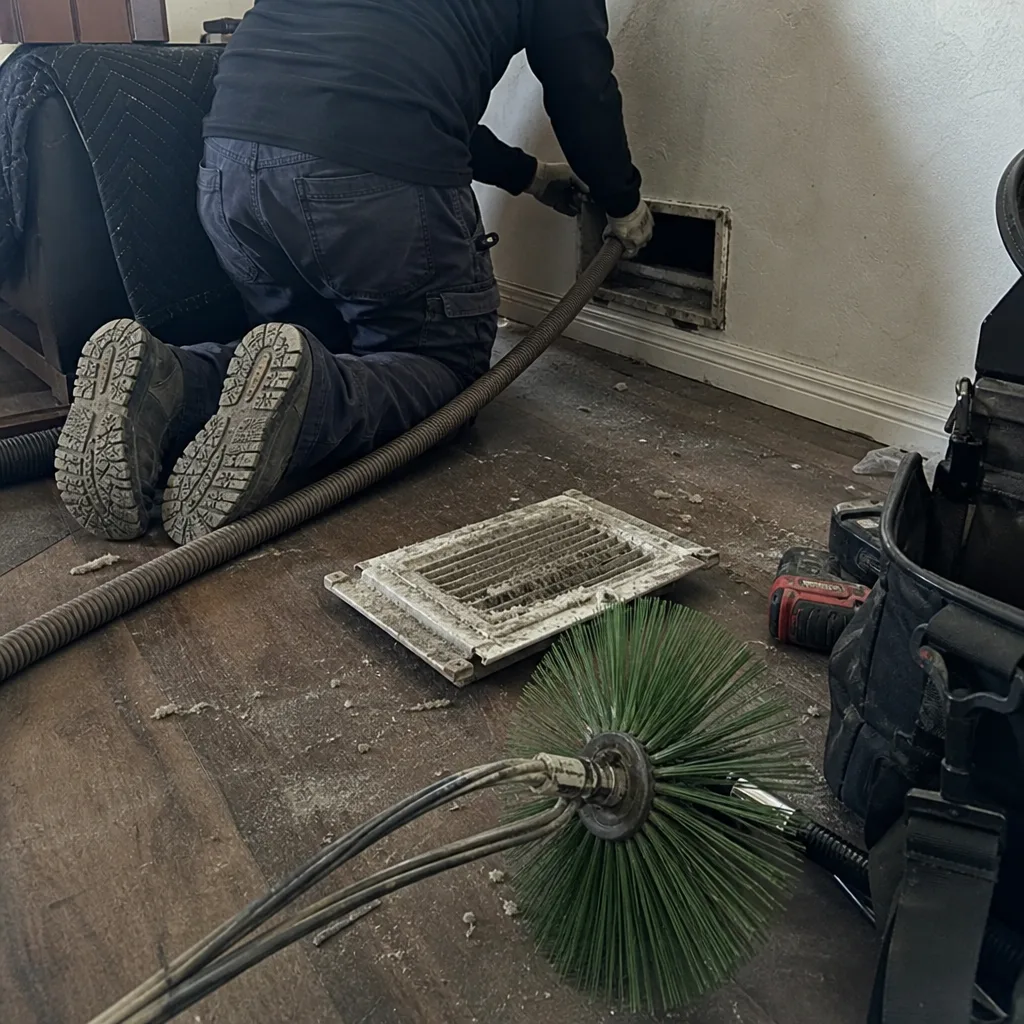 Before
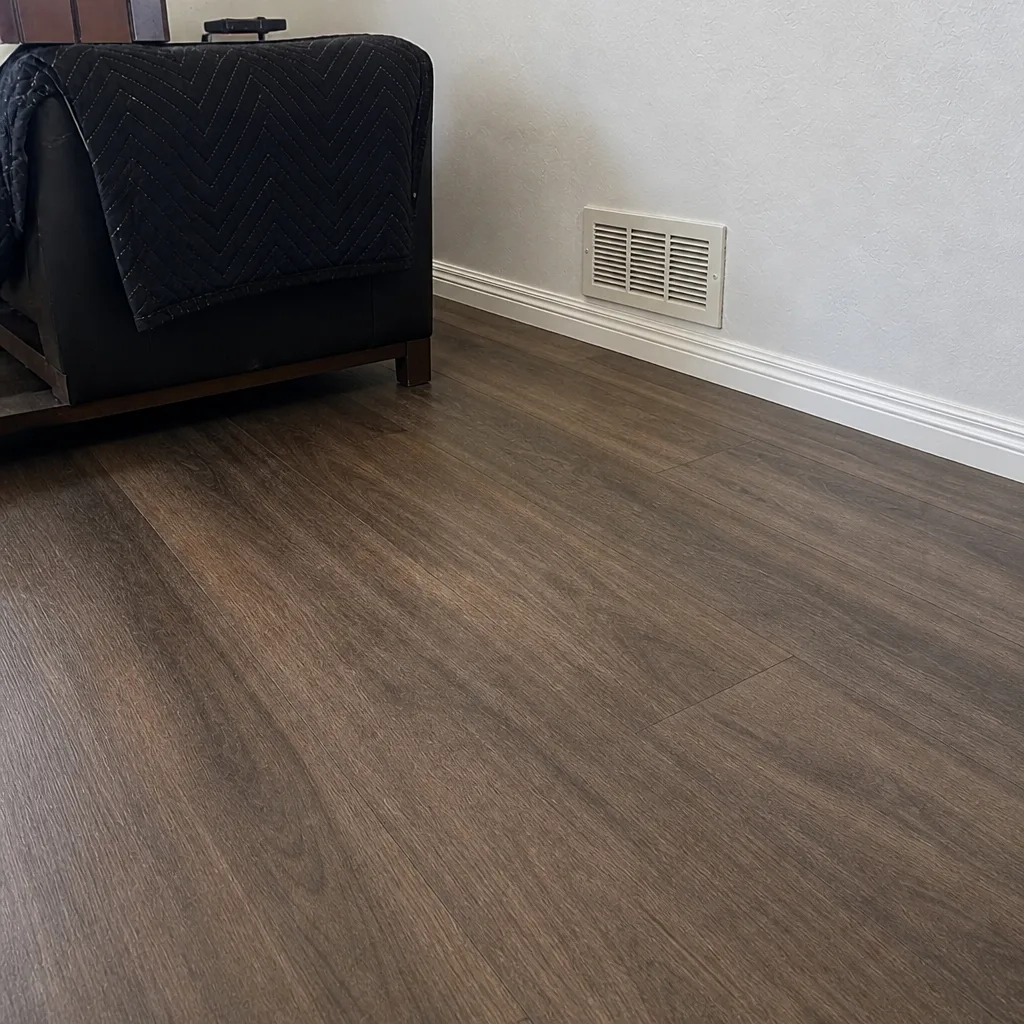 After
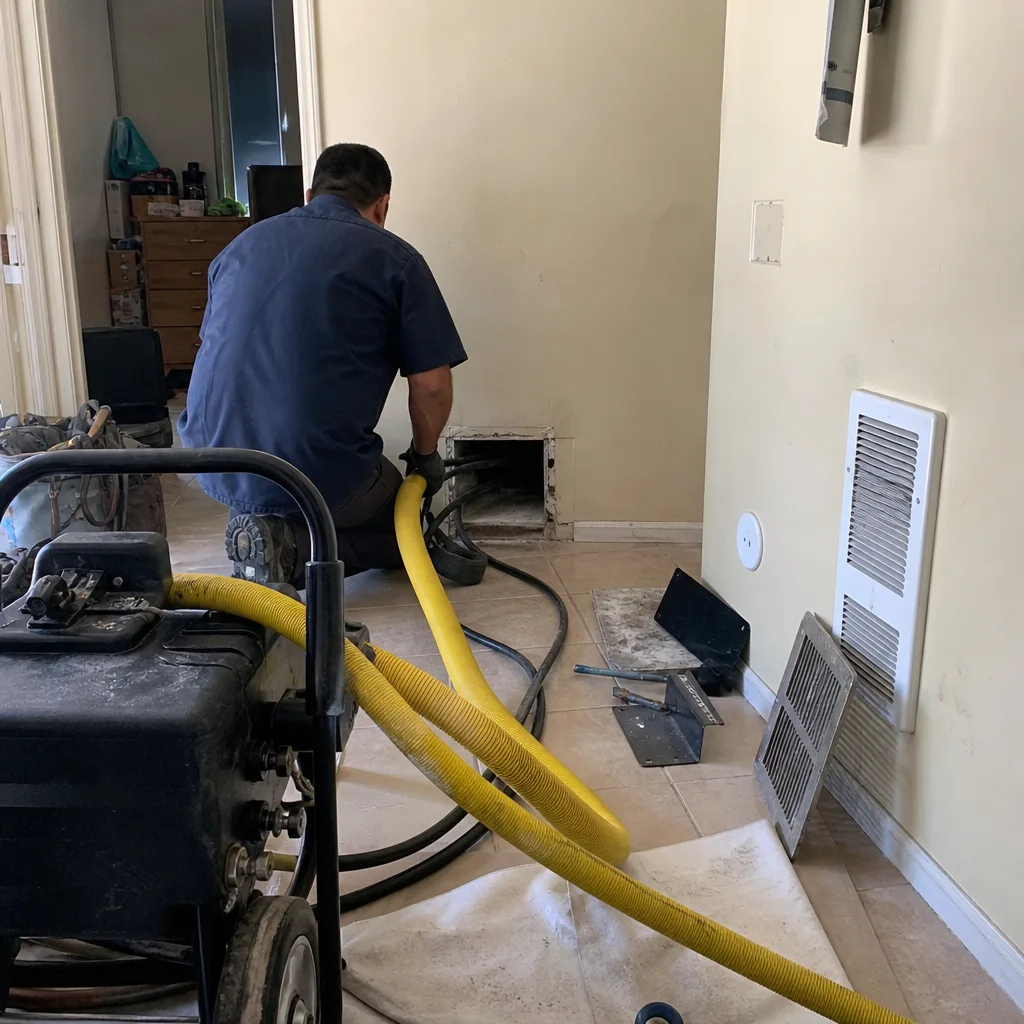 Before
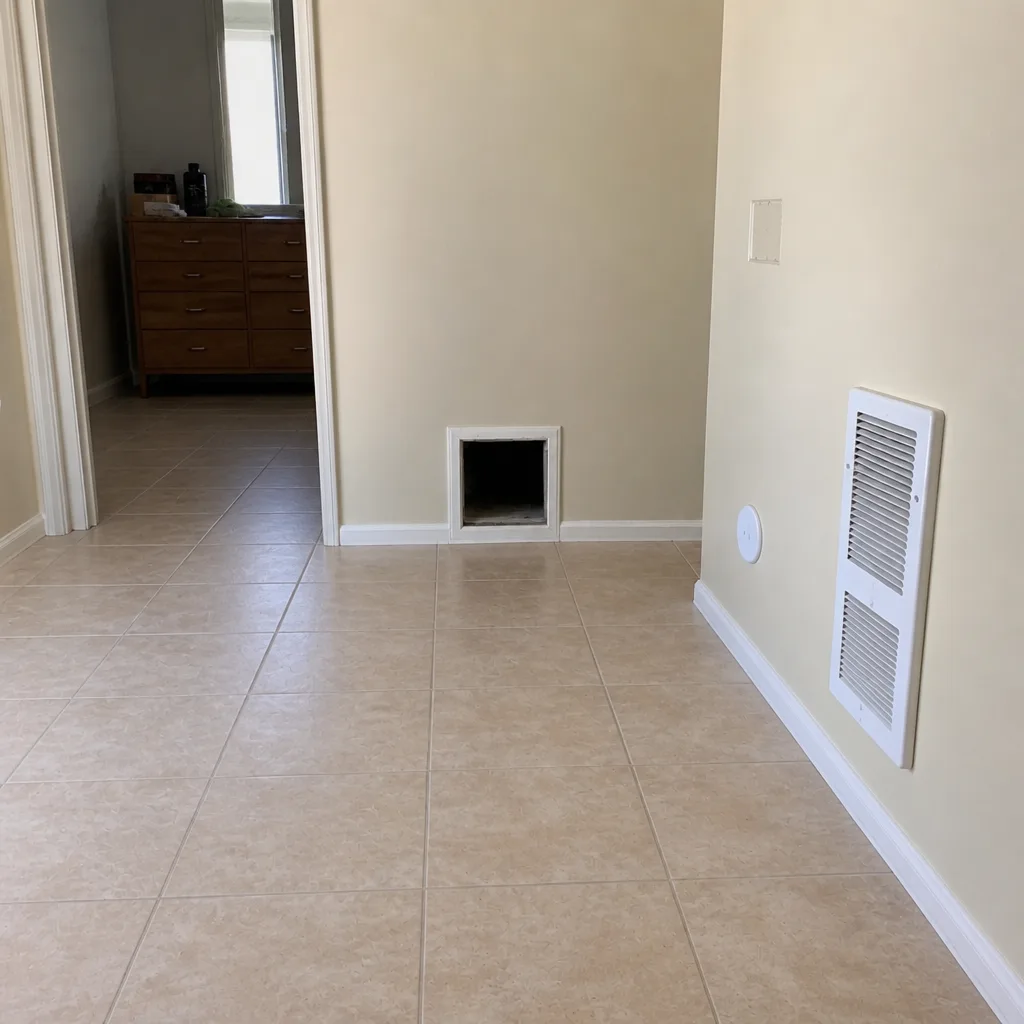 After
When to Call a Professional
Some situations need a specialist, not a filter change. Call a professional when you can smell smoke or a musty odor from multiple registers after the filter has been replaced, when you see visible staining or film on the return grille or the coil, when a duct liner is soft, sagging, or water-stained, or when your energy use has crept up without an obvious cause. Call if the system has been through a significant smoke event or a heavy Santa Ana season and hasn’t been cleaned since. Call if the dryer takes longer to dry a load than it used to, since a blocked dryer vent is a fire risk. And call if you simply don’t know when the ducts were last cleaned. Our technicians have up to 13 years of experience, and we can find leaks and fix them, not just clean. Stanton Air Duct Cleaning Pros offers free estimates in Stanton. Call (877) 820-9417. We answer 24/7. Fast dispatch from 7am to 7pm, Sunday through Friday.
Frequently Asked Questions
For a typical Stanton home, we recommend a cleaning tied to the Santa Ana season (late summer into fall) plus a spring inspection, and an additional cleaning after any significant wildfire smoke event. Homes with pets, allergy concerns, or duct board construction often benefit from two cleans a year. The right number depends on what the inspection finds.
Late summer into fall is the higher-priority window in Stanton, because Santa Ana winds from September through November push the most particulate into homes. Spring is the right time for a startup inspection covering the coil, filter, and airflow. Fall cleaning matters more, but both windows serve different purposes.
Check the filter first: a darkened, smoky-smelling filter after a smoke event is a strong sign. If a burnt or acrid smell persists at the registers after a filter change, or if you see gray film on the return or the coil, smoke has reached the duct surfaces and professional cleaning is the right next step. A household filter won’t stop fine smoke particulate.
It starts with physical removal of the deposited particulate and odor-carrying film using rotary brushing and negative-air extraction, then cleaning the coil, blower, and cabinet, then sanitizing cleaned surfaces. We use a Rotobrush rotary brush system and a Nikro negative-air machine, and Abatement Technologies filtration equipment on the sanitizing side. A spray alone doesn’t remove what’s on the duct walls.
It can, if it’s done with the wrong equipment. A shop-vac or a brush without negative-air extraction releases loosened debris into living space. Done with proper negative-air control, the opposite should happen: the material comes out, and it stays out. Ask any company what equipment they use before you book.
Yes, in homes where humid outside air is getting into the duct system. Ducts lined with fibrous material or built from duct board can absorb moisture and develop a damp smell or, over time, mold. If you notice a musty odor from registers during May through July, an inspection is the right move.
You ask for before-and-after photos of your own ducts. A company that can show you what came out of your system, and what the cleaned duct looks like, is a company you can verify. We provide photos as part of documenting the job, which is what “Guardsman-grade protection standards” means in practice: a defensible, documented result.
A low quote usually means one of two things: a quick surface pass with inadequate equipment, or a price that gets revised once the technician is on site. The honest approach is one flat price agreed before work starts, with a written estimate that sets the final number. That’s how we quote, and we’ll explain exactly what your system needs first.
We don’t publish a per-vent price, because a system with duct board, leaks, and multiple returns needs more work than a simple clean one. The fair way to know is a free estimate: we’ll inspect, explain what’s needed, and put a single flat price in writing before anything starts. Call (877) 820-9417.
The Bottom Line
Duct maintenance in Stanton tracks air quality events, not a four-season calendar. The Santa Ana window from September through November is the highest-loading period, and a cleaning plus a sealing pass before it is the single most valuable appointment of the year. The marine layer from May through July is the moisture window, where duct liner and duct board need watching. Smoke events can open a reactive cleaning window at any time, and the spring startup inspection protects cooling performance and airflow. One annual spring cleaning isn’t enough to cover those patterns. Clean, seal, filter, and inspect on a rhythm that matches the air, and the system stays in good shape all year.
Contact
If your system is due for a seasonal pass, or you just aren’t sure when it was last cleaned, get a free estimate from a specialist who works the full duct ecosystem, from cleaning and sealing to dryer vents and air sanitizing. We use professional-grade equipment on every job, including the Rotobrush rotary brush system and Nikro negative-air extraction that any HVAC tech would recognize by name. Call (877) 820-9417. We answer 24/7. Fast dispatch from 7am to 7pm, Sunday through Friday. If a call comes in outside dispatch hours, it’s booked into the next opening. The estimate is free, and the price is set per job by the written estimate.
Written by the team at Stanton Air Duct Cleaning Pros.