
Last updated November 23, 2026
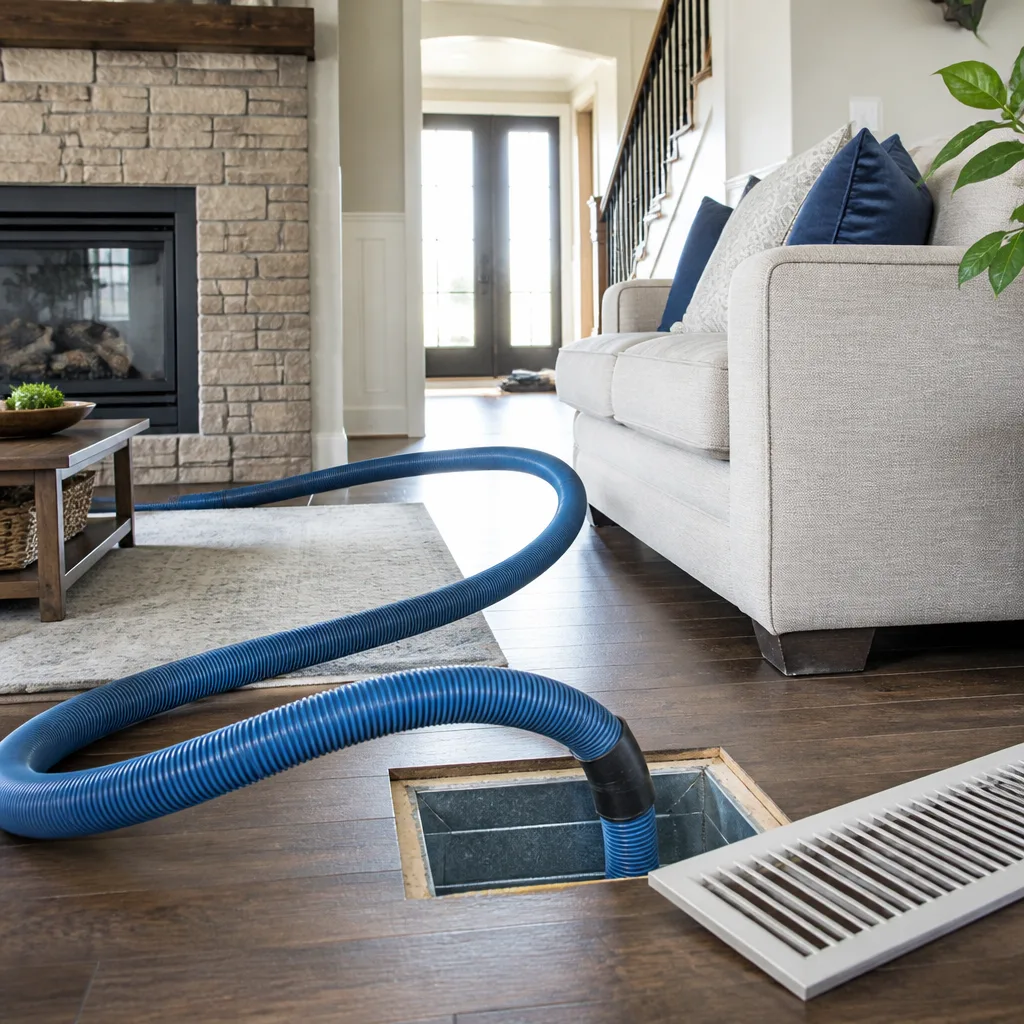 Whole-home duct cleaning
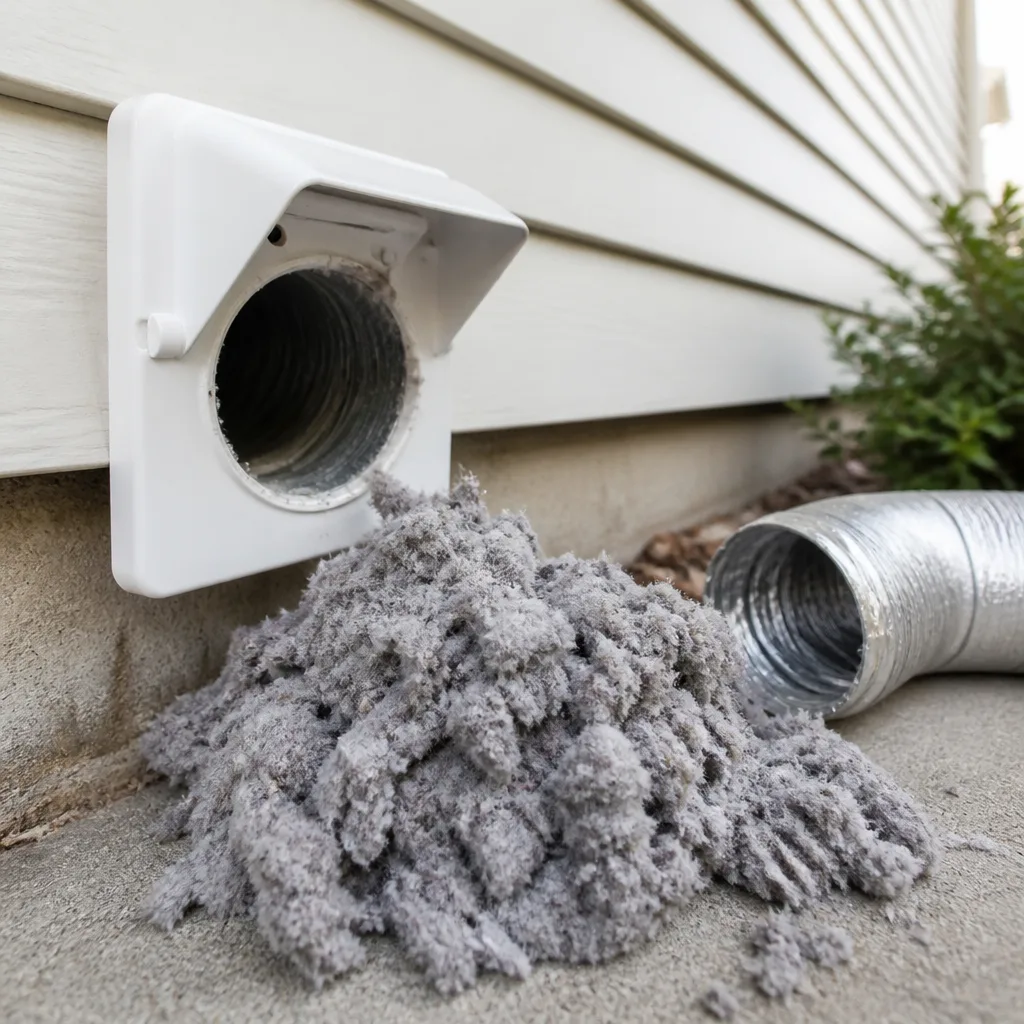 Dryer vent cleaning
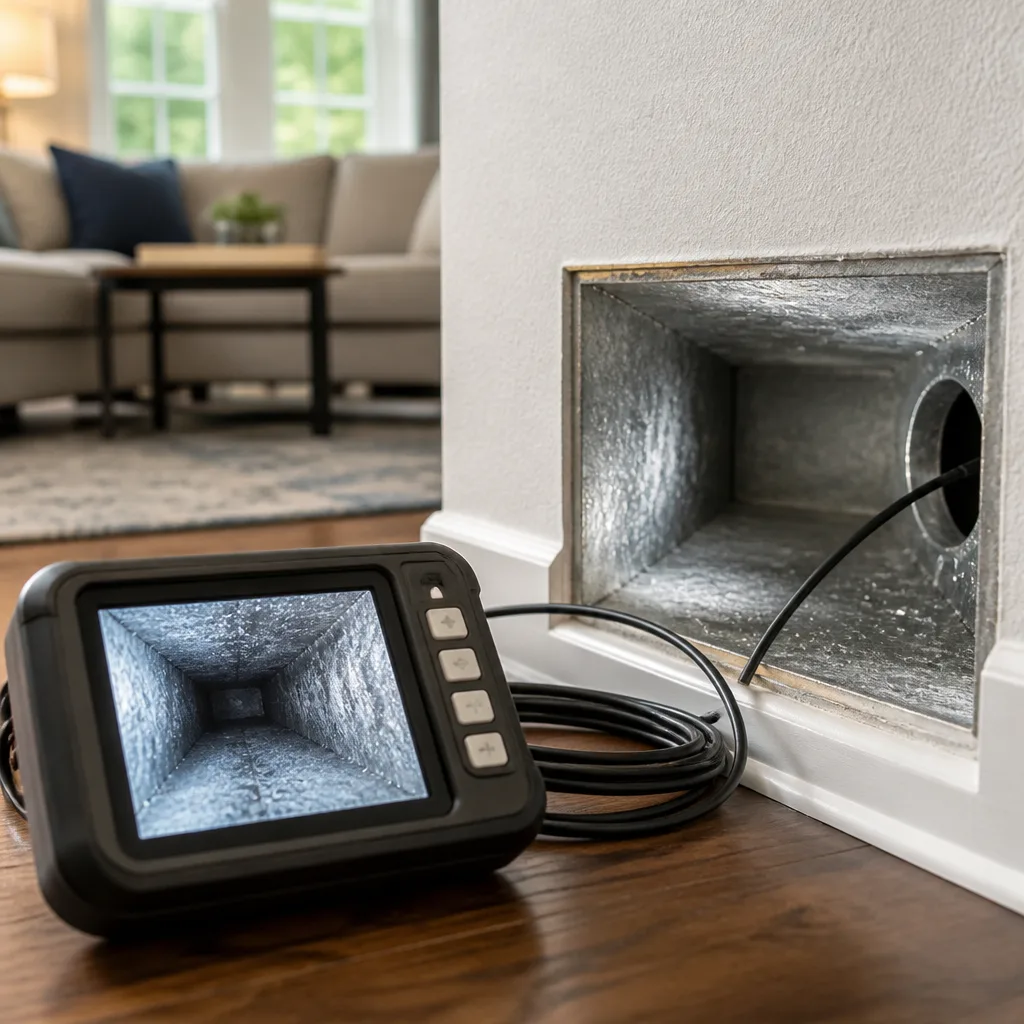 Camera inspection
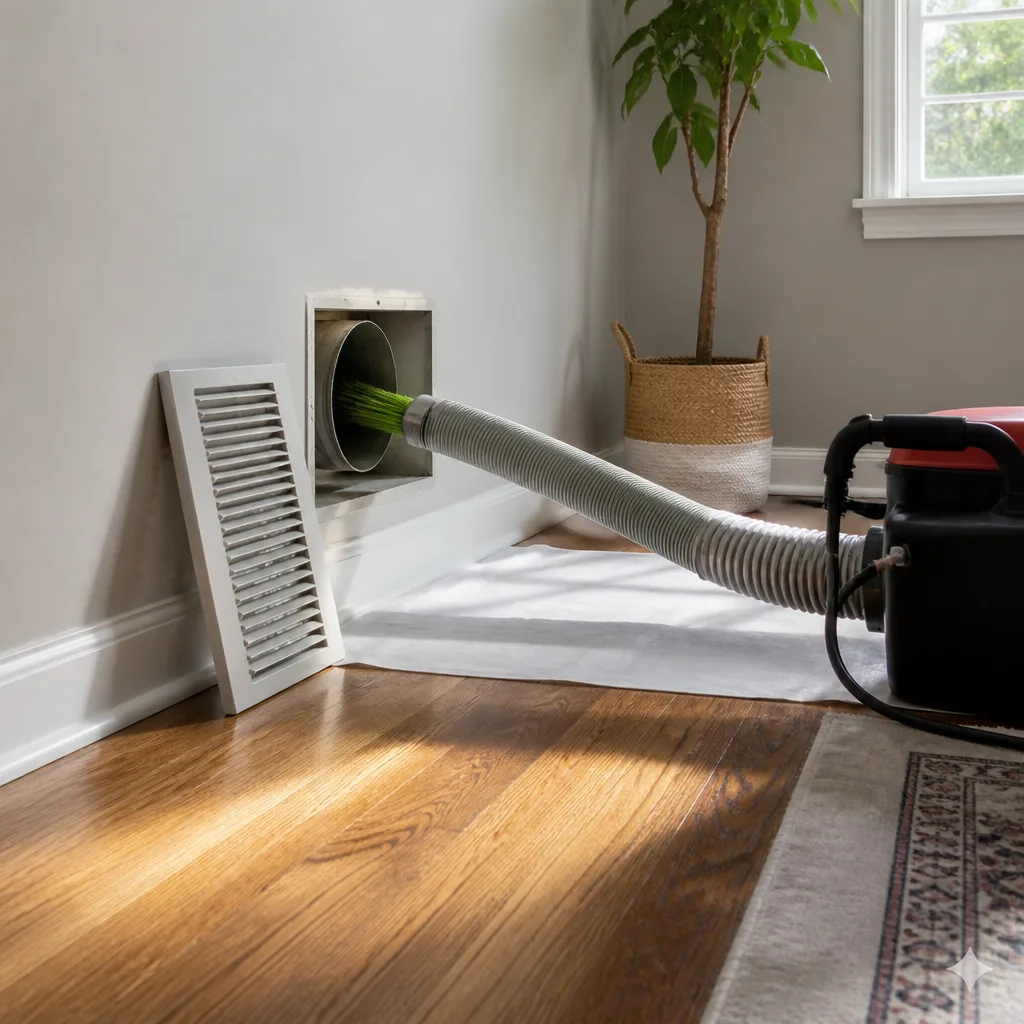 Sanitizing & deodorizing
Whole-system duct and dryer vent check with before-and-after photos - you see exactly what came out of your vents
That "$99 whole-house special" is a bait ad - the real number appears once they are in your hallway, or the "clean" is a shop-vac at the register. We photograph the inside of your ducts before and after instead.
Air Duct Cleaning Maintenance Checklist for Stanton Homeowners
A checklist that tells you to change the filter every 90 days has already failed in Stanton. During a Santa Ana event, fine dust and ash load a MERV-11 filter to capacity in under two weeks, so the calendar interval is the problem, not the solution. Duct systems here don’t degrade on a schedule. They degrade on events: a smoke plume that parks over Orange County for a week, a kitchen remodel, a mild winter when the furnace barely runs and dust settles undisturbed. This guide replaces the calendar with observable checkpoints you can actually see, test and act on. You’ll learn what to inspect, when it matters, and which findings justify a camera inspection.
Quick Answer
A useful duct maintenance checklist for Stanton homeowners is event-triggered, not calendar-based. Check the filter after every Santa Ana wind event and wildfire smoke episode, inspect the air handler for bypass leakage and coil discoloration every few months, and walk your flex duct runs for sag points and disconnected liners at least once a year. Replace filters by condition, not by the box, and call for a professional camera inspection when airflow at the registers is uneven or you find visible staining past the filter.
Styles & brands we work with
- Whole-home duct cleaning
- Dryer vent cleaning
- Camera inspection
- Sanitizing & deodorizing
Table of Contents
- Why Calendar Checklists Fail in Stanton
- Event-Triggered Checkpoints: Smoke, Dust, Renovation, Downtime
- The Tissue-Paper Test: Self-Assessing Register Airflow Balance
- Visual Indicators at the Air Handler
- Checklist Items for Flex Duct Systems in Stanton Tract Housing
- A Filter Strategy Built Around Local Air Quality Events
- When a Checklist Item Warrants a Camera Inspection
- The Stanton Seasonal Rhythm: What to Do and When
Why Calendar Checklists Fail in Stanton
Stanton sits in the flat middle of Orange County, a few miles inland from the coast. Inland enough that marine air rarely scrubs the dust off the rooftops. Close enough to the coast that heating and cooling loads stay gentle most of the year. That combination produces a specific pattern: the HVAC system runs lightly for long stretches, then works hard during a heat spell, then sits dormant through mild weeks while fine dust settles into the return side. A duct system that idles isn’t a clean system. It’s a sediment trap.
The generic checklist misses this because it assumes steady seasonal use. In climate zones with hard winters and full-blast summers, duct contamination follows a predictable arc. Here it follows wind events. When Santa Ana winds push through, they carry fine particulates from the inland hills and everything loosened by days of dry, gusting air. Your return grille is the biggest intake in the house. It pulls that material into the ductwork before the filter catches it, and a filter already partly loaded from the last event gets overwhelmed faster than its printed change interval suggests.
The fix is simple: stop treating filter changes and duct inspections as scheduled chores and start treating them as responses to what the air actually did that month. In our experience, a Stanton home that gets checked after each wind and smoke event reaches the same filter condition in November that a calendar-following home reaches in February, and the event-triggered approach catches duct problems months earlier.
Two things this checklist won’t cover: anything that requires opening the air handler cabinet or reaching into the duct runs themselves. Those are the jobs we list for a professional below. What you can do safely is observe, test and record.
Event-Triggered Checkpoints: Smoke, Dust, Renovation, Downtime
Every checkpoint below is something you do after an event, not on a date. Keep a simple note on your phone with the date and what you found. That record is the single most useful thing you can hand a technician later.
- After a Santa Ana wind event. Pull the return filter and hold it up to light. If you can’t see light through the pleats, replace it. Also check windowsills and the top of the return grille for fresh grit; if grit is inside the grille slats, that material partly entered the duct.
- After a regional wildfire smoke episode. Smoke particles are smaller than most dust and travel deep into the return. Check the filter twice in the two weeks following, and note any musty or smoky smell from supply registers when the fan first starts. A persistent smoke smell in the supply air after the smoke itself has cleared usually means the material landed in the ducts, not the room.
- After any renovation or drywall work. Sawdust and drywall dust are far heavier loads than outdoor dust. Cap or tape the supply and return registers in the work area before the first cut, and check the filter the same evening and again after cleanup.
- After extended HVAC downtime. If the system sat idle for weeks during a mild stretch, run the fan alone for an hour before you judge anything. Dust settles on the coil and cabinet during downtime and the first run pushes it into the ducts. Then check the return filter and the air handler area.
- Before and after the hot season. Early summer is when a lightly used system suddenly runs hard, and it’s when a partly loaded filter finally fails. Check the filter, the coil face and the condensate area before the first real heat.
- After a remodel in a neighboring unit or a shared-wall renovation. In Stanton’s denser housing, dust travels through shared structures and attics. A check of the return after a neighbor’s project is cheap insurance.
If you’d rather have the whole system observed by someone with the right equipment, our air duct cleaning service is built around exactly these event windows, using a Rotobrush rotary brush system for the duct walls and a Nikro negative-air machine to hold dust at the source instead of letting it settle into the house.
The Tissue-Paper Test: Self-Assessing Register Airflow Balance
You can measure how evenly your system moves air across the rooms without owning a single tool. Tear a strip of tissue about the length of your hand. Hold it near the face of each supply register, one at a time, with the fan running on normal. Watch the deflection. A healthy register pulls the strip taut toward the grille and holds it there. A starved register lets the strip droop or flutter weakly.
Run the test room by room and note which registers are strong, which are weak, and which are nearly dead. Then look at the pattern.
- One weak register, everything else strong. Usually a closed or partly closed damper in the branch feeding that room, or a crushed flex run. Check the damper lever at the boot before anything else.
- An entire half of the house weak, the other half strong. Points toward a trunk-level restriction, a crushed or disconnected main run, or a sagging flex duct that has collapsed at a low point.
- Every register weak at once. Points upstream: a loaded filter, a dirty evaporator coil, a blower issue, or a return that’s undersized or blocked by furniture.
- Weak registers plus a strong return grille that seems to work overtime. Suggests leakage on the supply side or a duct that’s losing air to the attic before it reaches the room.
- Airflow fine but dust reappears on the furniture right after cleaning. Suggests contamination in the run itself rather than an airflow problem.
Repeat the test after any change you make, and again after a wind event if the results were borderline. If the pattern moves, the system is telling you where the restriction lives. If the tissue test shows a whole-house pattern, don’t chase it yourself; that’s the point at which a professional measurement pays for itself. Our HVAC cleaning service starts with exactly this kind of airflow assessment before any equipment comes out.
Visual Indicators at the Air Handler
The air handler is where the story is written. If you can access the unit safely, look at these five things. Do not open the cabinet, do not remove panels, and do not reach past the filter slot. Observation only.
- Filter bypass leakage. Look at the edges of the filter where it seats. Fresh dust streaks around the sides of the filter, or a visible gap at one corner, mean unfiltered air is going straight past into the coil and then into the ducts. A filter that’s “changing colors” but the area around it is dirty is doing less than you think.
- Coil face discoloration. With a flashlight, look at the evaporator coil through the filter opening. A clean coil is metallic and uniform. Darkening, matting or fuzz along the entering face means the filter isn’t catching what it should and contamination has already moved past it.
- Dust on the blower wheel. Where visible through the opening, the blower wheel should look clean and evenly spaced. A furred blower wheel is a sign that fine material has been cycling through the system for a while.
- Staining around the cabinet seams. Dark staining at the panel joints suggests air is moving through a gap it wasn’t meant to use, which often means the cabinet or the duct connection has a leak.
- Condensate pan and surrounding area. Standing water or biological growth near the pan signals moisture the ducts don’t want. That’s a case for a professional visit right away, not a filter change.
If even two of these are present, contamination has bypassed your filter and the ducts need professional attention. A home with a compromised filter seat will keep feeding the same problem into a freshly cleaned system, which is why we always look at the filter frame and duct connections before and after cleaning. Guardsman-grade protection standards apply to our sanitizing work, and knowing the duct is holding air where it should is part of that.
Checklist Items for Flex Duct Systems in Stanton Tract Housing
Most Stanton homes built in the tract phases of the mid-to-late twentieth century run flexible duct in the attic. Flex duct performs well when it’s stretched and supported and poorly when it’s not. It’s also the part of your system most likely to fail without a single symptom inside the house. Walk the attic runs, if the access is safe, and check for these:
- Sag points between supports. Flex duct should be stretched tight enough that the liner stays round. Sagging runs kink at low points, and a kink is a restriction that the tissue test will later show at the register.
- Disconnected inner liner. The plastic inner liner is the actual air path; the gray jacket is only insulation. If the inner liner has slipped off the collar at a boot, the system is blowing air into the insulation jacket and into the attic. Visible insulation fibers inside the boot or a lot of dust around the collar are the signs.
- Crushed sections under stored items. Attics in these homes collect boxes, holiday decorations and the like. Anything sitting on a flex run flattens it. Move stored items off the ducts.
- Tears in the outer jacket. Rips expose the inner liner to attic heat and dust, and they let attic air into the insulation. Tape isn’t a long-term fix here.
- Missing or fallen supports. A sagging run with a lost strap will keep sagging no matter what you do downstream.
- Duct runs touching hot roof sheathing. On warm days the attic heats up fast, and an uninsulated or jacket-damaged run touching the deck loses cooling capacity before the air reaches the room.
A flex system with two or three of these findings is a repair job before it’s a cleaning job. Duct repair and sealing is part of what we do as a specialist, and it’s the difference between cleaning the ducts you have and fixing the ones you need. If you’re dealing with a system that’s leaking heavily, that repair comes first.
A Filter Strategy Built Around Local Air Quality Events
The filter is the first hard boundary between your living space and the ductwork, and in Stanton the boundary is under more pressure than most packaging assumes. You don’t need a more expensive filter. You need a better read on when it’s done.
- Use the hold-to-light test, not the calendar. Hold the filter up to a bright light. If you can’t see through a representative section of the pleats, replace it. In quiet months that can mean a filter lasts far longer than ninety days; in a wind event month it can mean two weeks.
- Match the filter to the filter slot. A filter that’s a half inch undersized or slipped in at an angle leaks around the edges and lets the coil take the load. Check the fit before you check the brand.
- Pick MERV by what the system can handle, not the highest number on the shelf. A higher MERV catches more, but a filter that’s too restrictive for the blower starves airflow and can freeze the coil during cooling season. A MERV-8 to MERV-11 range is a reasonable working band for most residential systems, and the filter change interval shortens as the MERV goes up. If the manufacturer specifies a maximum, respect it.
- Stock filters where you’ll see them. A filter that has to be ordered arrives a week after the event. Keep a matched spare at home.
- Write the install date on the frame. A pencil note on the filter edge saves guessing.
- Check the return grille slot as part of the same job. A loose return grille lets dust draw around the filter’s edge. If the grille doesn’t sit flush, that’s the bypass leakage you’ll later see at the coil.
If you already run a whole-home air quality setup from a brand like Aprilaire or Honeywell, add one more step: verify that the media cabinet or bypass setup is still sealed and seated every few months. Those systems perform well when they’re tight, and poorly when a panel has been left off. Our sanitizing work uses Abatement Technologies equipment, the same category of gear used in restoration projects, so we’re equipped to handle the residential and light-commercial side of whole-home filtration rather than just the duct cleaning side.
When a Checklist Item Warrants a Camera Inspection
Most of what’s in this checklist is owner work: observe, test, filter change, reset a damper. A few findings cross the line into a camera inspection because they tell you something is happening inside the duct where you can’t see it.
Call for a professional camera inspection when any of the following is true:
- The tissue test shows a whole-house airflow problem that a filter change doesn’t fix.
- You’ve found a sagging, crushed or disconnected flex run that can’t be reset by hand.
- There’s visible staining, dust matting or fuzz past the filter at the coil or blower.
- A persistent musty or smoky smell comes out of the supply registers when the fan starts.
- The return grille shows grit or debris that didn’t come from the current filter.
- You have a post-renovation dust problem that hasn’t cleared two weeks after cleanup.
- You’ve had pest activity in the attic near the duct runs.
A camera inspection uses a small camera on a flexible line to see into the actual duct runs, so the question “how dirty is it really?” gets a direct answer instead of a guess. If you’ve called a few companies and gotten guesses, ask for the camera footage. A specialist with proper equipment will show it to you. That’s the standard we hold ourselves to at Stanton Air Duct Cleaning Pros, and it’s how we handle the duct repair and sealing that so often follows a real inspection.
The Stanton Seasonal Rhythm: What to Do and When
Local conditions mean the work has a natural rhythm. You’re not scheduling the same tasks at the same time as a homeowner in Minnesota. What you’re doing is riding the actual weather and usage pattern of this inland corner of Orange County.
Late spring. The first heat spell is the system’s hardest test. Before it, check the return filter, the coil face and the condensate pan. Run the fan and repeat the tissue test across every register. If one register has been weak all winter, now is when you’ll notice it.
Summer. The system runs heavy. Check the filter more often than you’d think, especially if you keep windows open at night. If you’re going to work in the attic, do it in the morning. That’s also the time to look at the flex runs for sagging, because an attic in July will show you every weak spot in the insulation.
Fall and Santa Ana season. The biggest single-event window. After the first strong wind event, pull the filter and check the return. Repeat after each event. If wildfire smoke has moved into the region and the supply air still smells like smoke days later, that’s the cue for a professional duct cleaning visit, not another filter change. Consider our dryer vent cleaning at the same time if the laundry has felt slower than usual; dryer vent lint builds up on its own schedule and doesn’t care about the weather.
Winter. Mild. Furnace use is light and duct dust has a chance to settle. Run the fan on its own for an hour once a month, check the filter, and listen at the return for rattles or a whistling that wasn’t there before. Whistling at a return is usually a filter that’s loading; a rattle can be a loose panel, a sign for a professional.
Renovation months. Any month is renovation month in a house you own. Tape registers before the first cut and check the filter that evening. This one habit prevents more duct contamination than any other.
Common Mistakes to Avoid
- Trusting the 90-day filter rule. A wind event can load a MERV-11 filter in Stanton in under two weeks. Change on condition, not on the box, or you’ll spend money on filters that stopped working weeks ago.
- Buying the highest MERV available. A restrictive filter starves the blower and can freeze the coil in summer. Match the rating to the system and the filter slot.
- Ignoring the filter seat. A perfectly good filter that leaks around one corner is doing less than a modest filter that sits tight. The frame matters as much as the media.
- Skipping registers during renovation. Drywall dust is the heaviest load your ducts will see in a normal year, and taping the grilles before the work starts saves a cleaning later. If you’re doing an addition and the crew uncovers ductwork, get them to cover it the same day.
- Assuming a quiet system is a clean system. A lightly used system can sit for weeks letting fine dust settle into the return. Silence isn’t a signal.
- Letting a musty smell “clear up on its own.” Moisture in the ducts or the pan doesn’t disappear. It grows. Get it inspected; that’s the finding that gets worse fastest.
- Hiring on a low-ball quote alone. A quote that doesn’t mention real equipment isn’t offering real cleaning. Ask what equipment they’ll use and what the price per system is before anyone arrives.
See the difference
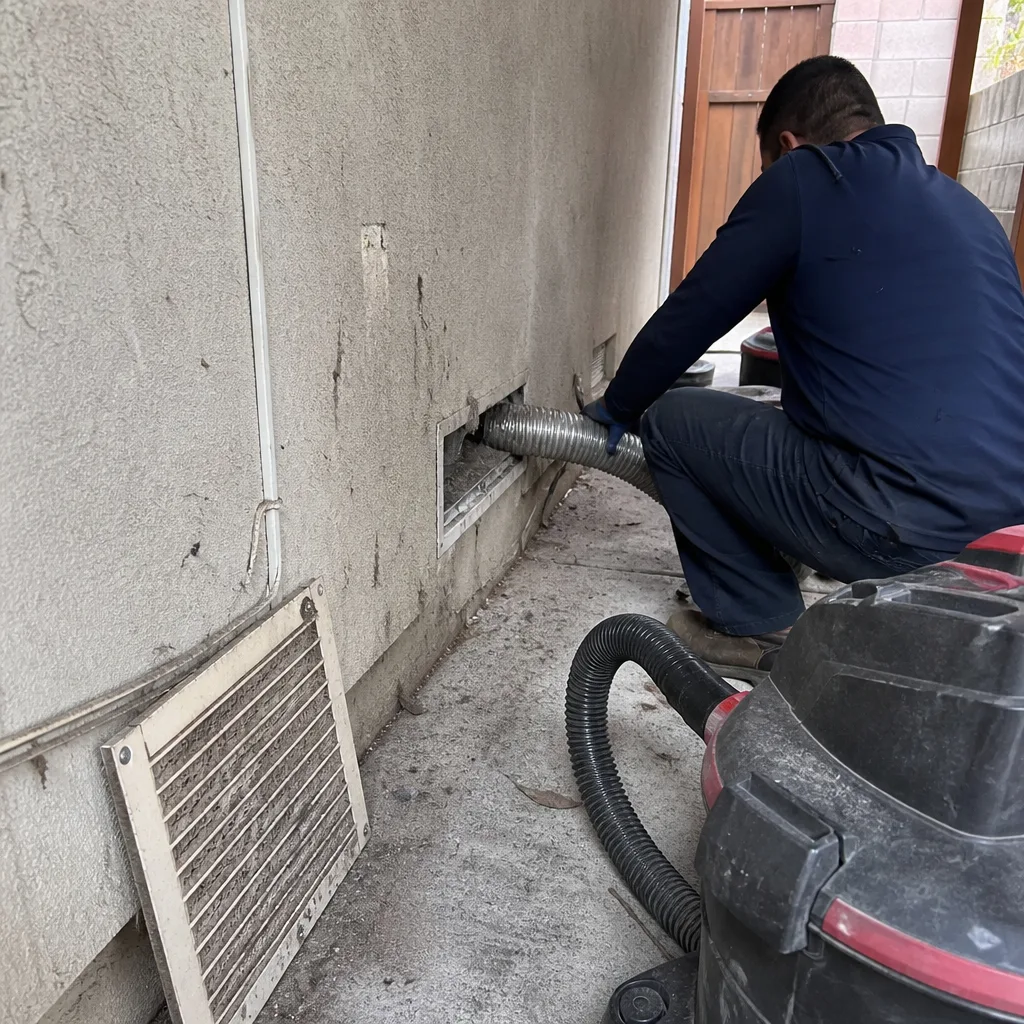 Before
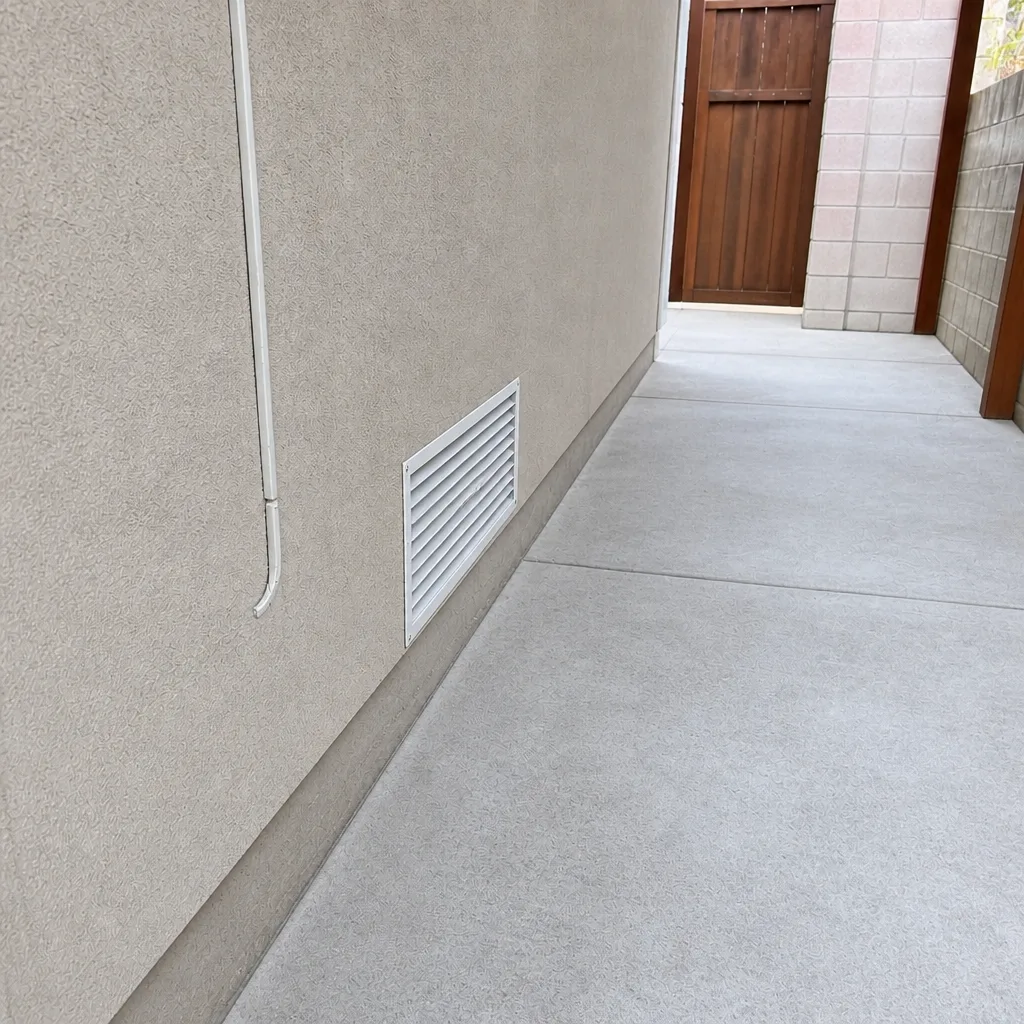 After
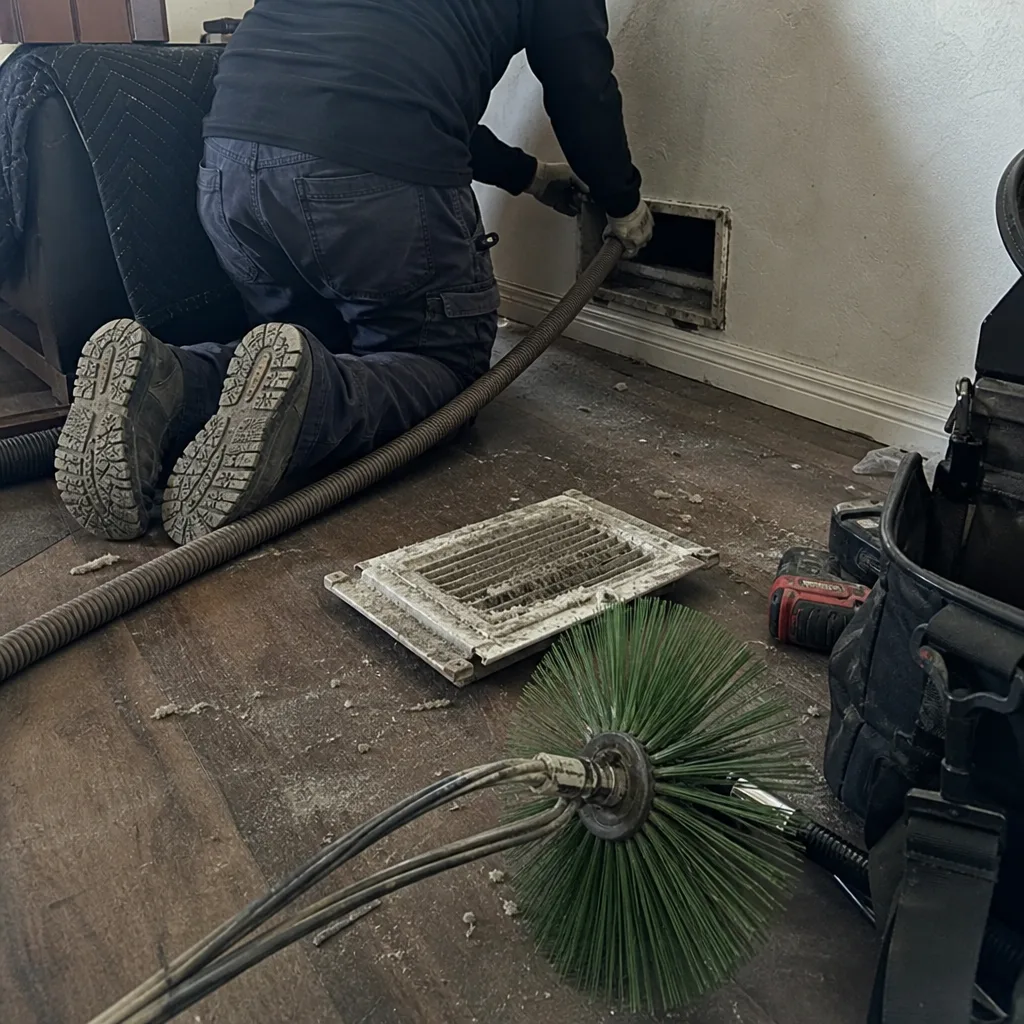 Before
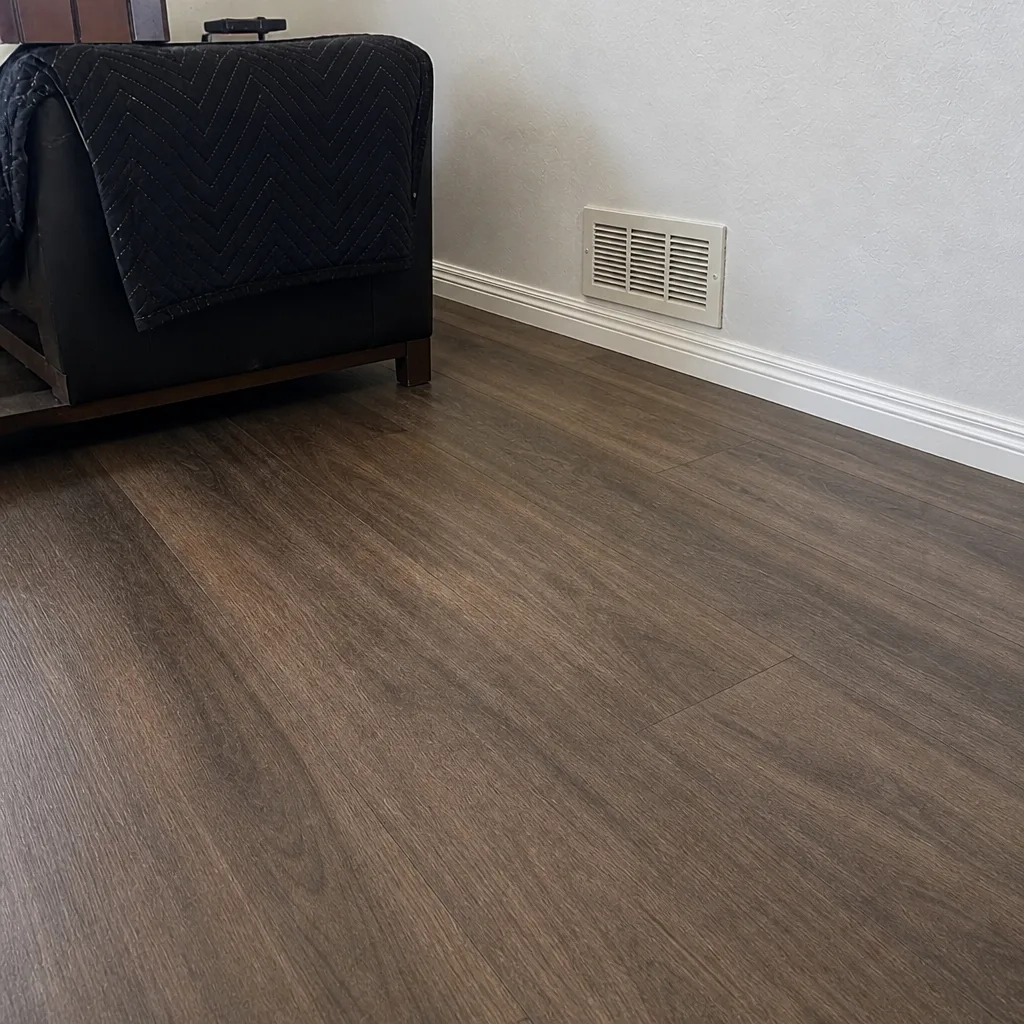 After
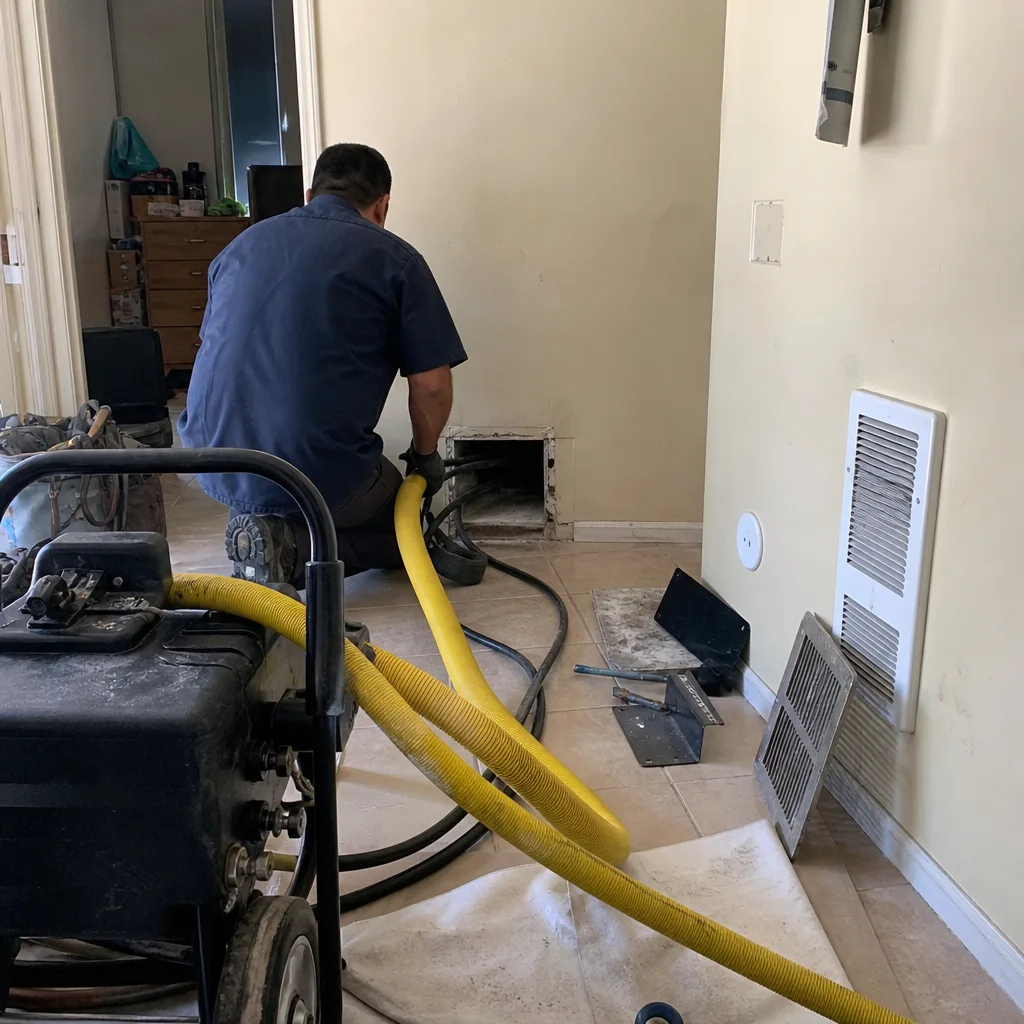 Before
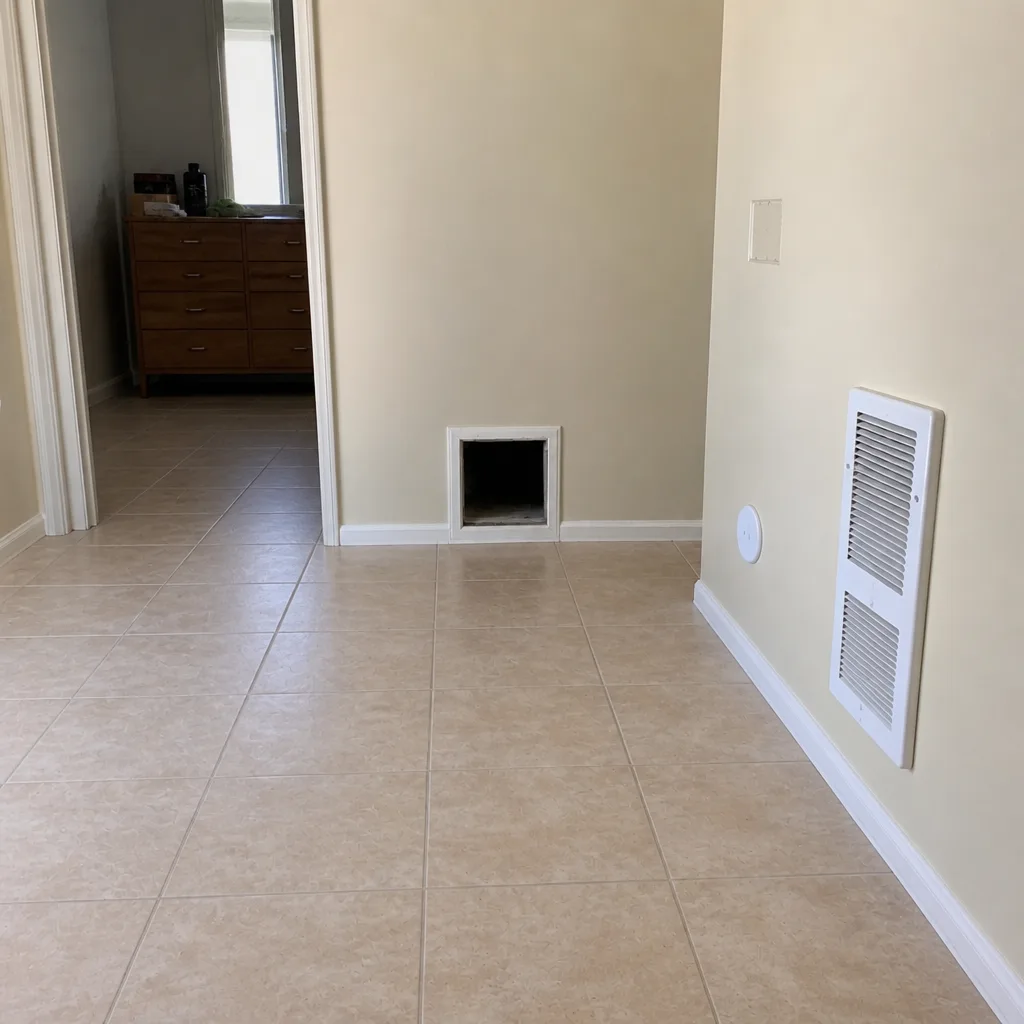 After
When to Call a Professional
Call for help when the tissue test shows a system-wide airflow problem, when a flex run is crushed or disconnected, when dust or matting is visible past the filter, or when a smell persists in the supply air. Call when you’ve had a renovation that wasn’t contained or a pest finding in the attic. Call when you want a camera inspection rather than a guess. Stanton Air Duct Cleaning Pros offers free estimates in Stanton. Call (877) 820-9417. We answer 24/7, and fast dispatch runs 7am to 7pm. Our technicians have up to 13 years of experience, and we bring Rotobrush and Nikro equipment to every job so the cleaning is thorough by design, not by promise.
Frequently Asked Questions
In Stanton, ducts should be cleaned on an event-driven basis rather than a fixed calendar. A typical home with no smoke or dust events and no pets or renovation work can go significantly longer than the standard “every few years” advice, while a home that takes two or three Santa Ana events a season may need cleaning within a year. The right trigger is a camera inspection, not a number on a website. Call (877) 820-9417 for an exact quote, and we’ll tell you what we actually find.
Cheap quotes usually mean less equipment and less time per system. A van with a shop-vac and a long hose can’t create negative pressure across the whole system, can’t clean duct walls with a rotary brush, and can’t hold the dust at the source while working. Ask what equipment is used on the job and whether the price is per system or per vent; a per-vent price on a large system often ends in a much larger invoice. Call (877) 820-9417 for an exact quote, and estimates are free.
Ask for before-and-after photos of your own ducts, not stock photos, and ask whether a camera went into the ducts before and after the cleaning. A specialist who uses real equipment will show it to you, and the photos of your runs should look different when compared side by side. Call (877) 820-9417 for an exact quote if you want an inspection with documented findings.
You can safely do the inspection work in this checklist – the filter change, the tissue-paper airflow test, the visual checks at the air handler – but the cleaning itself is a professional job. A homeowner vacuum at the register pulls from the room, not the duct, and running a brush blindly through flex duct risks tearing the inner liner. The flex runs in Stanton’s tract housing are especially easy to damage. Call (877) 820-9417 for an exact quote on a full-system clean.
No. A filter can load fast from outdoor dust and do its job the whole time, which is exactly what happens during a Santa Ana event. The sign that contamination has bypassed the filter is different: dust streaks around the filter edges, darkening on the coil face, or matting on the blower wheel. Those find the bypass, and that’s what usually precedes a duct problem. Call (877) 820-9417 for an exact quote if you see those signs.
Inland Orange County gets strong dry wind events and wildfire smoke episodes that push a heavy load of fine particulates into return grilles in short bursts, while the mild winters mean the HVAC system runs lightly and dust settles undisturbed for long stretches. That combination means filters load fast in the fall and ducts accumulate sediment the rest of the year. Neither pattern shows up on a fixed calendar, so check by event. Call (877) 820-9417 for an exact quote.
The Bottom Line
A duct maintenance checklist that works in Stanton is built on observation, not the calendar. The core moves are: check filters by condition after every wind and smoke event, run the tissue-paper test room by room, look at the coil face and filter seat for bypass, and walk your flex duct runs for sag points and liner damage. Those five checks catch most problems before they become cleaning jobs. When a finding points inside the duct – visible matting past the filter, persistent smells, a system-wide airflow loss – that’s when a camera inspection earns its place. If you’d rather have a specialist look at it, call us.
Call (877) 820-9417 for a free estimate. We answer 24/7, with fast dispatch from 7am to 7pm. One price per system, agreed before any work begins, with before-and-after photos of your own ducts. That’s the standard for every job, and it’s how we handle Stanton homes.
Written by the team at Stanton Air Duct Cleaning Pros.